
Choosing the best smart thermostats for lennox hvac means checking system stages and wiring before comparing apps or displays. The key split is whether your Lennox setup is conventional or a heat pump, and whether it has a C-wire. You need a thermostat that matches those details without sacrificing the controls you actually use.

Pros
- Wi-Fi touchscreen control
- Flexible scheduling and geofencing
- Dual-fuel and ventilation control
- Supports 3H/2C heat pumps
- Apple HomeKit integration
Cons
- Smart features use Honeywell Home platform
- No stated smoke or CO sensing

Pros
- Conventional and heat-pump compatibility
- Matter certified for smart-home integration
- Flexible seven-day scheduling options
- Auto-away and filter reminders
- Indoor humidity display option
Cons
- Requires a 24 VAC C-wire
- Not compatible with 120 to 240V baseboard heat
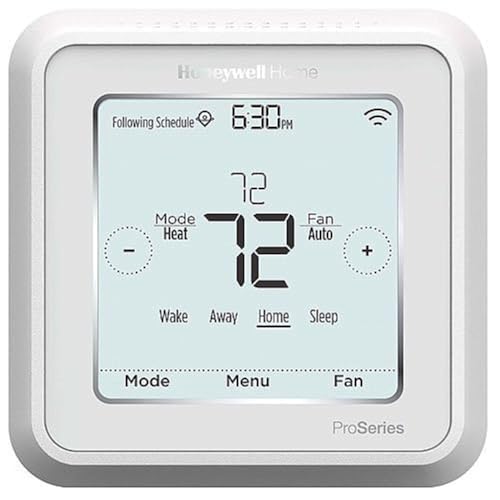
Pros
- Supports heat pumps and conventional systems
- Flexible 7-day and shorter scheduling modes
- Geofencing for location-based control
- Apple HomeKit and Amazon Alexa integration
Cons
- Hardwired installation requires a C-wire
- White finish only

Pros
- Energy Star certified
- Works with conventional systems and heat pumps
- Free C-wire adapter included
- Remote control through iOS and Android app
Cons
- Not compatible with mini split systems
- Remote features depend on the mobile app

Pros
- Dual-stage heating and cooling control
- Supports up to two external sensors
- LoRa range up to 2,034 feet
- Alexa, Google Home, IFTTT, and Home Assistant support
Cons
- Hub required and sold separately
- Requires 24VAC system with C-wire

Pros
- Supports up to 3H/2C heat pump systems
- Works with 2H/2C conventional systems
- 2.4GHz and 5GHz WiFi connectivity
- Alexa and Google Assistant compatible
Cons
- Smart control depends on WiFi connectivity
- White color is the only listed finish
Match the Thermostat to Your HVAC System
Start at the existing wall plate or HVAC documentation. The models in this comparison support different combinations of conventional heating, cooling, and heat-pump stages, so a thermostat that looks suitable may still lack the terminals your system needs. The Honeywell TH6320WF2003 T6 Pro Smart Thermostat and TH2320WF4010/U FocusPRO S200 Smart WiFi both list support up to 3H/2C heat pump and 2H/2C conventional systems.
Heat-pump owners should pay special attention to auxiliary heat and staging. The Cielo Smart Thermostat Eco for Central HVAC lists heat-pump support up to 4H/2C, while the YoLink Thermostat 2, Smart Heat Pump Thermostat supports dual-stage heating and cooling and external sensors. Conventional-system owners may have more flexibility, but the wiring still needs to agree with the thermostat terminals.
Pro Tip: Confirm the number of heating and cooling stages, then photograph the existing wiring before removing the old thermostat.
Wiring, Wi-Fi, and Control Options
Most of these choices require a 24VAC C-wire. The Honeywell Home X2S Smart Wi-Fi Thermostat, White explicitly requires one, while the Cielo model includes a C-wire adapter for homes without one. That adapter can simplify installation, but you should still verify that your HVAC system is supported before connecting anything.
App and platform support also separates the models. The X2S works with Matter, Amazon Alexa, Google Assistant, and Apple HomeKit. The Cielo adds SmartThings, IFTTT, Home Assistant, and Siri Shortcuts, while YoLink requires a hub and uses its LoRa network for remote access. For broader smart-home compatibility, see our smart thermostat category.
| System focus | Key requirement | Useful control |
|---|---|---|
| Heat pump | Stage and auxiliary support | Remote scheduling |
| Conventional HVAC | Correct 24VAC wiring | App or voice control |
| No C-wire | Included adapter option | DIY-friendly setup |
Scheduling and Room Comfort
Geofencing can adjust comfort as your routine changes, while fixed schedules suit households with predictable hours. The Honeywell TH6320WF2003 T6 Pro Smart Thermostat, Honeywell TH6220WF2006/U Lyric T6 Pro Wi-Fi, and FocusPRO S200 each list geofencing or several weekly scheduling formats.
Room-by-room accuracy may matter more in a large or unevenly heated home. YoLink supports up to two optional sensors, and its long-range LoRa protocol is intended for larger homes and challenging spaces. Cielo provides energy-use patterns, vacation mode, and preset Home, Away, and Asleep schedules instead of relying only on manual changes.
Before You Mount It: A thermostat should not be selected by brand name alone. An incorrect stage or power configuration can leave heating or cooling operating improperly, so confirm the HVAC specifications before installation.
I keep seeing homeowners focus on voice control while overlooking the system type printed in the HVAC documentation. The safer approach is to identify conventional versus heat-pump operation first, then choose the smart features that fit your routine.
Expert Examined
From Marcus Bell

The mistake I see most often is treating every wall thermostat as interchangeable because the mounting footprint looks similar. I would keep the old wiring labels, verify the C-wire, and confirm the stage count before making the swap.
Read more about Marcus BellFor broader home-safety planning, the Wi-Fi smoke and carbon monoxide detector options can complement a connected HVAC setup. The U.S. Department of Energy also provides general energy information for homeowners evaluating heating and cooling use.
Which Thermostat Fits Your Lennox Setup
I would point you to the Honeywell TH6320WF2003 T6 Pro Smart Thermostat if your system needs broad stage support, dual-fuel and ventilation control, or Apple HomeKit integration. Its listed support reaches 3H/2C heat pump and 2H/2C conventional configurations, and its UWP mounting system can make it a practical upgrade within the T Series family.
For a lower-complexity conventional or heat-pump installation with a C-wire, I would consider the Honeywell Home X2S Smart Wi-Fi Thermostat, White. Matter support, flexible schedules, auto-away, humidity display, and filter reminders make it appealing when everyday app control matters more than advanced staging.
I would choose the Cielo Smart Thermostat Eco for Central HVAC for a home without a C-wire that still needs central-HVAC compatibility and several smart-home integrations. Its included adapter, vacation mode, energy-use patterns, and support for conventional systems up to 2H/2C make the feature set especially useful for schedule-conscious households.
The Bottom Line
The biggest mistake is assuming a Lennox label guarantees compatibility with every smart thermostat. Stage count, heat-pump operation, auxiliary heat, 24VAC power, and C-wire availability matter more than the logo on the front.
If you do only one thing first, identify your HVAC type and write down every connected terminal. Then compare that information with the thermostat’s listed system support before choosing an app, voice assistant, or scheduling feature.
FAQs
Check whether your Lennox system uses a heat pump or conventional heating and cooling, then confirm the number of heating and cooling stages. Heat-pump systems may also need auxiliary-heat support, so match the thermostat specifications to the HVAC documentation. Several models require a 24VAC C-wire, including the Honeywell Home X2S. The Cielo Smart Thermostat Eco includes a C-wire adapter for homes without one, but you should still verify system compatibility before installation. Use the existing thermostat location only if it represents the home’s typical temperature. Avoid relocating it without checking wiring and installation requirements, and keep the device away from unusual heat or cooling sources that could distort readings. Matter is a communications standard intended to help compatible smart devices work within supported smart-home platforms. It does not replace checking HVAC wiring, stages, or heat-pump compatibility.How do I choose between a conventional and heat-pump thermostat?
Does a smart thermostat need a C-wire?
Where should a thermostat be mounted?
What does Matter certification mean for a thermostat?
Sources
- U.S. Department of Energy, Energy Saver information. www.energy.gov
- National Fire Protection Association, home safety resources. www.nfpa.org