
Installing the best Wi-Fi smoke and carbon monoxide detectors protects your property long before standard sirens reach outside the front door. The critical split centers on whether your ceiling junction boxes already supply AC wiring or require battery power. Choosing the proper ecosystem integration ensures you receive phone notifications without delays or false alarms.
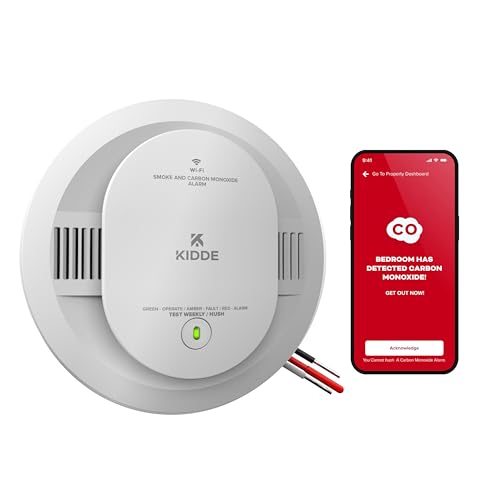
Pros
- Dual detection for smoke and carbon monoxide
- Remote silence control via mobile app
- Certified to UL 217 and UL 2034 standards
- Spoken voice alerts alongside audible alarm
Cons
- Hardwired installation requires existing home wiring
- Requires a 2.4 GHz Wi-Fi network connection

Pros
- Wire-free interconnect sounds every alarm across the home
- Detects both smoke and carbon monoxide
- Real-time alerts via Ring app without subscription
- UL 217 and FCC certified protection
Cons
- AA alkaline batteries require ongoing replacements
- Live monitoring service requires an optional paid subscription

Pros
- Voice alerts announce hazard type and room location
- Quick Connect plug eliminates rewiring for replacements
- Compatible with Google Nest Protect alarms
- Battery backup maintains operation during power outages
- Sends phone alerts through the First Alert app
Cons
- Requires existing AC electrical wiring for installation
- App notifications depend on First Alert app setup

Pros
- Voice warnings announce danger type and location
- Compatible with Google Nest Protect alarms
- Mobile alerts sent through First Alert app
- Precision Detection Technology reduces nuisance alarms
- Low-battery alerts eliminate midnight chirping
Cons
- Requires battery replacements over device lifespan
- Mobile notifications require First Alert app setup
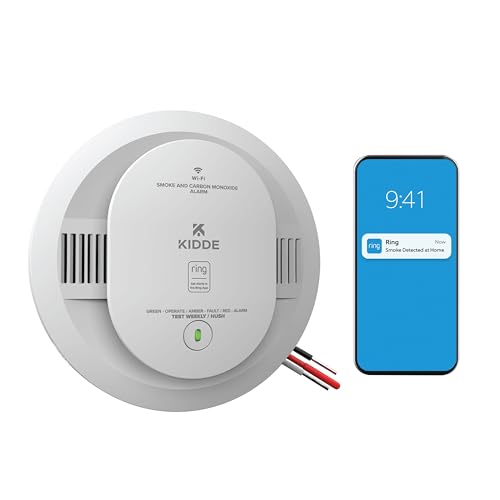
Pros
- Smoke and carbon monoxide double detection
- Free real-time Ring app notifications
- Spoken voice alerts and Alexa compatibility
- UL 217 and FCC safety certified
Cons
- Requires hardwired electrical installation
- 24/7 professional monitoring requires paid subscription
- Uses replaceable AA batteries instead of sealed cell
Power Requirements and Interconnect Wiring
Ceiling wiring dictates your initial hardware selection. Homes built after modern electrical codes feature dedicated three-wire runs triggering all interconnected units when one detects a hazard. If your space lacks junction boxes, wire-free radio frequency units establish shared defense without running cables through attics.
Hardwired models draw household power while housing alkaline backup cells for grid outages. Units running purely on disposable batteries offer flexible mounting on plaster walls but demand routine battery checks. Linking these units with other home safety detection devices prevents remote rooms from staying silent during emergencies.
Check Circuit Loads: Never connect smart interconnected alarms to circuits shared with high-draw appliances or dimmer switches. Electrical fluctuations can induce false alarms or damage internal microprocessors.
Detection Sensors and Nuisance Prevention
Modern dual-sensor units combine optical smoke chambers with electrochemical carbon monoxide cells. Older sensors often mistook cooking steam for active flames, prompting occupants to disable them. Advanced firmware analyzes particle density, sharply reducing nuisance triggers while satisfying standards from the National Fire Protection Association.
Electrochemical cells identify odorless carbon monoxide escaping from cracked furnace exchangers or blocked water flues. Because carbon monoxide disperses evenly throughout living spaces, combination units provide reliable coverage when positioned along primary hallways. Reading our safety blog provides further insight into seasonal furnace maintenance and ventilation checks.
Expert Examined
From Ray Okafor

I frequently see homeowners silence an alarm through their phone and assume cooking smoke caused it without verifying the air quality. If a detector signals elevated carbon monoxide alongside minor smoke particles, evacuate the home immediately instead of opening a window.
Read more about Ray OkaforSmart Ecosystems and Mobile Alerts
App architecture determines how alerts reach your phone during an incident. Some hardware communicates directly over local wireless networks, while other models route telemetry through platforms like Ring or Google. Selecting units compatible with your existing home security systems lets you manage sirens and perimeter sensors within one interface.
| Power Source | Interconnect Method | Mounting Location |
|---|---|---|
| Hardwired AC | Three-wire or Wi-Fi | Hallways near bedrooms |
| Battery Only | Radio frequency mesh | Spaces lacking wall wiring |
| Hybrid Backup | Hardwire and wireless | Replacement of older units |
Voice alerts provide critical guidance during night emergencies by stating the specific danger and room of origin. Sleeping children wake more reliably to spoken warnings than harsh electronic sirens. Mobile hush capabilities allow you to cancel cooking alarms from your smartphone rather than balancing on chairs.
Verify Wireless Range: Test your Wi-Fi signal strength at the exact ceiling installation point before drilling mounting brackets. Weak reception accelerates backup battery drain because the internal radio continuously searches for your router.
Selecting the Detector for Your Home Layout
For households with pre-existing three-wire ceiling junction boxes, I would point you directly to the First Alert SC5 Hardwire Smart Smoke & Carbon. The quick connect plug eliminates tedious rewiring during installation, while the integrated voice alerts with Heads-Up warnings clearly announce the specific hazard and room location. Compatibility with Google Nest Protect units makes it particularly valuable if you are expanding an existing safety network without discarding functional equipment already mounted throughout the house.
If your property lacks pre-wired ceiling boxes, I recommend the wire-free Kidde Smart Smoke Detector with Ring, AA Battery because it operates on standard alkaline cells and links directly with Ring setups. Alternatively, if your home already features standard hardwired alarms, adding just one Kidde Hardwired Kidde App Enabled Smart Smoke upgrades that entire interconnected electrical circuit to your smartphone, enabling real-time app notifications, low battery warnings, and remote hush capabilities without replacing every ceiling fixture.
The Bottom Line
The single mistake most homeowners make is assuming every smart detector connects to any existing alarm system or app ecosystem. Mixing incompatible brands on a hardwired line can disable interconnected triggering, leaving distant rooms completely silent when smoke accumulates elsewhere.
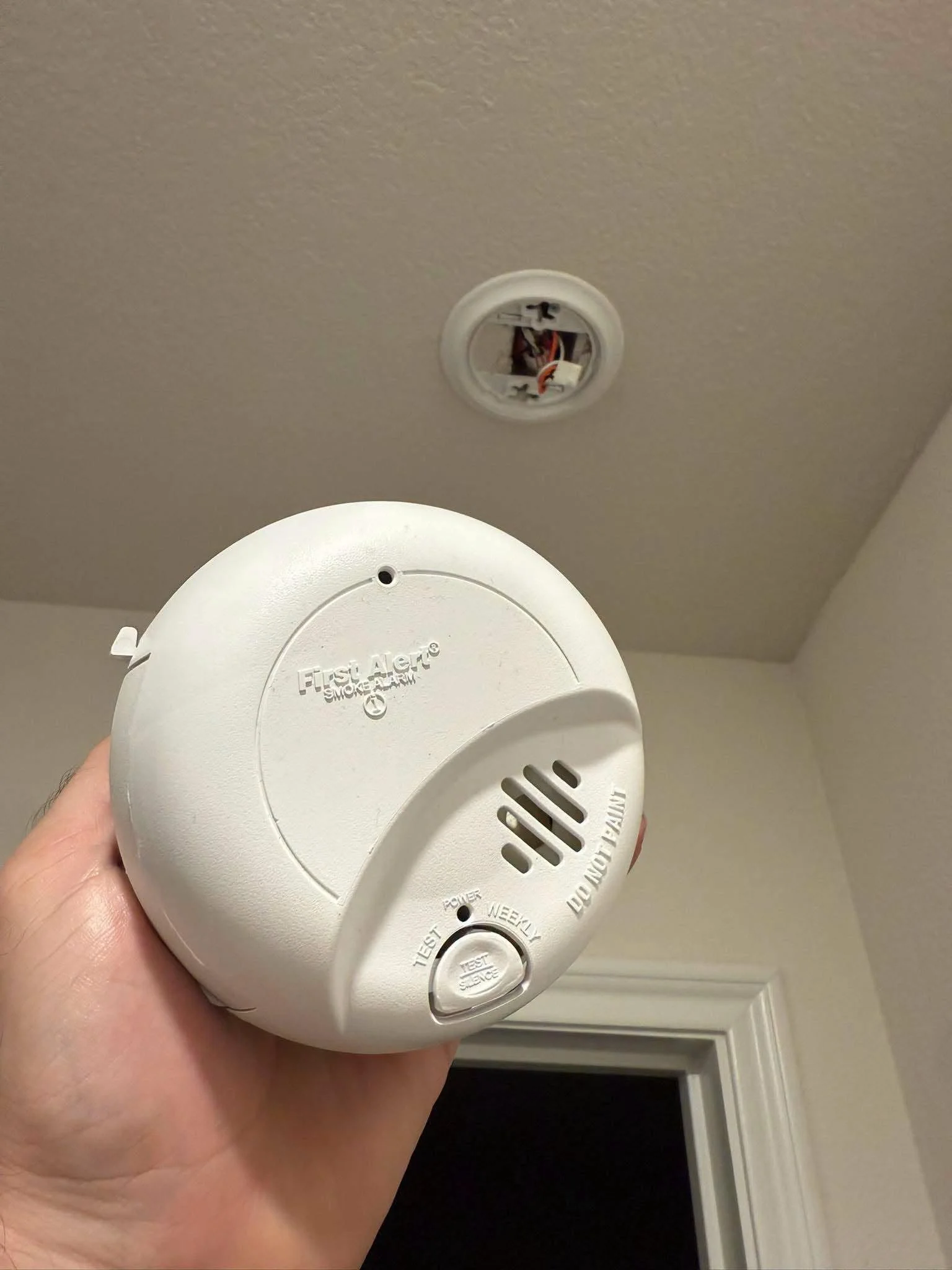
Start by unmounting one current ceiling unit to confirm whether you have hardwired connectors or standalone battery brackets. Replace the unit outside your primary sleeping quarters first, ensuring you receive audible voice warnings and instant mobile notifications where you need them most.
FAQs
Do Wi-Fi smoke and CO detectors still sound an alarm without internet?
Yes. The physical siren and local interconnected triggering operate completely independently of your home network. Internet connectivity is only required to push mobile notifications to your smartphone, update device status logs, and silence nuisance alerts through the app.
Can I mix different brands of smart detectors on the same hardwire line?
No. Hardwired interconnect lines rely on manufacturer-specific signaling voltages to trigger secondary alarms across rooms. Mixing brands on the same physical traveler wire can damage internal circuit boards, trigger continuous nuisance alarms, or prevent other units on the circuit from sounding during an emergency.
Where should combination smoke and carbon monoxide alarms be installed?
Mount units on ceilings or high on walls outside every separate sleeping area and on every level of your house. Keep them at least ten feet away from cooking appliances and bathrooms to prevent nuisance triggers from kitchen cooking vapors or shower steam.
How often do smart smoke and carbon monoxide detectors need replacement?
Combination units require replacement every seven to ten years from the manufacture date stamped on the back plate. While photoelectric smoke sensors often last a full decade, the internal electrochemical carbon monoxide sensor degrades and loses chemical sensitivity over time.
Sources
- National Fire Protection Association www.nfpa.org
- U.S. Consumer Product Safety Commission www.cpsc.gov
- UL Solutions Standards www.ul.com