
Choosing the best smart thermostats for garage heater starts with identifying the heater’s voltage and wiring, not picking an app. This selection suits homeowners deciding between 120V to 240V models for electric baseboards, convectors, or fan-forced heaters.

Pros
- Works with 120V to 240V electric heating
- Humidity sensor and touchscreen
- Scheduling and geofencing support
- Apple Home, Alexa, and Google compatible
Cons
- Requires a neutral or second live wire
- Limited to electric baseboards and fan-forced heaters
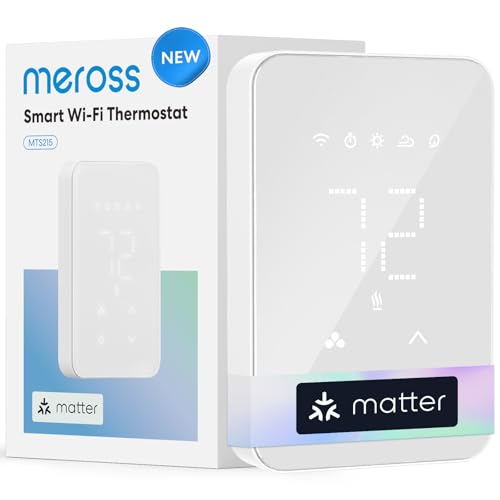
Pros
- Supports 120 to 240V electric heating
- Matter compatibility across major smart-home platforms
- 24/7 scheduling for automated temperature control
- Real-time and historical energy monitoring
Cons
- Not compatible with 24V HVAC systems
- Requires Wi-Fi for remote app control

Pros
- 1°F temperature accuracy
- Works with Apple Home, Alexa, and Google Home
- 7-day programmable heating schedule
- Energy monitoring with historical reports
Cons
- Requires four or more installation wires
- Electric baseboard heater not included

Pros
- WiFi programming through the Hoot smartphone app
- Large LCD touchscreen display
- 120/208/240V multi-volt compatibility
- Thermistor control accurate to ±1°F
Cons
- Requires double-pole, four-wire installation
- Temperature range limited to 41°F to 90°F

Pros
- Works with 120, 208, or 240V systems
- Hoot smartphone app programming
- Large LCD touchscreen display
- Thermistor control accurate to plus or minus 1°F
Cons
- Single-pole, three-wire installation required
- Temperature range limited to 41°F to 90°F
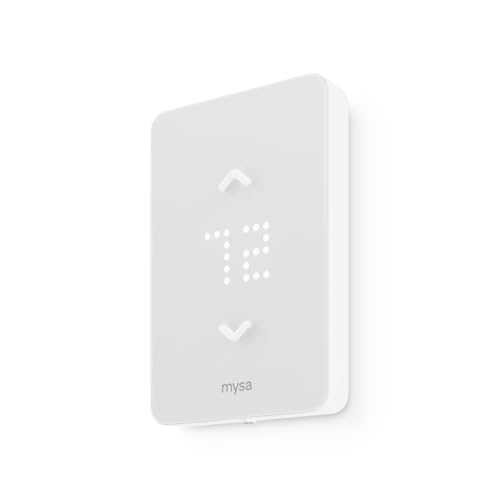
Pros
- Supports 120V and 240V electric heating
- 7-day scheduling with no subscription
- HomeKit, Alexa, and Google compatibility
- Remote control, geofencing, and vacation mode
Cons
- Requires four wires, including neutral or second live
- Not compatible with 24V furnaces or heat pumps
Match the Thermostat to the Heater
A garage heater may use a high-line-voltage circuit rather than the 24V wiring found in many central HVAC systems. The meross Matter Smart Thermostat for Electric specifically excludes 24V HVAC equipment, while the listed Mysa and KING models are also aimed at line-voltage heating. Confirm the heater label and thermostat wiring before ordering.
Wire count is the next major split. Mysa Smart Thermostat V2 for Electric Baseboard requires one neutral or a second live wire, and Mysa Smart Thermostat LITE for Electric Baseboard requires four wires including a neutral or second live wire. The standard meross Smart Thermostat for Electric Baseboard requires four or more wires, while KING offers separate single-pole and double-pole configurations.
Before You Wire: Turn off power at the breaker and use an electrician if high-voltage wiring or local code requirements are outside your comfort level.
Choose Controls That Suit the Space
Remote control is useful when the garage is detached, infrequently occupied, or slow to warm. Mysa provides Android and iOS control, while the meross models add app access and broad smart-home compatibility. The Matter model works with Alexa, Apple Home, Google Home, and SmartThings at the same time.
Scheduling can prevent a heater from running continuously. The meross models provide a visual seven-day schedule, KING supports four or six daily periods, and Mysa LITE includes seven-day scheduling, geofencing, away settings, and vacation mode. For additional smart-home ideas, see our smart thermostat category.
| Control type | Wiring focus | Useful setting |
|---|---|---|
| Matter model | 120V to 240V | Open-window pause |
| Mysa models | Neutral or second live | Geofencing |
| KING models | Single or double pole | Temperature lock |
Consider Monitoring and Heater Protection
Energy visibility can matter in a garage because heating demand may be easy to overlook. Both meross models report electricity consumption through the app, and the standard meross model also supports open-window detection and automation triggers. Those features can help you notice unusual usage without relying only on the wall display.
Display and temperature controls vary. KING models use large LCD touchscreens, temperature locks, and over-the-air firmware upgrades. Mysa V2 adds a humidity sensor and touchscreen, while Mysa LITE uses on-device buttons and connects to 2.4 GHz WiFi.
Expert Examined
From Marcus Bell

I keep the wire check ahead of every smart-heater decision. The mistake I see is choosing by app compatibility before confirming the circuit type, wire count, and pole arrangement, so start at the electrical box instead.
Read more about Marcus BellIf you are also planning other connected equipment around the property, our coverage of WiFi smoke and carbon monoxide detectors can help separate safety monitoring from temperature control.
Which Thermostat Fits Your Garage
I would point you to the meross Matter Smart Thermostat for Electric when your 120V to 240V electric heater has compatible wiring and your home uses several smart-home platforms. Matter support, energy monitoring, open-window detection, and visual scheduling give it a broad feature set without locking you into one voice assistant.
I would choose the Mysa Smart Thermostat V2 for Electric Baseboard for a garage where a touchscreen, humidity sensor, mobile control, and geofencing matter. Its stated compatibility with electric baseboards and fan-forced heaters still depends on having a neutral or second live wire.
For a single-pole installation, I would consider the Mysa Smart Thermostat LITE for Electric Baseboard. It includes scheduling, remote control, voice control, geofencing, and vacation features without a subscription, but you should confirm the four-wire requirement and heater wattage before purchase.
The Bottom Line
The mistake most garage-heater buyers make is treating every thermostat as interchangeable. These products target high-voltage electric heating, but their wire requirements, pole arrangements, load limits, and control features differ.
If you only do one thing first, switch off the breaker and identify the heater voltage, wire count, and pole arrangement from the existing installation. Then select a model whose stated requirements match those details, and consult the U.S. Consumer Product Safety Commission for general electrical safety information.
FAQs
A compatible line-voltage electric heater may work with one of these models, but compatibility depends on voltage, heater type, wire count, pole arrangement, and load. Do not assume a thermostat made for 24V HVAC equipment will work with a 120V or 240V heater. Requirements vary by model. Mysa models specify a neutral or second live wire, the standard meross model requires four or more wires, and KING offers single-pole and double-pole versions. Inspect the existing box before ordering. Several listed products state compatibility with electric fan-forced heaters, including Mysa and meross models. Confirm the heater’s voltage and wiring against the exact thermostat requirements rather than relying only on the heater’s name. A certification or safety mark indicates that a product may have been evaluated against particular requirements, but the mark does not guarantee compatibility with your heater. Check the exact product documentation and local electrical requirements before installation.Can I use a smart thermostat with a garage heater?
What wiring does a garage thermostat need?
Can a thermostat control a fan-forced garage heater?
What does a thermostat certification mean?
Sources
- National Fire Protection Association. www.nfpa.org
- UL Solutions. www.ul.com
- U.S. Consumer Product Safety Commission. www.cpsc.gov