
Installing the best smart plugs for outdoor lights means matching weather protection and outlet layout before choosing an app. The main split is between one grounded outlet, several independently controlled outlets, and an indoor plug that should stay sheltered. You need a practical fit for landscape lighting, patio fixtures, holiday displays, or garden equipment.

Pros
- Four-pack of compact smart plugs
- Alexa and Google Assistant voice control
- Bluetooth or WiFi connection
- Schedules and group controller
- ETL and FCC certified
Cons
- 2.4GHz WiFi only
- Requires the Govee Home app
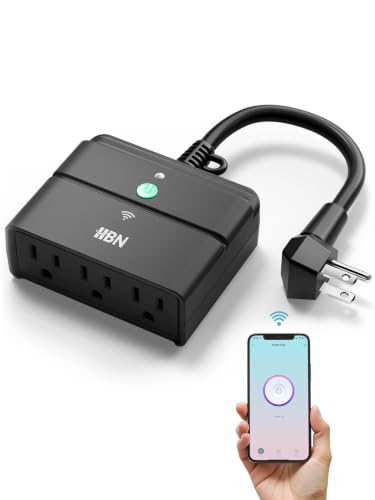
Pros
- Three independently controlled outlets
- Alexa and Google Assistant compatible
- IP44 weatherproof for outdoor use
- 1875W resistive, 15A capacity
Cons
- Requires secured 2.4 GHz WiFi
- Must be mounted at least 2 feet high

Pros
- IP64 weather resistance with protective cover
- 15A/1875W capacity
- Alexa, Google Home, SmartThings compatible
- Schedules and sunset/sunrise offsets
Cons
- Requires 2.4GHz Wi-Fi
- Setup and remote control use the Kasa app

Pros
- Alexa and Google Assistant voice control
- Remote control through three compatible apps
- Schedules and timers for connected devices
- Group control and family sharing
- ETL and FCC listed
Cons
- 2.4GHz WiFi only
- Alexa and Google setup requires the GHome app first

Pros
- Alexa and Google Assistant voice control
- Remote control through three compatible apps
- IP44 weatherproof outdoor housing
- 15A, 1875W resistive heavy-duty rating
Cons
- Requires secured 2.4GHz Wi-Fi
- Must stay at least 2 feet off ground

Pros
- Matter support for major smart home platforms
- 15A/1800W capacity
- Remote app control from anywhere
- Voice control with Siri and Alexa
- Timers and schedules for automation
Cons
- Requires 2.4GHz Wi-Fi and IPv6
- Hub required for most Matter platforms
Outdoor protection matters first
For lights exposed to rain or splashing, start with the weather rating rather than voice compatibility. The Smart Plugs & Outlets category includes both indoor-oriented models and outdoor plugs, so do not assume every compact Wi-Fi outlet belongs beside a walkway.
The HBN Outdoor Smart Plug, WiFi Smart Outlet Plug has an IP44 rating and three independently controlled sockets. The Kasa Outdoor Smart Plug KP401 raises that distinction with IP64 protection, a cover for the unused plug, and a stated Wi-Fi range of up to 300 feet. Both manufacturers specify keeping outdoor units at least two feet above ground with the plug pointing downward.
Before You Mount It: Do not leave an outdoor plug resting on wet ground or point its connection upward. Follow the placement direction supplied for the model, and keep the connected lighting load within its stated rating.
One outlet or several control zones
A single outlet suits one lighting group, such as a porch display or fountain light. The HBN Outdoor Smart WiFi Plug provides one grounded outlet per plug and comes as a two-pack, which can help when separate locations need their own schedules.
Three outlets are more useful when landscape lights, patio accents, and seasonal decorations need different routines. HBN lists independent control for each socket, while Kasa supports schedules, countdown timers, and sunrise or sunset offsets. Those details matter more than having the largest number of voice assistants.
| Device type | Key distinction | Best placement |
|---|---|---|
| Single outdoor outlet | One grounded load | One lighting group |
| Three-outlet outdoor plug | Independent sockets | Several light zones |
| Indoor compact plug | No outdoor rating stated | Sheltered location |
Scheduling, Wi-Fi, and platform fit
Outdoor lighting usually benefits from automatic timing, especially dusk-to-dawn routines. Kasa offers sunrise and sunset offsets, and both HBN outdoor models support scheduled on and off times. Check that your network uses 2.4 GHz, because the outdoor HBN plugs and Kasa KP401 require that band.
Indoor options can still work for a covered, dry location. Govee supports Bluetooth or Wi-Fi, Alexa and Google Assistant, group control, and schedules, while GHome Smart supports its own app plus Smart Life and Tuya. For Apple Home, Alexa, Google Home, or SmartThings users who already have a compatible controller, Linkind Matter Smart Plug, Work with Apple Home adds Matter-based local network control.
The Smart Sensors & Home Automation section is useful if the plug will become part of a wider automation setup. Matter is not the same as universal operation without requirements: Linkind specifies a Matter-certified hub or controller for several listed platforms, though its AiDot app can operate without one.
Pro Tip: Set the schedule around the actual lighting purpose, such as sunset for pathway lights and a later shutoff for decorative displays. Group only fixtures that should always change together.
Ratings and safe load planning
Electrical ratings help you avoid pairing a plug with equipment beyond its intended capacity. HBN lists 15A and 1875W resistive ratings for its outdoor models, Kasa lists 15A and 1875W, and Linkind lists 15A and 1800W. Govee is rated at 10A and 1200W, so its smaller capacity deserves attention when several devices share a circuit.
Certification labels also need careful interpretation. ETL and FCC listings appear across these products, but they do not make an indoor model weatherproof. For broader electrical safety information, consult UL Solutions and follow the product directions for placement, network setup, and connected loads.
Expert Examined
From Marcus Bell

I keep the controller close to the protected side of an outdoor connection whenever possible. The mistake I see is treating a weather rating as permission to leave every joint exposed, so I keep the plug elevated and make sure the lighting connection itself is suitable for outdoor use.
Read more about Marcus BellWhich plug fits your lighting layout
I would point you to HBN Outdoor Smart Plug, WiFi Smart Outlet Plug when three outdoor lighting zones need separate schedules. Its three independently controlled sockets, IP44 weatherproofing, Alexa and Google Assistant support, and sunrise or sunset scheduling fit a patio or garden with several distinct groups.
For a single outdoor lighting run, I would choose related safety information only as a reminder that a smart plug does not replace appropriate household safety equipment, then select Kasa Outdoor Smart Plug KP401. Its IP64 rating, attached cover, 15A/1875W capacity, long stated Wi-Fi range, and sunrise or sunset offset make it a strong fit for a covered or exposed lighting point.
I would reserve HBN Outdoor Smart WiFi Plug for homes that need separate locations rather than separate sockets at one location. Its two-pack, grounded outlet per plug, weatherproof design, and compatibility with HBN Smart, Smart Life, and Tuya give you flexible placement across a yard.
The Bottom Line
The mistake most buyers make is choosing an indoor plug because it has the right voice assistant, then placing it where rain or splash can reach it. Outdoor lighting calls for a weather-rated model, correct orientation, and a load that stays within the stated electrical limits.
If you do only one thing first, map every light group and mark which locations are exposed. Then choose between a single grounded outlet, a multi-outlet unit with independent controls, or a sheltered indoor plug before comparing schedules and smart-home platforms.
FAQs
An indoor plug should remain in a dry, sheltered location unless its product information specifically gives it an outdoor rating. The outdoor cable and connection also need protection appropriate for the location, not just a smart outlet with app control. A model with independently controlled outlets is the better match when separate lighting groups need different schedules. The HBN Outdoor Smart Plug, WiFi Smart Outlet Plug has three independently controlled sockets and supports scheduled operation. The outdoor models listed here require a secured 2.4 GHz Wi-Fi connection and do not support 5 GHz networks. Check signal strength at the planned location before mounting the plug, especially when the outlet is far from the router. They identify the product’s stated protection against solids and water exposure, but they do not mean the plug can sit in standing water. Keep the unit elevated, point the connection downward, and follow the placement instructions supplied with it. ETL certification indicates that a product has been assessed against applicable safety requirements by an approved testing organization, while FCC requirements concern electromagnetic emissions. Neither label by itself makes an indoor plug suitable for outdoor placement.Can an indoor smart plug control outdoor lights?
Which outdoor smart plug is best for multiple light zones?
Do outdoor smart plugs need a special Wi-Fi network?
What do IP44 and IP64 mean for outdoor plugs?
What do ETL and FCC certifications indicate?
Sources
- UL Solutions www.ul.com
- US Consumer Product Safety Commission www.cpsc.gov