
Installing the best wireless smoke detector systems solves the dangerous dead zone problem where a basement fire fails to wake someone sleeping upstairs. The primary divide sits between standalone radio frequency units and app-enabled gateways that send phone notifications. Property layout and remote monitoring preferences dictate which setup fits your household.

Pros
- Dual-wavelength photoelectric sensor minimizes nuisance cooking alarms
- Built-in ten-year sealed lithium battery requires no swapping
- Tool-free magnetic mounting pad simplifies renter setup
- Certified to updated UL217 tenth edition standards
Cons
- No carbon monoxide detection included
- Lacks wireless or hardwired interconnect features
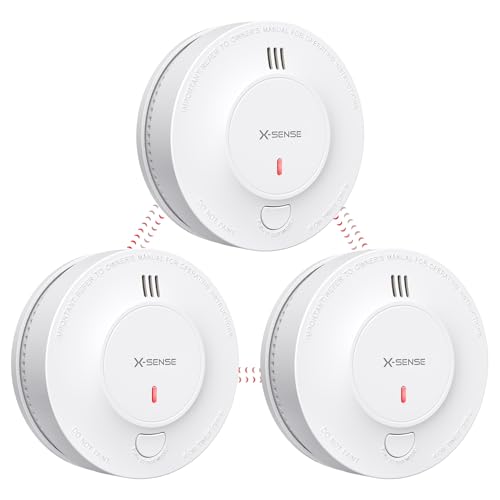
Pros
- Wireless interconnect for up to 18 Link+ units
- Sealed 10-year lithium battery eliminates replacements
- ETL listed to UL 217 safety standard
- Photoelectric sensor helps reduce false alarms
Cons
- Lacks built-in carbon monoxide detection
- Silencing remote control sold separately

Pros
- Sealed 10-year battery eliminates annual swaps
- Photoelectric smoke and electrochemical CO sensors
- Wireless interconnection covers up to 820 feet
- Certified to UL 217 and UL 2034 standards
Cons
- Lacks Wi-Fi connectivity for phone notifications
- Battery operation only with no hardwired option

Pros
- Compact 2.7-inch diameter takes minimal ceiling space
- 915MHz wireless interconnect links units without running wire
- Dual-LED photoelectric sensor reduces cooking false alarms
- Certified to latest UL 217 10th Edition standard
Cons
- Lacks integrated carbon monoxide detection
- Single pack requires buying extra alarms to link

Pros
- Hardwired interconnect links up to 12 alarms
- Photoelectric sensor reduces nuisance cooking alarms
- UL217 listed with ten-year operating life
- Includes 9V battery backup for power outages
- Ten-hour silence mode for low-battery chirps
Cons
- Requires existing wiring rather than battery-only setup
- Uses replaceable 9V cells rather than sealed lithium
- No integrated carbon monoxide detection

Pros
- UL 217 10th Edition certified dual-beam photoelectric sensor
- 10-year CR123A lithium battery eliminates annual swaps
- Wirelessly interconnects up to 24 units locally
- Includes 2.4GHz gateway for mobile app alerts
- Tool-free magnetic mounting pads included
Cons
- Gateway incompatible with 5GHz Wi-Fi bands
- Lacks built-in carbon monoxide detection
Radio Frequency Linkage Versus Wi-Fi Hubs
Wireless units eliminate the need to run interconnect cables behind drywall. Most standard setups rely on dedicated 915MHz radio frequencies to link alarms directly. When one sensor detects smoke, it broadcasts an RF pulse triggering every paired unit. Because these local signals bypass your router, a home network outage will not break communication between alarms.
Smart detector kits add a 2.4GHz gateway to that local radio mesh. This hub translates the emergency signal into an instant mobile app push alert. Families who travel and rental property owners gain immediate awareness from anywhere. Exploring general home safety and detection equipment reveals why off-site notifications prove critical for unoccupied homes.
Interconnection Trap: Never assume wireless alarms communicate across different brands. Interlinked units must share identical radio protocols to trigger together, meaning you cannot mix mismatched hardware expecting whole-home coverage.
Coverage Protocols and Installation Layouts
Signal reach defines how effectively hardware protects sprawling floor plans. High-capacity RF systems span up to 820 feet across open space, penetrating walls to link detached garages and basements. Positioning linked units in sleeping zones and across every level guarantees rapid sound distribution.
The table below summarizes primary interconnect formats used in residential properties:
| System Type | Signal Method | Primary Placement |
|---|---|---|
| Local RF Network | 915MHz Radio | Bedrooms and Hallways |
| Smart Gateway Kit | RF plus Wi-Fi | Multistory and Rentals |
| Hardwired Interlink | Physical 3-Wire Cable | New Construction |
Hardwiring remains standard in new builds, but retrofitting existing ceilings creates costly repairs. Modern wireless networks match that simultaneous siren response without sheetrock damage. Pairing these detectors alongside broader home security systems ensures fire and physical intrusion receive equal protection.
Expert Examined
From Marcus Bell

The mistake I see most often in two-story houses is treating standalone battery alarms as adequate. A closed bedroom door blocks out an 85-decibel siren sounding downstairs, so linking the units is what actually provides sufficient escape time.
Read more about Marcus BellSensor Standards and Nuisance Alarm Resistance
Modern detection relies on photoelectric chambers that identify smoldering fires before open flames spread. Guidelines from UL Solutions require updated 10th Edition alarms to resist nuisance triggers caused by cooking smoke. Dual-wavelength optical sensors differentiate between kitchen steam and synthetic room fires, drastically reducing false sirens.
Older ionization detectors prompted homeowners to disable alarms during routine cooking, leaving properties unprotected. Modern photoelectric chambers solve this safety hazard. Research from the National Fire Protection Association indicates working alarms cut fatal risks in half, making false alarm reduction crucial for long-term safety.
Interconnection Verification: Pair all units on a central table before mounting them on walls or ceilings. Activating the check button on one unit should trigger the sirens across every paired device within seconds.
Selecting the Right System for Your Layout
Your home footprint and whether you require remote notifications dictate the ideal choice. For multi-level homes needing combined fire and gas coverage, I would point you to the X-Sense Interconnected Smoke and CO Detector. It combines photoelectric smoke detection with an electrochemical carbon monoxide sensor, linking up to 18 units across an 820-foot range to protect distant bedrooms.
If you manage a rental or need off-site alerts, I recommend the Heiman Smart Wireless Interconnected Smoke. Its 2.4GHz gateway routes alerts directly to your phone while meeting UL 217 10th Edition standards. For dependable, wire-free fire alerts on a budget, the X-Sense Interconnected Smoke Detector delivers multi-room linkage with a sealed 10-year battery. You can review similar protection strategies in our best home security systems review.
The Bottom Line
The single biggest mistake buyers make is purchasing unlinked alarms to save money. A detector sounding on the main floor rarely wakes a sleeper behind a closed bedroom door upstairs. Without interconnection, critical evacuation minutes disappear.
If you take only one step today, map out your ceiling layout before purchasing hardware. Ensure you have enough alarms to cover every bedroom, sleeping hallway, and living level. Further residential safety advice is available across our safety blog articles.
FAQs
Do wireless interconnected smoke alarms require Wi-Fi to sound together?
No, standard wireless interconnected detectors communicate using local radio frequencies like 915MHz. They form an independent mesh network that activates all sirens simultaneously even if your home Wi-Fi goes down or your power fails. Wi-Fi is only required if you use an optional smart gateway for remote smartphone alerts.
What does the UL 217 10th Edition certification mean?
The UL 217 10th Edition standard mandates advanced resistance against false alarms caused by cooking vapors while improving responsiveness to slow, smoldering synthetic fires. Alarms meeting this standard feature sophisticated dual-wavelength or dual-beam optical sensors designed to prevent nuisance alarms near kitchen areas.
Can I link wireless smoke detectors from different brands?
Wireless alarms from different manufacturers will not communicate with each other because brands utilize proprietary radio frequencies and encryption protocols. To build a functioning interconnected system, you must select units from the same brand and product family that share compatible linkage software.
How far apart can wireless smoke detectors be placed?
Most modern RF smoke detector systems cover open-air transmission distances between 200 and 820 feet. In real-world homes, walls and floors reduce that range, so maintaining clear signal paths across hallways and stairwells ensures uninterrupted communication between levels.
Sources
- National Fire Protection Association www.nfpa.org
- UL Solutions www.ul.com
- U.S. Fire Administration www.usfa.fema.gov