
Installing the best wireless interconnected smoke detectors eliminates the dangerous silence between distant bedrooms and remote basement utility areas. The real hurdle is deciding whether to bridge existing electrical lines or switch to pure battery units. Homeowners retrofitting older houses without open drywall need a reliable signal that operates across every level without rewiring.

Pros
- Configurable NO and NC relay contacts
- Triggers auxiliary bells, sirens, and stairwell lights
- Dedicated 9V DC output for auxiliary sensors
- Compact casing fits into standard junction boxes
Cons
- Not a standalone alarm, requires existing detectors
- Hardwire interconnect line required for operation

Pros
- UL 217 10th Edition certified photoelectric sensor
- Open-air interlink range reaching up to 2,034 feet
- Local device-to-device alerts continue during Wi-Fi outages
- Monitors rapid temperature shifts within two minutes
- App-based scheduling for remote self-tests and silence
Cons
- YoLink Hub required separately for app connectivity
- Battery life limited to five years maximum
- Compatible accessories and sirens sold separately

Pros
- Wireless interconnect links up to 12 alarms
- Spoken voice warnings alongside 85 dB horn
- Dual 120V AC power with AA battery backup
- Meets UL 217 10th Edition safety standards
Cons
- Requires 120V hardwiring at install location
- AA backup batteries require routine replacement

Pros
- Precision Detection cuts down cooking nuisance alarms
- Interconnect triggers all compatible alarms together
- Visual indicator pinpoints the initiating unit
- Quick Connect Plug speeds up replacement installation
- Battery backup maintains coverage during outages
Cons
- Requires existing AC wiring, no battery-only operation
- Lacks integrated carbon monoxide detection
- Bulk twelve-pack format exceeds single-room needs
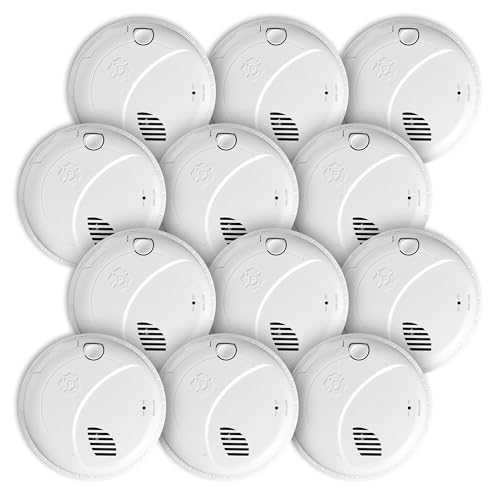
Pros
- Voice and location alerts specify hazard areas
- Precision Detection technology reduces cooking nuisance alarms
- Battery backup maintains operation during power outages
- Interconnects across compatible First Alert and BRK alarms
Cons
- Requires hardwired electrical connections
- No integrated carbon monoxide detection
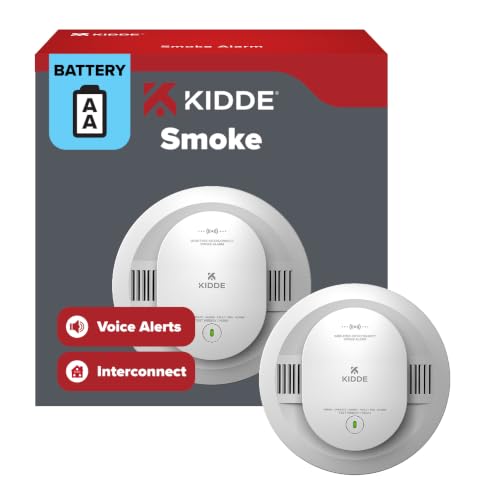
Pros
- Wireless interconnect for up to 12 alarms
- Voice alerts paired with loud 85 dB alarm
- Certified to UL 217 10th Edition standard
- No wiring needed, two AA batteries included
- Ten year limited warranty coverage
Cons
- Detects smoke only, no carbon monoxide sensor
- Requires periodic AA battery replacements over time
Radio Frequencies and Transmission Obstacles
Wireless alarms share status signals through radio frequency links instead of physical copper travelers. Signals must push through drywall, masonry, and floor joists to trigger adjacent units. The standard requires an initiating alarm to broadcast immediately to alert sleepers separated by closed doors, as outlined by the National Fire Protection Association.
Standard radio frequency networks handle typical floor plans, but split levels or detached structures can drop weaker transmissions. Long-range protocols extend communication across hundreds of feet without separate repeaters. You can integrate these units alongside home safety detection devices to protect remote outbuildings where standard sirens go unheard.
Interconnect Pairing: Pair every wireless alarm on a flat surface in the same room before mounting them to walls or ceilings. Confirming the group link at ground level prevents climbing ladders twice if an alarm fails to enroll.
Power Source Selection for Retrofits and Additions
Older properties frequently lack three-wire interconnect cables connecting ceiling junction boxes. Battery-powered wireless units solve this barrier by running on replaceable AA cells or long-life packs. They communicate across an internal radio group, eliminating the wall damage of pulling wire through finished ceilings.
Hybrid installations mix hardwired circuits on main levels with wire-free alarms in attic or basement conversions. Combining physical wiring with wireless transmitters ensures newly finished areas meet safety codes. Many households connect these zones alongside monitored home security systems for off-site mobile alerts.
| Power Type | Signal Method | Best Placement |
|---|---|---|
| Pure Battery | Wireless Radio | Unwired Additions |
| Hardwired Hybrid | Wire and Radio | Remodeled Levels |
| Auxiliary Relay | Wired Contact | External Sirens |
Interconnect Compatibility: Never cross-wire physical interconnect circuits between different equipment manufacturers. Combining incompatible signaling voltages can fry internal circuit boards or prevent grouped units from activating during a fire emergency.
Detection Standards and Audible Alerts
Current manufacturing standards require smoke alarms to differentiate synthetic fire hazards from normal cooking vapor. Detectors certified to the UL 217 10th Edition standard react quickly to burning polyurethane foam while resisting nuisance trips. Upgrading older hardware to this standard eliminates the dangerous urge to disable nuisance units.
Audible voice warnings provide critical clarity beyond standard 85-decibel pulsing tones. A verbal announcement stating fire helps occupants select a safe egress route immediately. You can check our general safety blog for additional family escape advice.
Expert Examined
From Marcus Bell

I keep seeing homeowners silence nuisance alarms by removing batteries, leaving entire bedrooms unprotected for weeks. Choosing detectors with clear voice prompts and remote hush features stops this habit because family members can verify the room before turning off the horn.
Read more about Marcus BellChoosing the Right Hardware for Your Floor Plan
If you have a detached garage, outbuilding, or expansive floor plan, I would point you to the YoLink Photoelectric Smoke Detector. Its long-range LoRa protocol covers up to 2,034 feet in open air and maintains local alarm-to-alarm communication during internet outages, while the rapid temperature alerts flag sudden heat spikes between 9 and 36 degrees.
For homes with existing wiring that need to expand into new renovations or basements, I recommend the Kidde Smoke Detector, Hardwired & AA Battery. It wires directly to 120V circuits, includes AA backup power, and bridges wirelessly with up to 12 compatible alarms so new unpowered zones link into the main electrical network.
In rooms lacking junction boxes entirely, I suggest pairing that setup with the Kidde Smoke Detector, AA Battery-Powered. It runs on two included AA batteries, speaks voice alerts alongside its 85-decibel horn, and synchronizes with your existing Kidde wire-free units without pulling a single foot of wire.
The Bottom Line
The most common mistake is mounting wireless alarms straight out of the box without enrolling them into a shared network group. An unlinked detector remains an isolated unit, leaving upstairs bedrooms completely silent when a utility room fire starts downstairs.
Audit your ceilings first to verify which rooms have electrical wiring and which need battery hardware. Choosing one matching manufacturer across all locations ensures reliable wireless signaling when an emergency occurs.
FAQs
No, wireless smoke detectors from different brands use distinct radio protocols and frequencies. While all units sound an audible horn locally, they cannot transmit activation signals across brands. Stick to one manufacturer and product family to ensure every alarm sounds simultaneously during a fire. Most standard wireless detectors communicate reliably through walls and floors up to fifty feet apart in residential settings. Advanced protocols like LoRa can reach across several hundred feet, even connecting outbuildings or detached garages. Always verify communication from your furthest room before securing the mounting plates. The UL 217 10th Edition standard is an updated fire safety guideline designed to reduce false alarms from cooking steam. It also requires sensors to detect fast-burning synthetic materials found in modern furnishings. Units meeting this certification reduce kitchen nuisance trips while improving escape detection times. Yes, battery-powered wireless alarms function normally during power outages because their internal cells supply both detection and radio transmission power. Hardwired wireless hybrid models include AA or lithium backup batteries that keep the sensor and interconnect signal active if household electricity drops.Can you mix wireless interconnected alarms from different brands?
How far apart can wireless interconnected smoke detectors be placed?
What does the UL 217 10th Edition standard mean for smoke alarms?
Will wireless interconnected smoke detectors work during a power outage?
Sources
- National Fire Protection Association www.nfpa.org
- Underwriters Laboratories Standards www.ul.com
- US Fire Administration www.usfa.fema.gov