
Property owners shopping for the best smart thermostats for short term rental should start with HVAC compatibility, not app features. The key split is between central-system thermostats, mini-split controllers, and battery-powered controls, especially when guests need reliable temperature changes without on-site help.

Pros
- Remote app control and real-time monitoring
- 7-day programmable temperature scheduling
- Backlit LCD for dark rooms
- Temperature control within 2°F
Cons
- Requires a 24V C-wire and no batteries
- Works only with 2.4GHz Wi-Fi

Pros
- Matter support across major smart-home platforms
- Flexible 24/7 heating and cooling schedules
- Remote app and voice control
- Alerts for filters and system malfunctions
Cons
- C-wire required for some wiring configurations
- Not compatible with electric baseboard heaters
- Compatibility check required before purchase

Pros
- Remote control through Smart Life App
- Alexa and Google Home compatible
- 7-day or 5-1-1 scheduling
- Supports non-programmable mode
Cons
- Requires C-wire, cannot use batteries
- Not compatible with multi-stage systems
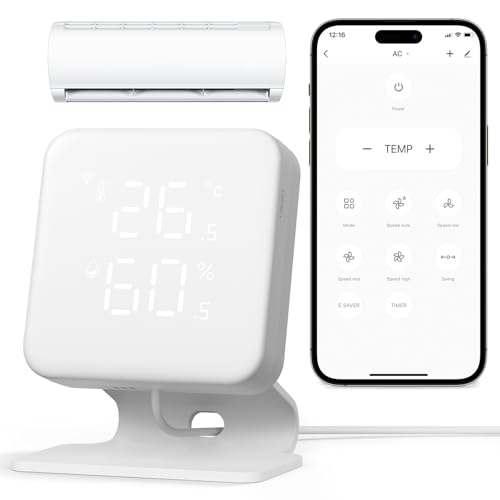
Pros
- Works with 300+ AC brands
- Built-in temperature and humidity display
- Alexa and Google Home control
- 7-day schedules and geofencing
Cons
- 2.4GHz WiFi only, no 5GHz
- Requires IR line of sight

Pros
- 5-2 day scheduling
- Large backlit display with clear font
- Battery powered, no C-wire required
- UWP wall plate simplifies installation
Cons
- Not compatible with electric baseboard heat
- Two AA batteries not included

Pros
- Smart alerts for filters and system malfunctions
- Remote control through the meross app
- Matter, Apple Home, Alexa, Google Assistant compatible
- Flexible schedule and child lock
Cons
- C wire required for some setups
- Not compatible with 110V, 120V, or 240V baseboards
Match the thermostat to the HVAC system
A short-term rental may use a conventional furnace and air conditioner, a heat pump, or a ductless unit. The Riseem model is limited to conventional single-stage 1 heat/1 cool systems and does not support heat pumps or multi-stage equipment. That makes its wiring check especially important before ordering.
The two meross thermostats support a wider range of HVAC equipment, including heat pumps, air conditioners, furnaces, boilers, humidifiers, and dehumidifiers. They do not support 110V, 120V, or 240V electric baseboard heaters, millivolt thermostats, or two-wire systems. For a mini-split, window air conditioner, or portable unit, the WOOX Smart AC Controller is the relevant type because it sends infrared remote signals rather than replacing a wired central thermostat.
For more smart climate ideas across the home, the Smart Energy & Climate Control category provides useful context.
Before You Order: Do not assume a thermostat’s app can overcome incompatible wiring. Confirm the existing terminals and system type first, since an incorrect match can cause abnormal operation or leave the control unusable.
Power and connectivity affect guest support
C-wire requirements are a major rental-property consideration. Riseem requires a 24V C-wire and cannot run on batteries, while both meross models require a C-wire for some wiring setups. XuLuaba also requires a C-wire and cannot use battery power. These choices may work well where the wiring is known, but they create a more involved replacement if the property has older wiring.
The Honeywell Home X2P uses two AA batteries, which are not included, and does not require a C-wire. It supports 1 heat/1 cool systems, 5-2 scheduling, a non-programmable option, filter reminders, and a backlit display. That simpler power format can suit an owner who wants scheduled control without depending on a common wire.
| Device type | Key requirement | Suitable system |
|---|---|---|
| Central WiFi thermostat | C-wire often required | Wired HVAC |
| Battery programmable thermostat | Two AA batteries | 1 heat/1 cool |
| IR AC controller | 2.4GHz WiFi | Mini-split or window AC |
WiFi details matter after installation. Riseem, WOOX, and the other WiFi products listed here use 2.4GHz connectivity, while 5GHz is not supported where specified. A property manager should confirm the rental network offers the required band before promising remote access to guests.
Expert Examined
From Dana Whitfield

I keep seeing rental owners focus on remote temperature changes while overlooking the wiring and equipment type. The better approach is to photograph the existing terminals, identify the HVAC system, and verify the network band before choosing a replacement.
Read more about Dana WhitfieldThe Smart Thermostats category is also useful when you are standardizing controls across several properties.
Scheduling and alerts reduce avoidable calls
Guests often need immediate temperature control, while owners want a schedule that limits unnecessary operation between stays. Riseem offers app control, real-time monitoring, and 7-day programming. XuLuaba adds 5-1-1, 7-day, and non-programmable modes, with Smart Life app control plus Alexa and Google Home compatibility.
The meross Matter Smart Thermostats for Home supports flexible 24/7 schedules, remote control, voice platforms, and alerts for filter life, system malfunctions, and long-term operation. The other meross model also provides app control, smart alerts, child lock, and flexible scheduling. For properties where several people may adjust the wall control, those management features deserve more attention than appearance.
WOOX adds temperature and humidity display, history trends, schedules, geofencing, and infrared learning for unsupported remote brands. It is not for central HVAC, ducted systems, or wired systems. The WiFi smoke and carbon monoxide detector recommendations can help with the wider remote-safety setup, though they do not replace HVAC compatibility checks.
FYI: Matter is a smart-home connectivity standard. The meross Matter models are described as working with Apple Home, Alexa, Google Home, Home Assistant, and Samsung SmartThings through Matter-certified platforms.
Which thermostat fits the rental?
I would point you to meross Matter Smart Thermostats for Home for a rental with compatible central HVAC and a mixed smart-home setup. Its broad HVAC support, Matter integration, flexible schedules, remote access, and system alerts make it a strong fit when guests, cleaners, and owners may use different platforms.
I would choose WOOX Smart AC Controller for a property using a mini-split, window unit, or portable air conditioner. It is designed for infrared-controlled equipment, includes humidity information and history, and supports geofencing without requiring a wired thermostat replacement.
For a conventional single-stage system with a confirmed C-wire, I would consider WiFi Thermostats for Home Smart Thermostat because it offers remote app control, real-time monitoring, and 7-day scheduling. If the property lacks a C-wire, I would instead point you toward Honeywell Home X2P Programmable Thermostat for its battery power and straightforward 5-2 schedule, provided the HVAC system matches its compatibility requirements.
The Bottom Line
The mistake most short-term rental owners make is treating every smart thermostat as interchangeable. A central HVAC thermostat cannot automatically control a mini-split, and a C-wire-dependent model is not a practical match for wiring that does not provide the required power.
If you only do one thing first, identify the HVAC type, existing terminals, and available WiFi band. Then choose between a wired central thermostat, a battery-powered conventional model, or an IR controller based on that information rather than on the app or display design.
FAQs
The WOOX Smart AC Controller is designed for mini-splits, window air conditioners, portable air conditioners, and heat pumps controlled by infrared remotes. It is not for central HVAC, ducted, or wired systems, and it requires infrared line of sight to the unit. Several do. Riseem, XuLuaba, and both meross models require or may require a C-wire, while Honeywell Home X2P uses two AA batteries and does not require one. Confirm the property’s wiring before ordering. The meross models provide alerts related to filter life, system malfunctions, and long-term operation. These alerts can help an owner notice HVAC issues remotely, but they do not replace professional service when equipment problems occur. Matter is a connectivity standard used by compatible smart-home platforms. The listed meross Matter models are described as working with Apple Home, Alexa, Google Home, Home Assistant, and Samsung SmartThings through Matter-certified platforms.Which thermostat type works with a mini-split in a short-term rental?
Do these smart thermostats need a C-wire?
What maintenance alerts can help rental owners?
What does Matter mean on a smart thermostat?
Sources
- US Consumer Product Safety Commission www.cpsc.gov
- UL Solutions www.ul.com