
Choosing the best smart thermostats for rental property starts with matching the thermostat to the HVAC system, not the rental unit’s décor. Landlords need dependable remote scheduling while tenants need controls that are clear, compatible, and difficult to misconfigure.

Pros
- Remote app control and real-time monitoring
- 7-day programmable temperature scheduling
- Backlit LCD for dark rooms
- Temperature control within 2°F
Cons
- Requires a 24V C-wire and no batteries
- Works only with 2.4GHz Wi-Fi

Pros
- Matter support across major smart-home platforms
- Flexible 24/7 heating and cooling schedules
- Remote app and voice control
- Alerts for filters and system malfunctions
Cons
- C-wire required for some wiring configurations
- Not compatible with electric baseboard heaters
- Compatibility check required before purchase

Pros
- Remote control through Smart Life App
- Alexa and Google Home compatible
- 7-day or 5-1-1 scheduling
- Supports non-programmable mode
Cons
- Requires C-wire, cannot use batteries
- Not compatible with multi-stage systems
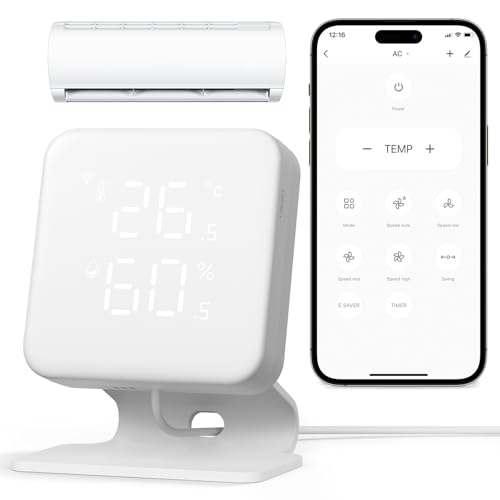
Pros
- Works with 300+ AC brands
- Built-in temperature and humidity display
- Alexa and Google Home control
- 7-day schedules and geofencing
Cons
- 2.4GHz WiFi only, no 5GHz
- Requires IR line of sight

Pros
- 5-2 day scheduling
- Large backlit display with clear font
- Battery powered, no C-wire required
- UWP wall plate simplifies installation
Cons
- Not compatible with electric baseboard heat
- Two AA batteries not included

Pros
- Smart alerts for filters and system malfunctions
- Remote control through the meross app
- Matter, Apple Home, Alexa, Google Assistant compatible
- Flexible schedule and child lock
Cons
- C wire required for some setups
- Not compatible with 110V, 120V, or 240V baseboards
Match the thermostat to the HVAC wiring
The biggest split is system compatibility. Riseem’s WiFi Thermostats for Home Smart Thermostat is limited to conventional single-stage systems with one heat and one cool setup, while the Honeywell Home X2P Programmable Thermostat supports one heat and one cool, hot water heat, forced air, and 750 mV systems.
The two meross models cover a wider range of HVAC equipment, including heat pumps, furnaces, boilers, humidifiers, and dehumidifiers, but they exclude millivolt thermostats and two-wire systems. XuLuaba supports several system types, including heat or cool only systems, but excludes multi-stage systems and heat pumps with auxiliary or emergency heat.
Before You Mount It: Check the existing terminals and HVAC type before ordering. A C-wire requirement, unsupported heat pump configuration, or electric baseboard system can make an otherwise suitable thermostat unusable.
Separate central HVAC from ductless AC
Not every rental has a conventional wall thermostat. The WOOX Smart AC Controller is designed for mini-split, window, and portable air conditioners or heat pumps that use infrared remotes. It is not for central HVAC, ducted systems, or wired systems, and it needs line of sight to the AC receiver.
For central systems, app control and schedules are more useful when the device remains connected to the property’s WiFi. Riseem and XuLuaba use 2.4GHz WiFi, while WOOX also requires 2.4GHz. The meross options add Matter integration with Apple Home, Alexa, Google Home, Home Assistant, and Samsung SmartThings.
| Device type | Main requirement | Suitable setting |
|---|---|---|
| Central HVAC | Wiring compatibility | Furnace or boiler |
| Ductless AC | IR line of sight | Mini-split or window unit |
| Battery thermostat | Two AA batteries | Single-stage replacement |
For broader smart-home details, the Smart Thermostats category provides additional context on connected climate controls.
Choose power and control for turnover
A rental thermostat should be easy to reset between occupants. Honeywell Home uses two AA batteries and does not require a C-wire, making it the simplest choice where compatible wiring is limited. The other conventional wall thermostats require C-wire power in the configurations described by their manufacturers.
Remote control can help a landlord adjust schedules without entering the unit, while flexible programming helps tenants set daily routines. meross adds system, filter-life, and long-term operation alerts, and WOOX adds temperature and humidity display, schedules, and geofencing.
Expert Examined
From Dana Whitfield

I keep the HVAC model and terminal layout with the property records because the recurring mistake I see is replacing a thermostat without confirming the system type. A quick wiring check before turnover is more useful than assuming every smart wall control uses the same terminals.
Read more about Dana WhitfieldFor connected safety equipment elsewhere in the property, consider related resources such as WiFi smoke and carbon monoxide detectors. The US Consumer Product Safety Commission also publishes consumer safety information that can inform property maintenance decisions.
Which thermostat fits your rental
I would point landlords with a compatible conventional single-stage system toward the WiFi Thermostats for Home Smart Thermostat. Its app supports remote temperature changes, real-time monitoring, and seven-day schedules, but the C-wire and 2.4GHz requirements should be confirmed first.
For a property with varied HVAC equipment or a Matter-based smart home, I would choose the meross Matter Smart Thermostats for Home. It supports flexible 24/7 scheduling and alerts, though it is not intended for baseboard, millivolt, or two-wire systems.
I would reserve the WOOX Smart AC Controller for a rental using a compatible mini-split, window AC, or portable AC with an infrared remote. It avoids wall wiring and adds app, voice, schedule, and geofencing control, but it is not a central HVAC thermostat.
The Bottom Line
The mistake most rental-property buyers make is treating every thermostat as interchangeable. System type, terminal wiring, C-wire power, WiFi band, and infrared control all point to different products.
Start by photographing the existing thermostat terminals and identifying the HVAC equipment. Then select the narrowest compatible model that gives tenants the controls they need and gives you remote access without creating an installation mismatch.
FAQs
A conventional smart thermostat suits central HVAC with compatible wiring. A controller such as WOOX is intended for infrared-controlled mini-splits, window units, and portable AC systems instead. Several models require C-wire power, including Riseem and the XuLuaba thermostat. Honeywell Home uses two AA batteries, while meross says C-wire needs vary by wiring configuration, so inspect the system before purchase. Riseem, XuLuaba, WOOX, and both meross models provide app-based remote control. The meross models also support voice platforms and Matter-compatible smart-home systems, while Honeywell Home is a programmable battery thermostat. Matter allows compatible smart-home platforms to connect locally with supported devices. The meross Matter models list Apple Home, Alexa, Google Home, Home Assistant, and Samsung SmartThings as compatible platforms.Which thermostat type suits a rental property?
Do these smart thermostats need a C-wire?
Can tenants control the thermostat remotely?
What does Matter compatibility mean here?
Sources
- US Consumer Product Safety Commission www.cpsc.gov
- US Fire Administration www.usfa.fema.gov