
Choosing among the best smart thermostats for heat only starts with identifying the heating system, not the app features. The key split is between line-voltage electric heat and compatible low-voltage systems, so this selection suits homeowners replacing a heat-only control who want the right match before installation.
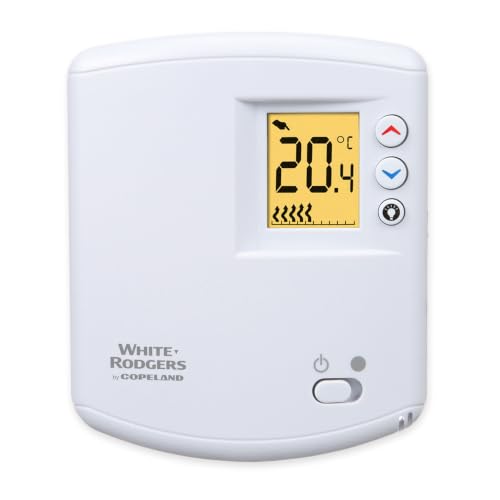
Pros
- High-accuracy digital temperature control
- Supports single-pole applications
- Supports double-pole applications
- 4000-watt maximum at 240 volts
Cons
- Nonprogrammable design lacks scheduling
- Line-voltage applications only

Pros
- Remote control through Smart Life App
- Alexa and Google Home compatible
- 7-day or 5-1-1 scheduling
- Supports non-programmable mode
Cons
- Requires C-wire, cannot use batteries
- Not compatible with multi-stage systems

Pros
- ±0.27°F accuracy with baseboards and convectors
- Silent TRIAC switching with no clicking
- Controls smaller baseboards with 200W minimum load
- Compact design fits small spaces
Cons
- Electric heat only, not fan-forced convectors
- Maximum load limited to 2,000W at 240V

Pros
- 5/2-day programming for weekday and weekend schedules
- Four program periods per day
- Temporary override for quick temperature changes
- Front battery access with low-battery indicator
Cons
- Heat-only operation
- Not compatible with resistive-element and blower systems

Pros
- Holds temperature within 1°F
- Up to 10% savings versus mechanical thermostats
- Fahrenheit or Celsius display
- Three-year manufacturer warranty
Cons
- Not compatible with fan-forced heaters
- Nonprogrammable, manual temperature setting only

Pros
- Electronic temperature control
- On-demand backlight for varied lighting
- Soundproof operation reduces clicking noise
- Heating indicator confirms heat is on
Cons
- 240-volt line-voltage setup required
- Non-programmable temperature control
Match the thermostat to your heating system
Heat-only does not describe one universal wiring setup. The Honeywell Home Digital Non-Programmable Thermostat is specifically for electric baseboard heaters and convectors with a two-wire connection, while the White-Rodgers Line Voltage supports single-pole and double-pole applications and lists a 240-volt maximum power range.
The XuLuaba Smart WiFi Thermostat for Home with App Remote supports gas, oil, electric, heat pump without auxiliary or emergency heat, heat-only systems, floor or wall furnaces, and two-transformer systems. It requires a C-wire and cannot run on batteries, while its listed incompatibilities include auxiliary or emergency heat pumps, multi-stage systems, and millivolt conventional systems.
Before You Mount It: Do not assume a heat-only thermostat will fit every heater. Confirm the system type, voltage, wire arrangement, and load requirements first, especially if the existing control serves a line-voltage heater.
Decide between app control and direct adjustment
Remote access matters most if you want to change the temperature while away or coordinate heating with a smart-home routine. The XuLuaba model offers Smart Life App control plus Alexa and Google Home compatibility, along with 5-1-1-day or seven-day scheduling.
For a simpler room-by-room control, non-programmable models keep the decision focused on temperature adjustment and electrical fit. The Honeywell Home model adds silent TRIAC switching, an on-screen heating power indicator, and a compact design, while the Stelpro Line Voltage Thermostat uses two buttons and shows heater output through a four-bar indicator.
| Control style | Key requirement | Best fit |
|---|---|---|
| WiFi programmable | C-wire required | Remote scheduling |
| Digital non-programmable | Line-voltage compatibility | Simple adjustment |
| Programmable line-voltage | Resistive heat only | Weekday scheduling |
Programming can be useful when your weekday and weekend routines differ. The LUX ELV4 provides four periods per day, separate weekday and weekend settings, temporary overrides, front battery access, and a low-battery indicator, but it is not compatible with heating appliances that combine an electric heating element and a blower fan.
See more smart thermostat options if your system needs features beyond heat-only control.
Pay attention to load, noise, and upkeep
Electrical limits separate these products as much as their controls do. Honeywell Home lists a 2,000-watt maximum load at 240 volts and a 200-watt minimum, while Stelpro lists maximum loads at 120, 208, and 240 volts. White-Rodgers lists a 4,000-watt maximum and 250-watt minimum at 240 volts.
Noise and visibility may matter in bedrooms or quiet work areas. Honeywell TL7235A1003 Line Volt Pro includes an on-demand backlight, soundproof operation, and a heating indicator. The LUX ELV4 uses front-access batteries and includes a positive off switch, which can simplify routine status checks.
Expert Examined
From Marcus Bell

I keep seeing homeowners choose by thermostat appearance before checking the heater label and wiring. The safer order is to identify the equipment and electrical requirements first, then select scheduling or app functions that the system can actually support.
Read more about Marcus BellFor broader household energy planning, the Smart Energy and Climate Control category can help you consider related devices without treating every thermostat as interchangeable.
Which thermostat fits your room?
I would point you to the Honeywell Home Digital Non-Programmable Thermostat for an electric baseboard or convector setup where quiet switching and precise adjustment matter more than remote access. Its two-wire, non-polarized connection and line-voltage compatibility keep the feature set focused, while the compact design suits smaller installation spaces.
For a compatible heat-only system with a C-wire, I would choose the Smart WiFi Thermostat for Home with App Remote. App control, Alexa and Google Home support, and flexible weekly scheduling make it the clearest choice for someone who wants to adjust heating away from home, provided the system is not multi-stage or millivolt.
I would reserve the ELV4 Programmable Line Voltage Thermostat for resistive line-voltage heating where weekday and weekend schedules are useful. Its temporary override, four daily periods, front battery access, and low-battery indicator suit a household that wants automation without WiFi, but the blower-fan restriction deserves attention before purchase.
The Bottom Line
The biggest mistake is treating every heat-only thermostat as electrically interchangeable. A heat-only label does not remove the need to verify line voltage, C-wire availability, heater type, load range, and compatibility restrictions.
If you only do one thing first, read the existing thermostat and heater specifications before choosing a feature set. Then match the wiring and electrical requirements, followed by your preference for app control, scheduling, silent switching, or straightforward manual adjustment.
FAQs
Electric baseboard and convector systems need a thermostat specifically rated for line-voltage electric heat. The Honeywell Home Digital Non-Programmable Thermostat lists compatibility with 120V and 240V line-voltage heating and uses a two-wire, non-polarized connection. Some can, but compatibility depends on the system and wiring. The XuLuaba model supports heat-only systems and requires a C-wire, while it is not compatible with millivolt conventional systems, multi-stage systems, or heat pumps with auxiliary or emergency heat. Battery requirements vary by model. The XuLuaba thermostat cannot run on batteries and requires a C-wire, while the LUX ELV4 provides front battery access, a low-battery indicator, and a positive off switch. UL approval indicates that the product has been evaluated against applicable safety requirements under UL’s certification process. It does not confirm that the thermostat matches your heater, wiring, voltage, or load, so those details still require separate verification.Which thermostat type suits electric baseboard heat?
Can a WiFi thermostat work with a heat-only system?
Do programmable thermostats need batteries?
What does UL approval mean for a thermostat?
Sources
- UL Solutions and Product Safety Certification. www.ul.com
- US Consumer Product Safety Commission. www.cpsc.gov
- NFPA and Electrical Safety Information. www.nfpa.org