
Shopping for the best smart thermostats for electric baseboard heaters starts with identifying the wiring behind your wall, since these systems use line voltage rather than conventional HVAC controls. The right choice depends on whether you heat rooms with baseboards, fan-forced units, or electric floors, and whether your electrical box has the required wires.

Pros
- Works with 120V to 240V electric heating
- Humidity sensor and touchscreen
- Scheduling and geofencing support
- Apple Home, Alexa, and Google compatible
Cons
- Requires a neutral or second live wire
- Limited to electric baseboards and fan-forced heaters
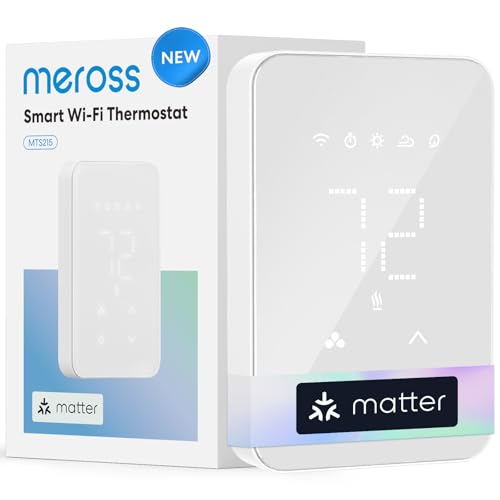
Pros
- Supports 120 to 240V electric heating
- Matter compatibility across major smart-home platforms
- 24/7 scheduling for automated temperature control
- Real-time and historical energy monitoring
Cons
- Not compatible with 24V HVAC systems
- Requires Wi-Fi for remote app control

Pros
- Smartphone control from anywhere
- Alexa and Google Assistant compatible
- 7-day programmable energy-saving schedule
- 15-foot floor sensor included
Cons
- Requires a compatible underfloor heating system
- Smart controls depend on WiFi and app setup

Pros
- 1°F temperature accuracy
- Works with Apple Home, Alexa, and Google Home
- 7-day programmable heating schedule
- Energy monitoring with historical reports
Cons
- Requires four or more installation wires
- Electric baseboard heater not included

Pros
- Supports 120V and 240V heating cables
- Built-in Class A GFCI protection
- Smart-home and voice-assistant integration
- App-based energy usage tracking
- Three-year limited warranty
Cons
- Maximum 15-amp load
- Larger systems need an additional power module
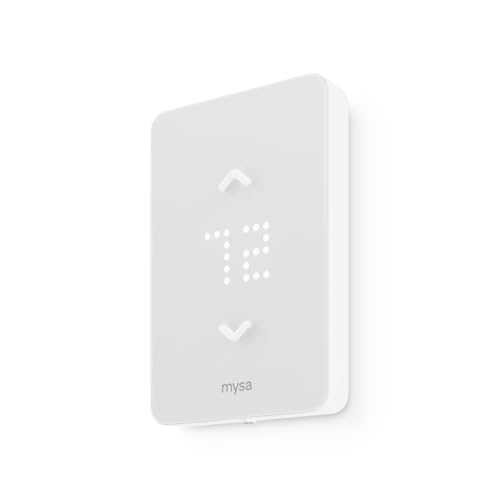
Pros
- Supports 120V and 240V electric heating
- 7-day scheduling with no subscription
- HomeKit, Alexa, and Google compatibility
- Remote control, geofencing, and vacation mode
Cons
- Requires four wires, including neutral or second live
- Not compatible with 24V furnaces or heat pumps
Match the thermostat to the heating system
Electric baseboards, convectors, fan-forced heaters, and radiant floors may all use high voltage, but their thermostat requirements are not identical. The meross and Mysa models are aimed at 120V to 240V electric room heating, while the MAXKOSKO and Schluter options are specifically oriented toward underfloor or floor-cable systems.
Do not substitute a 24V thermostat intended for a furnace or heat pump. Check the heater type, voltage, maximum load, and wire arrangement before ordering. For broader smart-home compatibility, you can also compare ecosystem options in our Smart Thermostats category.
Before You Mount It: A line-voltage thermostat involves household electrical wiring. Turn off the breaker, confirm power is off, and use an electrician if local code requires it or the wiring is unclear.
Wiring is the decision point
The Mysa Smart Thermostat V2 for Electric Baseboard requires one neutral or a second live wire and is designed for 120V to 240V systems. Mysa Smart Thermostat LITE for Electric Baseboard also requires four wires, including a neutral or second live wire, and does not work with a two-wire switch loop.
The meross Smart Thermostat for Electric Baseboard requires four or more wires in the electrical box. Its listed output limit is 16A, with separate wattage limits at 120V and 240V, so confirm the heater load rather than assuming every baseboard circuit is suitable.
| Heating type | Key requirement | Best placement |
|---|---|---|
| Baseboard or convector | 120V to 240V wiring | Main heated room |
| Radiant floor | Floor sensor compatibility | Heated floor zone |
| Fan-forced heater | High-voltage support | Heater control wall |
I keep the wiring check ahead of app features because an attractive touchscreen cannot solve an incompatible electrical box. The safest approach is to photograph the existing connections only after power is off and compare them with the manufacturer’s compatibility instructions.
Expert Examined
From Marcus Bell

I see the same mistake repeatedly in homes with electric heat: people identify the room but not the circuit. I keep the breaker rating, heater type, voltage, and wire count together before choosing a thermostat, then arrange professional help when any part is uncertain.
Read more about Marcus BellSchedules, sensors, and floor heating
Scheduling matters because electric resistance heat can run unnecessarily while rooms are empty. Mysa includes scheduling, geofencing, away, and vacation features, while the meross models add energy monitoring and open-window detection through the app.
Floor-heating buyers should focus on sensor support rather than baseboard features. MAXKOSKO includes a 15-foot floor sensor and is designed for many underfloor heating systems, while Schluter Ditra-Heat-E-WiFi Programmable supports 120V and 240V heating cables and includes a Class A GFCI.
For additional smart-home planning, our coverage of HomeKit-compatible devices can help if Apple Home is part of your household setup. Remember that voice control does not remove the need to select the correct electrical class.
FYI: A Class A GFCI is a ground-fault safety feature that cuts power when it detects a potentially dangerous electrical imbalance. It is especially relevant to thermostats controlling electric floor-heating cables.
Which thermostat fits your home
I would point you to Mysa Smart Thermostat V2 for Electric Baseboard when you want a touchscreen, humidity sensing, remote control, scheduling, and geofencing for a compatible 120V to 240V baseboard or fan-forced system. Its stated installation time is 15 minutes or less, but the wiring requirement still needs confirmation first.
For a lower-cost route with broad smart-home support, I would consider meross Matter Smart Thermostat for Electric. It supports Apple Home, Alexa, Google Home, and SmartThings, while also adding energy monitoring, visual scheduling, and open-window detection for compatible high-line-voltage heaters.
Radiant-floor owners have a different priority. I would choose Schluter Ditra-Heat-E-WiFi Programmable where heating cables, energy tracking, and built-in Class A GFCI protection matter, or select MAXKOSKO where a floor sensor and Smart Life app support fit the existing system.
The Bottom Line
The single mistake most buyers make is treating an electric baseboard thermostat like a standard furnace thermostat. These products are built for line-voltage heating, and the correct wire count, heater type, voltage, and load must all match.
If you do only one thing first, switch off the circuit and verify the existing thermostat wiring and heater specifications. Then choose between baseboard control, radiant-floor sensing, smart-home compatibility, and scheduling features.
FAQs
Yes, but it must support high-line-voltage electric heating at the system’s voltage. The products in this comparison are designed for compatible 120V to 240V systems, rather than 24V furnace or heat-pump controls. Many radiant-floor systems use a floor sensor to monitor the heated surface. MAXKOSKO includes a 15-foot floor sensor, while Schluter Ditra-Heat-E-WiFi Programmable is designed for floor-heating cables. Check the voltage, heater type, wire count, and whether the box has a neutral or second live wire. Mysa and meross list specific wiring requirements, so consult their compatibility instructions before disconnecting anything. Class A GFCI protection detects a ground fault and cuts power to help reduce shock risk. It is a useful safety feature for compatible electric floor-heating installations, but installation must still follow electrical requirements.Can I use a smart thermostat with electric baseboard heaters?
Do radiant floor heaters need a floor sensor?
How do I know whether my wiring is compatible?
What does Class A GFCI mean on a thermostat?
Sources
- NFPA and electrical safety information. www.nfpa.org
- UL Solutions and product safety standards. www.ul.com
- US Consumer Product Safety Commission and home electrical safety. www.cpsc.gov