
Choosing the best smart plugs for washing machine use means checking electrical compatibility before chasing voice control, especially if you want remote switching in a laundry room. The key decision is whether your household needs Matter flexibility, Apple Home support, or energy monitoring.

Pros
- Matter support across major smart home platforms
- Compact design helps preserve nearby outlet access
- UL certified flame-retardant design
- Scheduling, timers, app, and voice control
Cons
- 2.4 GHz Wi-Fi only
- Limited to 15A/1800W maximum
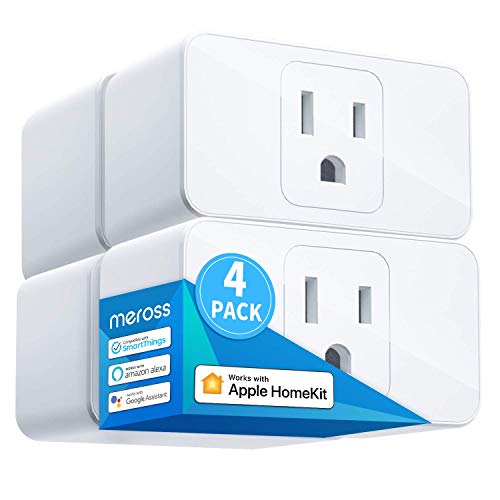
Pros
- Apple HomeKit, Alexa, Google Assistant compatible
- 15A capacity for appliances up to 1800W
- Compact design leaves room for two plugs
- Scheduling supports sunrise and sunset settings
Cons
- HomeKit remote control needs an online bridge
- Requires a 2.4GHz Wi-Fi network

Pros
- Apple HomeKit and Siri support
- Works with Alexa, Google Assistant, SmartThings
- Compact design preserves the adjacent outlet
- UL certified flame-retardant design
Cons
- 2.4GHz Wi-Fi only
- HomeKit remote control needs an Apple device

Pros
- Matter support for Apple Home, Alexa, Google Home
- Energy monitoring tracks usage over time
- Compact design helps preserve adjacent outlet space
- UL-certified flame-retardant design and 2-year warranty
Cons
- Requires 2.4GHz Wi-Fi
- 15A/1800W maximum load

Pros
- Matter support across major smart-home platforms
- 15A/1800W capacity for household electronics
- Remote control, timers, and scheduling
- FCC certified with overload protection
Cons
- Hub required for most listed platforms
- 2.4GHz Wi-Fi and IPv6 network only

Pros
- Matter support for major smart home platforms
- 15A/1800W capacity
- Remote app control from anywhere
- Voice control with Siri and Alexa
- Timers and schedules for automation
Cons
- Requires 2.4GHz Wi-Fi and IPv6
- Hub required for most Matter platforms
Start With the Washer and Outlet
A smart plug does not make every appliance suitable for remote switching. Check the washing machine’s electrical requirements, the outlet condition, and the plug’s stated capacity before connecting anything. The products here are rated for up to 15A and 1800W, but that does not replace checking your appliance documentation.
Keep the plug and washer connection away from splashing water, standing moisture, and cramped spaces that can trap heat. A compact design helps preserve access to the second outlet, while flame-retardant construction and UL or ETL certification provide useful safety information about the plug itself.
Before You Connect: Do not use a smart plug with a washer if the appliance instructions prohibit it, or if the outlet, cord, or plug shows heat damage, looseness, or moisture exposure.
Matter, HomeKit, and Wi-Fi Limits
Matter is the most flexible choice if your home uses more than one certified smart-home platform. The TP-Link Tapo Matter Supported Smart Plug Mini, Kasa Matter Smart Plug with Energy Monitoring, and both Linkind models support Matter-related control, while the Linkind products require a compatible Matter controller for Apple Home, Alexa, Google Home, or SmartThings.
Apple households can choose the meross Smart Plug 15A, Works with Apple Home or Tapo Apple HomeKit Smart Plug Mini, 15A. Remote HomeKit control requires a networked Apple device such as a HomePod, Apple TV, or iPad. All listed Wi-Fi models use 2.4GHz Wi-Fi, so confirm that your setup supports that band.
Local Matter control can continue within the home network when internet access is unavailable, according to the supplied product details. That is different from remote control away from home, which depends on the relevant app, controller, or bridge remaining available.
| Control approach | Key requirement | Useful fit |
|---|---|---|
| Matter | Compatible controller | Mixed platforms |
| Apple Home | Apple bridge for remote use | Apple households |
| App scheduling | 2.4GHz Wi-Fi | Routine switching |
Scheduling and Energy Visibility
Scheduling is useful when you want an appliance connection to switch at planned times, but it should not encourage unattended operation where the washer manufacturer advises against it. The Tapo and Linkind models include scheduling or timer functions, and meross supports schedules with sunrise and sunset settings.
The Kasa Matter Smart Plug with Energy Monitoring is the clearest choice for households that want consumption information as well as switching. Its energy monitoring tracks usage over time, helping you understand patterns rather than simply turning the outlet on or off.
Expert Examined
From Marcus Bell

I keep the smart plug accessible rather than hiding it behind laundry equipment. The mistake I see is treating remote control as a substitute for checking the washer, cord, and outlet before each use.
Read more about Marcus BellFor broader home automation, the smart sensors and home automation section explains how plugs fit alongside other connected devices. A plug should remain easy to disconnect if the laundry area develops moisture or an electrical fault.
Which Plug Fits Your Laundry Setup
I would point Apple households toward the HomeKit device ecosystem approach and the meross Smart Plug 15A, Works with Apple Home, provided the washer and outlet are compatible. It supports Apple HomeKit, Siri, Alexa, Google Assistant, and SmartThings, plus scheduling, while its compact shape occupies one socket.
I would choose the Kasa Matter Smart Plug with Energy Monitoring when energy visibility matters as much as switching. It combines Matter compatibility with usage tracking and a compact, UL-certified design. For a multi-platform home that wants a smaller pack, the TP-Link Tapo Matter Supported Smart Plug Mini adds Matter control, local network operation, Bluetooth onboarding, scheduling, and a 2-year limited warranty.
For a lower-quantity Matter setup, I would consider the Linkind Matter Smart Plug, Works with Apple Home. It supports app control, timers, voice platforms, and local Matter control, but you should confirm the required controller and the 2.4GHz Wi-Fi and IPv6 requirements first.
The Bottom Line
The biggest mistake is assuming a 15A rating alone proves a smart plug is appropriate for every washing machine. Appliance instructions, outlet condition, moisture exposure, platform requirements, and remote-control dependencies all matter.
If you do one thing first, read the washer’s electrical and smart-control instructions, then match the plug’s platform and capacity to that information. Only after that should you choose between Matter flexibility, Apple Home integration, compact design, or energy monitoring.
FAQs
No. Check the washing machine’s instructions and electrical requirements first, then compare them with the smart plug’s stated capacity. Do not connect the appliance if the manufacturer prohibits smart-plug use. Keep it accessible, dry, and away from splashing water or standing moisture. Avoid trapping it behind equipment where heat, movement, or cord strain could go unnoticed. Matter control through Apple Home, Alexa, Google Home, or SmartThings may require a compatible controller or bridge. Some app functions are available without that extra hub, depending on the model. It identifies a product that has been evaluated under the relevant certification program, but it does not confirm that the plug is suitable for every appliance. Match the plug to the washer instructions and electrical requirements. Matter-certified devices can communicate over the local network when internet access is unavailable, according to the supplied product details. Remote control from outside the home still depends on the appropriate app, bridge, or controller.Can I use a smart plug with any washing machine?
Where should a smart plug for a washer be placed?
Do these smart plugs need a hub?
What does UL or ETL certification mean here?
Will a smart plug work if Wi-Fi goes down?
Sources
- UL Solutions www.ul.com
- US Consumer Product Safety Commission www.cpsc.gov