
Shopping for the best smart locks for sliding glass doors starts with the mortise pocket, not the fingerprint reader. The key split is whether your frame accepts a standard 2085 pocket, a deeper 2885 pocket, or a slimmer design, making this decision especially important for homeowners, renters, and property managers.

Pros
- Five entry methods for family or rental access
- Stores up to 300 users
- Reversible handle for left or right opening
- IP65 weatherproof housing with emergency power backup
Cons
- Not a universal fit without mortise measurements
- Battery operation requires monitoring low-power alerts
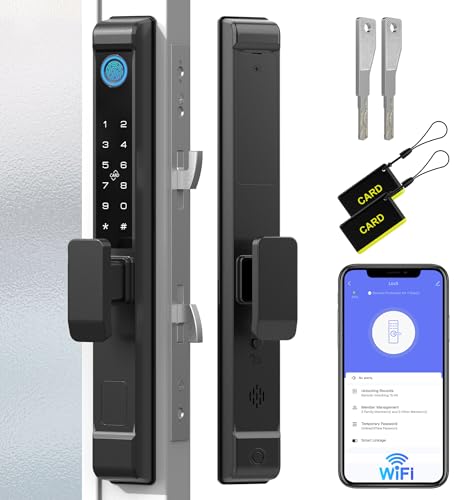
Pros
- Five entry methods, including fingerprint access
- WiFi remote control through mobile app
- Tamper alarm and 90-second lockout
- Low-battery warning with power-bank backup
Cons
- Requires compatible mortise and door dimensions
- Battery life rated for about eight months
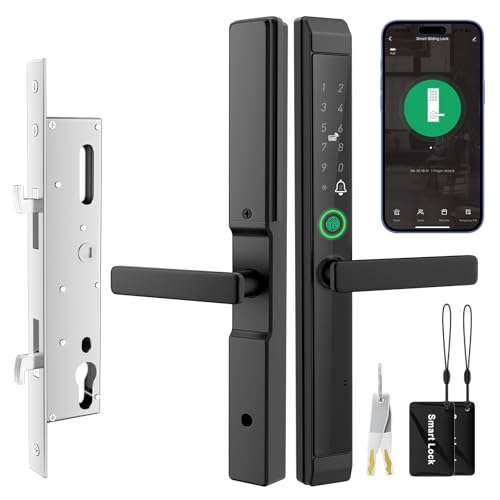
Pros
- Fingerprint, IC card, PIN, app, and key access
- Fits 1-3/16 to 2-3/16-inch doors
- Peek-proof PIN code with temporary access codes
- IP65 dust and water resistance
Cons
- Requires a 2.4 GHz Wi-Fi network
- Four AA batteries are not included

Pros
- AI fingerprint recognition with tamper alerts
- Fingerprint, keypad, app, RFID, backup key
- IP65 weatherproof aluminum construction
- Eight-month battery life with low-battery alerts
Cons
- Four AAA batteries not included
- Requires compatible door dimensions and frame width

Pros
- Five entry methods
- Stores up to 300 users
- Reversible handle for left or right opening
- IP65 weatherproof housing
Cons
- 2885 mortise requires a 1.8-inch frame
- Careful door measurements required before ordering
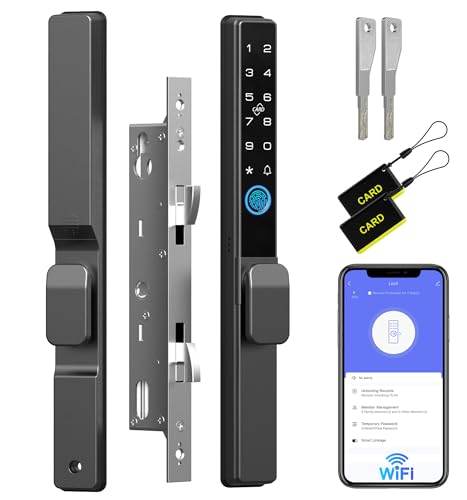
Pros
- Five access methods, including fingerprint and RFID
- WiFi remote control through mobile app
- 90-second shutdown after five invalid attempts
- Up to eight months of battery life
Cons
- Requires compatible mortise and door dimensions
- Frame must be at least 1.6 inches wide
Measure the Door Before Choosing a Lock
Sliding door smart locks are not universal replacements. The Eseesmart 2085 model and the Anweller 2085 model suit standard mortise arrangements, while the Eseesmart 2885 and Anweller 2885 versions require a deeper pocket and a frame at least 1.8 inches wide.
Door thickness matters as well. Several options cover 7/8 inch to 4-3/4 inches, but the JNZCH model is intended for doors from 1-3/16 to 2-3/16 inches. Measure the door edge, pocket depth, and frame width before ordering, then compare those figures with the product sizing notes.
Before You Mount It: A wrong mortise size can leave the lock unusable or require alterations to the door. Do not assume a lock labeled for sliding glass doors will match your existing pocket.
Entry Methods and Remote Access
All six options provide several ways to enter, including a fingerprint, code, card, app, or mechanical key, although the exact card type varies. This mix works well when some household members prefer a code while guests, cleaners, or tenants need temporary access.
The Eseesmart models can store up to 300 users and issue temporary codes remotely. JNZCH adds TUYA app functions such as entry history, one-time passwords, access administration, and remote unlocking through a 2.4 GHz Wi-Fi setup. The Anweller models also specify Wi-Fi remote app access.
If app access matters, check your home network before installation. For broader access-control planning, the explanation of what a smart lock bridge does can help clarify when a separate connection device is relevant.
| Lock format | Main fit | Access focus |
|---|---|---|
| 2085 mortise | Standard pocket | Fingerprint and code |
| 2885 mortise | Deep pocket | Family and rental access |
| Slim keypad | Narrower body | Tuya app control |
Battery Backup and Outdoor Exposure
Battery life is important because a patio lock may be exposed to changing temperatures and inconvenient access conditions. Eseesmart, Anweller, and eLinkSmart specify up to eight months, while JNZCH specifies up to six months with four AA batteries.
Each model includes a low-power warning or emergency power option in its listed features. Eseesmart, Anweller, and JNZCH mention power-bank backup, while JNZCH also states that its lock can be powered temporarily through USB-C. Check the battery type before buying so you can keep the right replacements available.
Pro Tip: Set a recurring battery reminder and keep a compatible power bank where it can reach the exterior emergency connection.
Weather resistance also differs in the details. Eseesmart, JNZCH, and eLinkSmart list IP65 protection, with operating ranges extending from -13°F in their specifications. For general smart-lock security questions, see how smart locks can be hacked before relying on app access alone.
Expert Examined
From Marcus Bell

I keep seeing the same avoidable mistake with sliding doors: buyers focus on keypad features before checking the edge profile. I would photograph the mortise and measure the frame first, then choose the access features that fit that hardware.
Read more about Marcus BellWhich Lock Fits Your Door
I would point homeowners with a standard pocket toward the Eseesmart Sliding Door Smart Lock, because its listed 2085 configuration fits most US sliding patio doors and it offers reversible installation, multiple access methods, and up to eight months of battery life. Its template-guided installation is also useful when you want a screwdriver-based setup.
For a deep pocket and a frame at least 1.8 inches wide, I would consider the Anweller 2885 Mortise Sliding Glass Door Lock. Its five entry methods, 90-second lockout after five invalid code or RFID attempts, tamper alarm, and emergency power-bank option suit a household that wants both convenience and added access protection.
I would choose the Sliding Door Smart Lock, Sliding Glass Door Lock from JNZCH for a slimmer door within its stated thickness range, especially when TUYA history, temporary passwords, and remote control matter. Confirm the 2.4 GHz Wi-Fi requirement before purchase, and remember that its batteries are not included.
The Bottom Line
The biggest mistake buyers make is selecting a lock by fingerprint and app features while ignoring the mortise pocket and frame width. A smart lock that cannot match the existing door edge is not a practical upgrade.
If you do only one thing first, measure the door thickness, mortise depth, and frame width. Then select the compatible 2085, 2885, or slim format before comparing battery details and access controls.
FAQs
Sliding glass door smart locks in this selection use mortise designs, including 2085 and 2885 formats, plus a slim keypad model. The correct choice depends on your existing pocket, door thickness, and frame width rather than the lock’s access features alone. Measure the door thickness, the mortise pocket depth, and the frame width at the installation area. Compare each measurement with the manufacturer’s compatibility specifications, especially if considering a 2885 deep-pocket model. The listed battery estimates range from about six to eight months, depending on the model. Enable low-battery alerts where available, keep replacement batteries ready, and confirm the emergency power method before installation. IP65 indicates protection against dust and water jets under the relevant enclosure rating system. It does not mean the lock should be submerged, so placement and maintenance still matter on an exposed patio door. UL Solutions provides additional information about product safety standards at its official website, ul.com.Which type of smart lock fits a sliding glass door?
How do I measure for a sliding patio door smart lock?
How often do these smart locks need new batteries?
What does IP65 mean on a sliding door lock?
Sources
- UL Solutions www.ul.com
- US Consumer Product Safety Commission www.cpsc.gov