
Choosing the best smart locks for outdoor gates starts with a hardware check: a fence gate needs a gate-compatible latch, while most connected models here are deadbolts for standard doors. That distinction matters most for homeowners deciding between remote access, battery convenience, and a simple code lock.

Pros
- Six entry methods, including fingerprint recognition
- Apple Home Key via iPhone or Apple Watch
- Thread support for Apple Home connectivity
- Stores up to 100 fingerprints and passcodes
Cons
- Remote access requires a Thread-enabled hub nearby
- Uses eight AA alkaline batteries
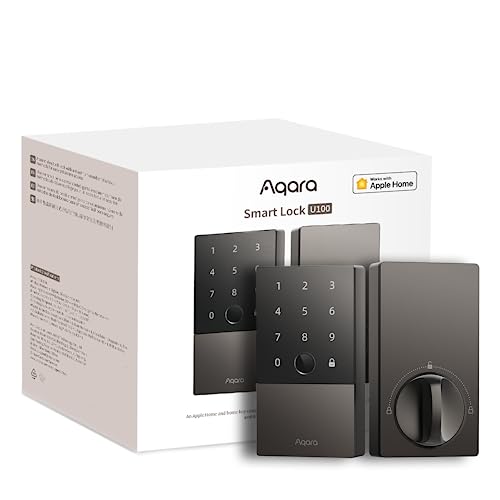
Pros
- Apple Home Key with iPhone and Apple Watch
- Fingerprint reader stores up to 50 prints
- Four AA batteries last up to 8 months
- IP65 zinc-alloy body, emergency USB-C charging
Cons
- Aqara Zigbee hub required for remote passwords
- NFC card sold separately

Pros
- Mechanical keypad operation, no batteries
- Custom 4 to 6 digit code
- Weather-resistant zinc alloy construction
- Works with left or right opening doors
Cons
- Manual deadbolt requires hand locking
- Not compatible with glass doors

Pros
- Up to 200 customizable access codes
- Remote app control with activity timestamps
- Backlit tactile keypad for nighttime use
- BHMA Grade 3 and IP54 rated
Cons
- AA batteries require periodic replacement
- Remote features use Wi-Fi and the app

Pros
- Apple Home Key and Thread support
- Fingerprint, keypad, app, and key entry
- Up to 100 fingerprints and passcodes
- IP65 weatherproof construction
Cons
- Remote access requires a nearby Apple hub
- Uses eight AA alkaline batteries

Pros
- Apple Home Key support with iPhone and Apple Watch
- Touchscreen keypad with temporary and one-time passwords
- IPX5-rated zinc alloy lock body
- Rekeyable cylinder supports an existing five-pin key
Cons
- Aqara hub required for remote access features
- NFC card sold separately
Gate hardware is not the same as door hardware
The Miosugo Keyless Gate Locks for Outdoor Fence is the only product in this group described specifically for garden gates, fences, garages, storage rooms, and similar openings. It uses a four to six digit code, has a manual deadbolt, and needs no batteries, so it avoids the connectivity and battery issues that affect electronic locks.
The ThorBolt, Aqara, and Tapo models are described as door deadbolts. Their fit details refer to standard door thicknesses, door holes, latch backsets, or door cylinders. Do not assume a deadbolt will attach to a narrow metal gate or work with a gate’s existing latch without checking the dimensions first.
Before You Mount It: A weather rating does not make a door deadbolt suitable for every gate. Confirm the gate thickness, latch geometry, opening direction, and mounting surface before ordering.
If the opening is an outward-swinging door rather than a fence gate, review these ways to secure an outward-opening door before selecting hardware.
Match the access method to the location
A keypad is practical for a shared side gate because visitors do not need an app or a physical key. The Miosugo model keeps that arrangement simple, but it does not provide app control, remote status, or automatic locking. Its manual operation is useful where avoiding accidental lockouts matters.
For a compatible exterior door, ThorBolt X1 models add fingerprint entry, Apple Home Key, app access, passcodes, Siri, and traditional keys. Thread support connects them with Apple Home, although remote access requires a Thread-enabled Apple home hub within the stated distance.
Aqara’s U100 adds fingerprint entry, Apple Home Key, local visitor passwords, and optional integrations through an Aqara Zigbee hub. The U50 uses keypad access, Apple Home Key, temporary passwords, and rekeying support, while the Tapo DL100 offers keypad, Bluetooth, Wi-Fi app control, voice commands with PIN verification, and activity timestamps.
| Device type | Key distinction | Best placement |
|---|---|---|
| Mechanical gate lock | No batteries | Fence or garden gate |
| Smart door deadbolt | App and keypad access | Compatible exterior door |
| Apple Home deadbolt | Home Key and Thread | Apple-connected entry door |
If you are weighing a physical spare against electronic access, compare the security trade-offs in key lock boxes versus smart locks. The right answer depends on who needs entry and whether the mounting hardware actually matches.
Weather ratings and battery planning
The gate-specific Miosugo lock uses zinc alloy with an anti-corrosion coating and is described as water-resistant and rust-resistant. The ThorBolt models and Aqara U100 carry IP65 ratings, while the Aqara U50 is rated IPX5 and the Tapo DL100 is rated IP54. These ratings describe resistance conditions, not complete protection from poor installation, standing water, or a misaligned gate.
Battery planning also differs. ThorBolt lists up to one year from eight AA alkaline batteries. Aqara U100 lists up to eight months from four AA batteries, U50 up to six months from four AA batteries, and Tapo lists up to 200 days in Wi-Fi mode or 300 days in Bluetooth mode from four AA batteries.
Pro Tip: Before fitting an electronic lock, make sure the gate closes and latches freely by hand. A motor or deadbolt cannot reliably correct a sagging gate or pressure against the strike.
I keep spare batteries with the household maintenance supplies and record the installation date inside the lock’s app or manual. The mistake I see is waiting for a low-battery warning while the gate is already difficult to close, so fix alignment before adding electronics.
Expert Examined
From Marcus Bell

I look first at the opening, not the app features. Outdoor gates often shift seasonally, and a lock that fits a door can bind when the gate presses against its strike. Measure the opening and confirm the latch path before choosing connected hardware.
Read more about Marcus BellWhich lock fits your entry point
I would point you to Keyless Gate Locks for Outdoor Fence for a true fence or garden gate where a local code and battery-free operation matter more than remote control. Its bidirectional installation and stated 35 to 60 mm fit range make it the clearest gate-oriented choice, provided your dimensions match.
For a standard exterior door that happens to serve a patio or yard, I would consider ThorBolt X1 Smart HomeKit Keyless Entry when Apple Home Key, fingerprints, and Thread are priorities. I would choose Tapo Smart Wi-Fi Deadbolt Door Lock when remote app control, up to 200 codes, activity records, and emergency USB-C power are more useful than Apple Home integration. Neither should be treated as a universal fence-gate replacement.
The Bottom Line
The biggest mistake is treating an IP rating as proof that a smart door deadbolt will fit an outdoor gate. Gate thickness, latch geometry, swing direction, and alignment decide whether the hardware can work safely.
If you do only one thing first, measure the gate and its existing latch area, then compare those measurements with the product’s stated fit range. Choose electronic door hardware only when the opening is actually compatible with a standard deadbolt installation.
FAQs
A gate-specific mechanical keypad lock is the clearest match among these products because it is described for fences and gates and does not need batteries. Door deadbolts may work only when the gate has compatible dimensions and mounting hardware. Not automatically. Check the gate thickness, latch backset, door-hole requirements, opening direction, and strike alignment against the product specifications before buying. The listed battery life ranges from about six months to one year for the electronic deadbolts, depending on the model and mode. Keep the latch aligned and replace batteries before the expected service interval rather than waiting for complete failure. It indicates a stated level of resistance to dust or water exposure under defined conditions. It does not guarantee that the lock will survive standing water, corrosion from every environment, or installation on an incompatible gate. A mechanical lock does not depend on batteries or network access, so a power outage does not affect its operation. It still requires correct installation and a code that is not easy for passersby to guess.What type of lock works best for an outdoor gate?
Can a smart door deadbolt be installed on a fence gate?
How often do smart gate locks need battery maintenance?
What does an IP weather rating mean for a lock?
Is a mechanical keypad lock safer during a power outage?
Sources
- UL Solutions, Standards and safety resources. www.ul.com
- US Consumer Product Safety Commission, Home safety information. www.cpsc.gov