
Shopping for the best smart locks for double doors starts with the mortise pocket, not the keypad. The main split is between 2085 and 2885 fittings, so this selection suits homeowners, landlords, and property managers who need confident fitment before adding keyless access.

Pros
- Five entry methods for family or rental access
- Stores up to 300 users
- Reversible handle for left or right opening
- IP65 weatherproof housing with emergency power backup
Cons
- Not a universal fit without mortise measurements
- Battery operation requires monitoring low-power alerts
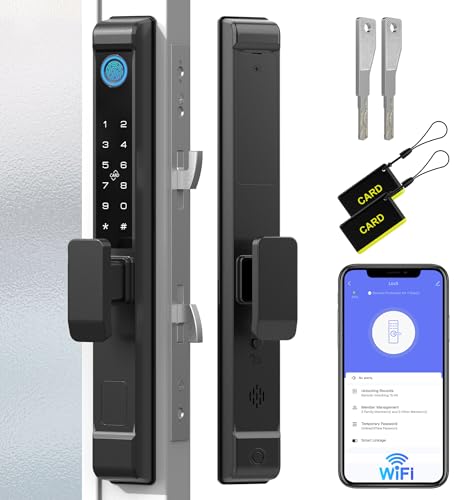
Pros
- Five entry methods, including fingerprint access
- WiFi remote control through mobile app
- Tamper alarm and 90-second lockout
- Low-battery warning with power-bank backup
Cons
- Requires compatible mortise and door dimensions
- Battery life rated for about eight months

Pros
- Five entry methods, including fingerprint and RFID
- Tuya app remote access with entry history
- Supports 300 users and temporary passwords
- Tamper alarm and five-attempt lockout
Cons
- 2085 mortise compatibility must be checked
- Requires four AAA batteries, not included

Pros
- Fingerprint, RFID, app, passcode, and key access
- Supports up to 300 users
- Remote access without WiFi or gateway
- Emergency USB power and two backup keys
Cons
- Four AAA batteries not included
- Requires precise door thickness and mortise measurements

Pros
- Five entry methods
- Remote access without a hub
- Reversible handle for either opening direction
- USB-C emergency power and two backup keys
Cons
- Four AAA batteries not included
- Door dimensions require careful checking
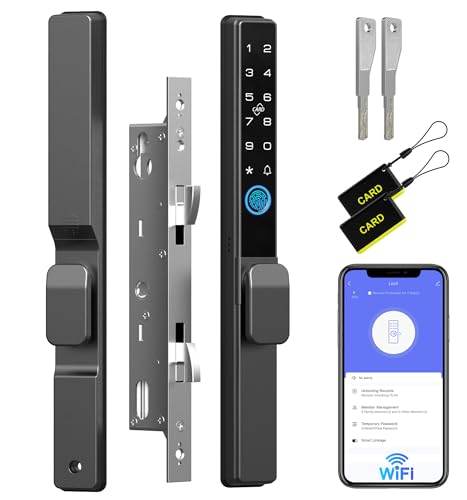
Pros
- Five access methods, including fingerprint and RFID
- WiFi remote control through mobile app
- 90-second shutdown after five invalid attempts
- Up to eight months of battery life
Cons
- Requires compatible mortise and door dimensions
- Frame must be at least 1.6 inches wide
Measure the Door Before Choosing Features
A smart lock can offer fingerprints, cards, passcodes, an app, and a mechanical key, but those features do not correct a mismatched mortise. The 2085 models suit many standard sliding patio doors, while 2885 options require a deeper pocket and a frame at least 1.8 inches wide in the cases specified by the manufacturer.
Measure the door thickness, frame width, and existing mortise before ordering. The products cover door thicknesses from roughly 7/8 inch through 4-3/4 inches, but the minimum frame width varies, so do not assume that one model will replace another.
Pro Tip: Measure the door edge and frame, then compare every dimension with the listing’s size guide before purchase.
2085 and 2885 Fit at a Glance
The pocket designation is the practical decision point for this category. A 2085 lock may be the better starting point for a typical patio installation, while a 2885 model makes sense only when the deeper pocket and frame requirements are confirmed.
| Mortise type | Frame requirement | Best match |
|---|---|---|
| 2085 | Varies by model | Standard patio doors |
| 2885 | Often 1.8 inches | Wider door frames |
Handle direction also matters. Eseesmart, Dhiedas, and the listed 2885 Anweller model provide reversible-handle details, which can help with left-opening or right-opening doors. For broader hardware questions, see this explanation of why strike plates matter.
Access Sharing and Emergency Power
Families may prefer fingerprints and RFID cards, while rental hosts often need temporary or one-time codes. Several models support up to 300 users, and app records or remote entry can help managers provide access without distributing physical keys.
Battery planning is equally important. The products generally specify up to eight months of battery life, low-power alerts, and emergency power through a power bank or USB connection. Remember that emergency USB power is for temporary entry, not for charging the installed batteries.
Before You Mount It: Do not rely on a remote access feature until the lock is fully powered and the door closes correctly; keep the supplied mechanical key available during setup.
For broader account and access concerns, read about how smart locks can be hacked. The US Consumer Product Safety Commission is also a useful authority for general household safety information.
Expert Examined
From Marcus Bell

I keep seeing the same avoidable mistake with sliding-door hardware: buyers focus on app features before checking the mortise. I would photograph the door edge, record the key measurements, and confirm the fit before choosing the access method.
Read more about Marcus BellProtection for Exterior Sliding Doors
Outdoor exposure makes housing and operating range relevant. Eseesmart and the 2085 Dhiedas model specify IP65 protection, while Eseesmart also lists operation from -13°F to 149°F. Anweller, Keylesslife, and Dhiedas models include wrong-entry limits, timed shutdowns, or tamper alerts for additional access control.
These features are useful safeguards, but they do not replace correct installation or careful code management. If you are adding another layer to an existing entry, compare the roles of a deadbolt and knob lock in your door setup rather than assuming every lock serves the same purpose.
Which Lock Fits Your Door
I would point homeowners with a standard sliding patio door toward the ESEESMART Sliding Door Smart Lock when its 2085 pocket matches the measured opening. Its five access methods, reversible handle, template-guided installation, 24-month warranty, and stated IP65 housing make it a practical fit for households that want several entry choices.
I would choose the Anweller 2885 Mortise Sliding Glass Door Lock only for a confirmed wider frame and compatible deeper pocket. Its five access methods, 90-second response after repeated invalid entries, eight-month battery claim, and power-bank backup suit a household that prioritizes access control.
For a rental property with a 2085 mortise, I would consider the Keylesslife Sliding Door Smart Lock,Sliding Door. Temporary and one-time passwords, app history, support for 300 users, and remote entry are especially relevant when family members, cleaners, or tenants need changing access.
The Bottom Line
The mistake most double-door buyers make is treating 2085 and 2885 as interchangeable labels. They are fitment choices, and the required frame width and mortise compatibility can differ between models.
If you do only one thing first, measure the door thickness, frame width, and mortise pocket. Then select access features, battery backup, weather protection, and support terms from the models that actually fit.
FAQs
Fingerprint locks can be convenient for households that want key-free entry, but the mortise and frame still need to match the door. Consider a passcode, RFID card, app, and backup key as additional access methods rather than relying on one method alone. Measure door thickness, frame width, mortise pocket dimensions, and the opening direction. Compare those measurements with the exact model requirements because 2085 and 2885 fittings do not share identical frame rules. The listed models provide low-battery alerts and emergency power through a power bank or USB connection. Several also include mechanical keys, but emergency USB power is temporary and does not recharge the installed batteries. IP65 is a housing protection rating stated by some listed models. It indicates the manufacturer presents the housing as protected against dust and water jets, but correct installation and ongoing care still matter for an exterior door.Are fingerprint locks suitable for sliding glass doors?
What should I measure before buying a double-door smart lock?
How do smart locks handle a dead battery?
What does IP65 mean for a sliding-door lock?
Sources
- US Consumer Product Safety Commission www.cpsc.gov
- UL Solutions www.ul.com