
Shopping for the best smart baseboard thermostats starts with one detail many buyers overlook: whether the wall box has the wires the thermostat needs. This selection suits homeowners choosing between line-voltage baseboard controls, radiant floor models, and connected features such as scheduling or remote access.

Pros
- Works with 120V to 240V electric heating
- Humidity sensor and touchscreen
- Scheduling and geofencing support
- Apple Home, Alexa, and Google compatible
Cons
- Requires a neutral or second live wire
- Limited to electric baseboards and fan-forced heaters
Pros
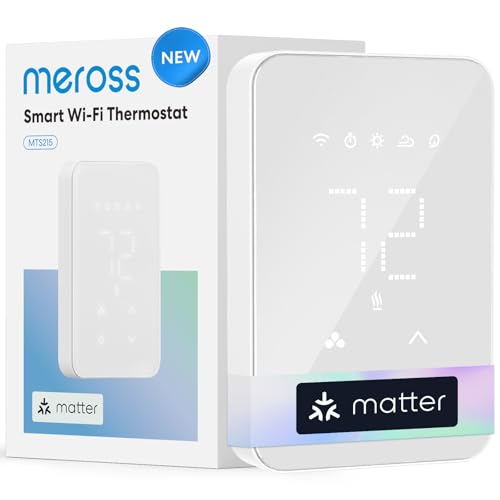
- Supports 120 to 240V electric heating
- Matter compatibility across major smart-home platforms
- 24/7 scheduling for automated temperature control
- Real-time and historical energy monitoring
Cons
- Not compatible with 24V HVAC systems
- Requires Wi-Fi for remote app control

Pros
- Smartphone control from anywhere
- Alexa and Google Assistant compatible
- 7-day programmable energy-saving schedule
- 15-foot floor sensor included
Cons
- Requires a compatible underfloor heating system
- Smart controls depend on WiFi and app setup

Pros
- 1°F temperature accuracy
- Works with Apple Home, Alexa, and Google Home
- 7-day programmable heating schedule
- Energy monitoring with historical reports
Cons
- Requires four or more installation wires
- Electric baseboard heater not included

Pros
- Supports 120V and 240V heating cables
- Built-in Class A GFCI protection
- Smart-home and voice-assistant integration
- App-based energy usage tracking
- Three-year limited warranty
Cons
- Maximum 15-amp load
- Larger systems need an additional power module
Pros
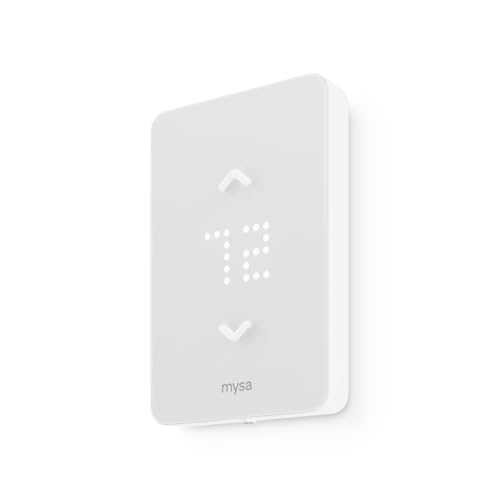
- Supports 120V and 240V electric heating
- 7-day scheduling with no subscription
- HomeKit, Alexa, and Google compatibility
- Remote control, geofencing, and vacation mode
Cons
- Requires four wires, including neutral or second live
- Not compatible with 24V furnaces or heat pumps
Match the Thermostat to the Heater
Most products here are designed for 120V or 240V electric heating, but that does not make them interchangeable. The Mysa and meross baseboard models support electric baseboards, convectors, or fan-forced heaters, while the MAXKOSKO and Schluter options are aimed at radiant underfloor heating systems.
Check the heater label and thermostat box before ordering. The meross Matter model is not for 24V HVAC equipment, and the Mysa Smart Thermostat V2 requires one neutral or a second live wire. These distinctions matter more than app features because an otherwise attractive thermostat cannot control an incompatible system.
Before You Wire: High-voltage thermostat work is not the same as low-voltage HVAC work. Turn off power at the breaker, verify compatibility, and use an electrician where local code requires it or whenever the wiring is unclear.
Wiring and Floor Sensor Details
Wire count separates several of these choices. The meross Smart Thermostat for Electric Baseboard requires four or more wires, while the Mysa LITE also requires four wires including a neutral or second live wire. The Mysa V2 states a neutral or second live wire requirement, so inspect the box rather than assuming an older thermostat has enough conductors.
Radiant floor systems require a different installation approach. MAXKOSKO includes a 15-foot floor sensor, and Schluter supports 120V and 240V heating cables with a built-in Class A GFCI. For additional background on connected home devices, see our coverage of smart energy and climate control.
| Device type | Key requirement | Best fit |
|---|---|---|
| Baseboard control | 120V or 240V wiring | Electric baseboards |
| Matter baseboard | Matter ecosystems | Multi-platform homes |
| Floor heating | Floor sensor or GFCI | Radiant systems |
The Schluter unit also carries a three-year limited warranty when installed according to its documentation. Its GFCI feature is especially relevant for buyers selecting a floor-heating controller, where electrical protection is part of the thermostat specification.
Expert Examined
From Marcus Bell

I keep seeing homeowners focus on WiFi support before opening the wall box. The mistake is ordering around the app, then discovering the thermostat needs a neutral, a second live wire, or four conductors. Check the wiring and heater voltage first, then compare scheduling and voice platforms.
Read more about Marcus BellSmart Features That Affect Daily Use
Remote control is available across several models, but the details differ. Mysa provides app control, scheduling, geofencing, and support for Apple Home, Alexa, and Google. The Mysa LITE adds vacation and away functions without a subscription, while meross models include scheduling and energy monitoring.
The meross Matter thermostat is the broadest ecosystem choice in this set because it supports Apple Home, Alexa, Google Home, and SmartThings through Matter. Its open-window detection can pause heating when a window is detected, while the other meross model also offers energy reports and home-automation triggers.
If your priority is radiant comfort rather than baseboard control, the MAXKOSKO uses the Smart Life app and supports Alexa and Google Assistant. Buyers comparing wider smart-home compatibility may also find our HomeKit device coverage useful for understanding ecosystem decisions.
Pro Tip: Write down the heater voltage, wire count, and smart-home platform before opening a product page. Those three checks eliminate most mismatches quickly.
Which Thermostat Fits Your Wiring
I would point you to the Mysa Smart Thermostat V2 for Electric Baseboard for a connected baseboard room where geofencing, touchscreen control, humidity sensing, and broad voice-assistant support matter. Its stated 120V to 240V range covers common electric baseboard and fan-forced applications, provided the box has the required neutral or second live wire.
For a multi-platform household that wants Matter support and a lower-cost route to scheduling, I would choose the meross Matter Smart Thermostat for Electric. It supports Apple Home, Alexa, Google Home, and SmartThings, and adds energy monitoring plus open-window detection. For radiant floor heating, I would instead choose the MAXKOSKO WiFi Smart Radiant Underfloor Heating when a floor sensor and Smart Life control suit the installation.
The Bottom Line
The single mistake most buyers make is treating every smart thermostat as a universal replacement. Line voltage, heater type, wire count, and floor-sensor requirements decide compatibility before scheduling or voice control enters the discussion.
If you only do one thing first, remove the existing thermostat cover with the breaker off and document the heater voltage and available wires. Use that information to narrow the choice, then confirm the thermostat’s supported heater type and smart-home platform.
FAQs
No. These products are intended for specified high-line-voltage systems, commonly 120V or 240V, while some are designed specifically for radiant floor heating. Check the heater type and voltage before purchase. Requirements vary. The meross baseboard model requires four or more wires, and both Mysa models specify a neutral or second live wire, with the LITE also stating a four-wire requirement. Inspect the wall box first. Some radiant floor thermostats use a floor sensor. MAXKOSKO includes a 15-foot floor sensor, while the Schluter model is designed for heating cables and includes Class A GFCI protection. A Class A GFCI is designed to cut power when it detects a ground-fault condition that could create an electrical shock risk. Schluter lists this feature as built into its floor-heating thermostat.Can a smart thermostat control any baseboard heater?
How many wires does a smart baseboard thermostat need?
Do floor-heating thermostats need a sensor?
What does Class A GFCI mean on a thermostat?
Sources
- National Fire Protection Association www.nfpa.org
- UL Solutions www.ul.com