
Securing inventory and monitoring register transactions demands the best security cameras for small business without flooding your checkout network. Most store managers struggle between flexible wireless setups and hardwired reliability when choosing surveillance gear. Running dedicated network recorders keeps local operations private, stable, and independent of monthly fees.

Pros
- Pre-installed 2TB hard drive for 24/7 recording
- Single-cable PoE connections reach up to 330 feet
- Expandable storage supports extra 8TB eSATA drive
- Runs independently offline via internal DHCP function
- Free mobile and desktop apps without subscription fees
Cons
- Works exclusively with Reolink brand IP cameras
- Firmware updates required before initial camera setup

Pros
- Dual 4K fixed and 360-degree PTZ tracking lenses
- Auto-tracks moving subjects up to 164 feet away
- Starlight color night vision without needing a spotlight
- AI human, pet, and vehicle detection filters alerts
Cons
- Requires eufy NVR S4 or updated HomeBase Pro
- PoE injector, switch, and adapter sold separately
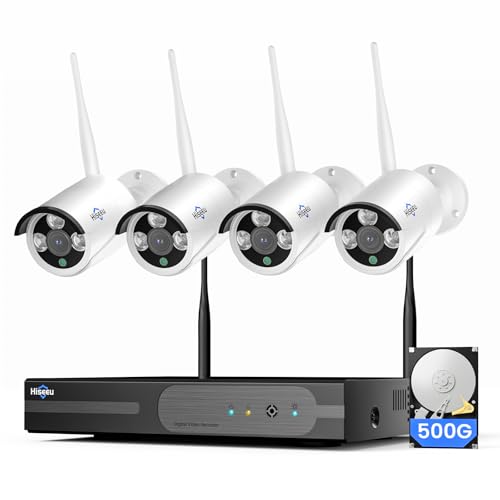
Pros
- Pre-installed 500GB hard drive without subscription fees
- Dual-band WiFi connectivity plus standalone local monitoring
- Expandable 16-channel NVR with 4K color night vision
- Weatherproof IP66 housings rated from minus 13 degrees
Cons
- Plug-in wired power requires nearby outdoor outlets
- Comes with four cameras despite sixteen channel capacity

Pros
- Pre-installed 3TB drive, no monthly fees
- AI human detection filters pets and shadows
- IP66 weatherproofing down to -13 degrees
- Expandable 16-channel NVR for extra cameras
Cons
- Requires wired power outlets for each camera
- Wireless range limited to 100-foot distance

Pros
- Pre-installed 2TB hard drive with expansion support
- Single PoE cable runs power and data up to 330ft
- Continuous 24/7 recording across eight camera channels
- Free desktop and mobile app with zero monthly fees
Cons
- Cameras not included with recorder unit
- Works exclusively with Swann IP cameras

Pros
- Pre-installed 4TB hard drive, expandable to 20TB
- 4K ultra HD resolution with 132-degree field of view
- Color night vision detection up to 100 feet away
- Built-in person and vehicle AI recognition with strobe sirens
Cons
- Requires running Ethernet cables to every camera location
- Includes only eight cameras for the 16-channel recorder
Hardwired Ethernet Versus Bandwidth Throttling
Commercial facilities cannot afford signal drops caused by metal shelves, concrete walls, or customer Wi-Fi traffic. Running Power over Ethernet supplies electricity and high-resolution video streams through a single cable up to several hundred feet away. Understanding what is an NVR and how is it different from a DVR helps owners choose modern IP setups over outdated coax connections.
Standard retail spaces benefit directly from localized networking because customer transactions continue smoothly without video feeds hogging store bandwidth. Standalone recorders operate their own subnets through integrated switches, isolating high-throughput 4K feeds from public point-of-sale terminals. You can check network safety guidelines through the Federal Communications Commission to ensure compliant commercial radio and networking hardware.
| Connection Type | Cable Range | Power Source |
|---|---|---|
| PoE Wired | Up to 330 ft | Single RJ45 Cable |
| Dual-Band Wi-Fi | Up to 100 ft | Dedicated AC Plug |
| Local NVR Hub | Direct Link | Centralized Unit |
Storage Retention and Event Retrieval
Around-the-clock video generation quickly fills modest hard drives, especially when running multiple 8MP streams simultaneously. Storing several weeks of footage requires efficient compression standards like H.265 to cut data volume in half. Establishing long retention buffers ensures you have records ready whenever is security camera footage admissible in court becomes an urgent legal priority for an insurance claim.
Many commercial managers configure their recorders to capture constant background video while tagging specific AI-detected events for quick review. Separating people from passing cars keeps alerts actionable without pinging store staff constantly throughout operating hours. Activity zones permit managers to exclude public sidewalks and focus strictly on entrance doors and stockrooms.
Check Local Recording Laws: Mounting security equipment in spaces where workers or customers expect privacy can trigger severe statutory penalties. Never position active recording lenses toward employee locker rooms, restrooms, or break areas.
Visual Deterrence and Night Visibility
Clear coverage of loading docks and back alleys requires sensitive optical components that capture detail without blown-out glare. Starlight sensors gather available ambient light from streetlamps to maintain color feeds into late hours. Interpreting alert indicators is simple once you master what do the lights on a security camera mean during active guard patrols.
Expert Examined
From Marcus Bell

I see many store managers aim wide-angle lenses across large parking lots and assume they will read license plates at fifty paces. Optical magnification or dedicated auto-tracking hardware is necessary if you need identifiable details beyond twenty feet.
Read more about Marcus BellActive deterrence elements make a measurable difference in stopping trespassing before inventory disappears behind fences. Flashing strobe lights combined with automated voice alerts signal to intruders that recording has started. Sturdy metal housings rated for harsh weather protect outdoor lenses from driving rain, snow, and summer heat.
Pro Tip: Position entrance cameras near eye level to capture facial features beneath baseball caps rather than pointing them straight down from high ceilings.
Matching Equipment to Your Floor Plan
I suggest the 4K PoE Security Camera System for sprawling spaces like open warehouses, car lots, or large retail stockrooms. Its sixteen-channel capacity gives you immediate room to expand, while the pre-installed four-terabyte hard drive provides massive local retention for eight included 8MP bullet cameras. The metal exterior construction handles intense outdoor exposure, and the active strobe alarms warn off after-hours trespassers automatically.
For mid-sized storefronts that already have compatible IP units or want to select specific hardware, I would point you to the REOLINK RLN8-410 8CH NVR Network Video Recorder. It delivers a dependable plug-and-play foundation with eight powered network ports and an integrated two-terabyte drive that handles 24/7 recording. If you have an existing commercial setup and need to secure a complex loading gate, the eufy Security PoE Bullet-PTZ Cam S4, 4K UHD excels with its dual-lens framing that tracks people up to 164 feet away.
The Bottom Line
The single biggest mistake small business owners make is relying on wireless consumer cameras that drop offline during network saturation or power interruptions. Battery-powered units miss crucial events while recharging, and shared Wi-Fi signals frequently buffer during busy checkout periods. Running dedicated Ethernet cables straight to a central network recorder guarantees continuous evidence preservation without ongoing subscription overhead.
Begin by mapping every entrance, register register station, and blind delivery corner before purchasing hardware. Choose a centralized video recorder that offers more input channels than your initial camera count so you can easily scale coverage later. Once your central hub is mounted in a locked utility closet, route direct cables to keep business operations secure and fully documented.
FAQs
Should a small business choose PoE or wireless cameras?
PoE cameras provide consistent power and video transmission over a single Ethernet line without fighting customer Wi-Fi for bandwidth. Wireless cameras suit temporary setups or rented offices where drilling holes is strictly forbidden, but PoE remains the professional standard for uninterrupted commercial recording.
How much hard drive storage does a commercial system need?
A system running four 4K cameras on continuous 24/7 recording typically requires two to four terabytes of storage to retain thirty days of footage using modern H.265 compression. Businesses with eight or more cameras should plan for four to eight terabytes to maintain adequate historical records for insurance investigations.
Do commercial security systems work without the internet?
Yes, network video recorders with integrated PoE switches create their own private local network to record video without an outside internet connection. An internet connection is only necessary when managers wish to view live feeds remotely or receive real-time push alerts on mobile devices.
What weather rating is necessary for outdoor commercial cameras?
Outdoor commercial cameras should carry at least an IP65 or IP66 weather resistance rating. These ratings confirm that internal electronics stay sealed against high winds, driving rain, dust, and temperature extremes across standard industrial operating conditions.
Sources
- Federal Communications Commission Equipment Authorization www.fcc.gov
- Occupational Safety and Health Administration Workplace Guidelines www.osha.gov
- National Institute of Standards and Technology Video Analytics Guide www.nist.gov