
Installing the best professional security cameras means moving past disposable Wi-Fi hardware and investing in dedicated wired infrastructure. The choice hinges on whether your site requires active optical tracking across wide perimeters or fixed wide-angle coverage over vulnerable entryways. Commercial properties and expansive residences require reliable data feeds that never stutter when network traffic spikes.
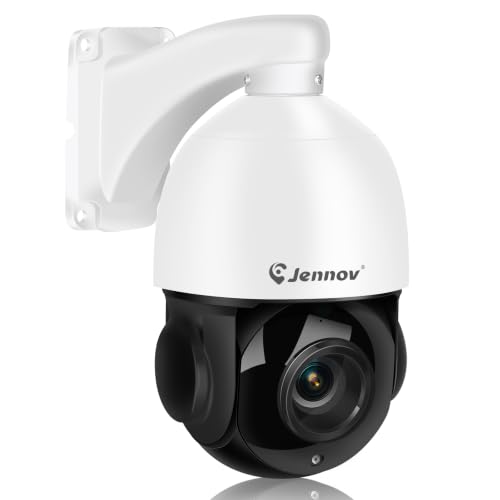
Pros
- 4K 8MP video with 20X optical zoom
- Auto tracking with adjustable human detection
- 320-foot IR night vision
- PoE connection uses one Ethernet cable
Cons
- Works only with Onvif PoE NVRs
- Tracks only one target at a time

Pros
- Adds 100 feet of camera distance
- Single cable carries power, video, and audio
- UL VW-1 and FT1 fire certified
- Includes dedicated RJ45 inline extension adapter
Cons
- Listed specifically for Swann NVR systems
- Fixed 100-foot length cannot be adjusted

Pros
- High 5MP resolution at 2592 x 1944 pixels
- Single-cable PoE data and power delivery
- Smart human and vehicle motion detection
- Night vision reaches up to 80 feet
Cons
- Requires separate PoE switch or injector
- Limited one-year manufacturer warranty

Pros
- IK10 vandal-proof and IP67 weatherproof dome housing
- AI detection filters human and vehicle movement
- Included 4TB hard drive expandable to 16TB
- Up to 100ft night vision on 5MP cameras
- Single-cable PoE carries power and video simultaneously
Cons
- Fixed 2.8mm lenses lack optical zoom or PTZ controls
- Requires physical network cable runs for 16 cameras

Pros
- 2K+ resolution with Color Night Vision
- Smart AI detects faces, people, and vehicles
- Red and blue deterrence lights
- IP67 weatherproof outdoor housing
Cons
- Requires a compatible U-Series NVR
- Cables are not included

Pros
- 4K 8MP resolution with 5X motorized optical zoom
- Wide coverage via 350-degree pan and 87-degree tilt
- IK10 vandal-proof and IP66 weatherproof metal housing
- Long-range infrared night vision up to 130 feet
Cons
- Restricted to ONWOTE NVR systems
- Requires hardwired PoE power setup
Power over Ethernet and Bandwidth Demands
Commercial hardware relies on Power over Ethernet to carry electrical current and high-resolution video streams through a single run. Running high-grade network lines like the Swann Security Cat5 Ethernet Cable eliminates the latency, dropouts, and signal interference that constantly plague consumer wireless gear. Standards like those maintained by UL Solutions verify that extended structural wiring resists flame spread inside wall cavities.
Bandwidth usage increases dramatically once you move to 4K resolution. Modern setups utilize H.265 compression protocols to slash digital file weights by more than half without sacrificing plate readability. Understanding what is an NVR and how is it different from a DVR helps buyers allocate adequate storage pools before recording multi-channel streams.
Network Planning: Always connect high-draw motorized cameras to an isolated network switch to prevent video packets from congesting your primary household network.
Housing Ratings and Physical Resistance
Harsh environments demand housings certified to withstand mechanical strikes and sustained weather events. An IP66 rating resists driving rain and blowing grit, while an IP67 enclosure withstands temporary immersion. For commercial perimeters subject to physical interference, an IK10 impact classification ensures the dome resists direct sledgehammer or projectile blows.
| Form Factor | Key Strength | Best Placement |
|---|---|---|
| PTZ Motorized | Long-range zoom | Open parking areas |
| Fixed Bullet | Visible deterrent | Fence perimeters |
| Vandal Dome | Impact resistance | Low-clearance entries |
Optical performance also separates commercial housings from standard budget units. Motorized zoom lenses mechanically shift glass elements to preserve detail, unlike digital cropping that quickly degenerates into jagged pixels. Proper target distance determines whether saved files qualify when verifying is security camera footage admissible in court after an intrusion.
Expert Examined
From Marcus Bell

The mistake I see most often is placing fixed dome cameras under dusty soffits without regular maintenance. Spiders build webs directly across the infrared emitter array, bouncing blinding light back into the sensor and wiping out nighttime detection.
Read more about Marcus BellLocal NVR Storage Versus Cloud Subscriptions
Professional installations depend on on-premise recording units rather than recurring cloud plans. Storing multi-stream feeds locally on surveillance-grade hard drives preserves continuous twenty-four-hour records rather than fragmented motion clips. If your facility requires automated subject screening, evaluate whether advanced platforms utilize specialized profiles or if do security cameras have facial recognition built into their onboard logic.
Physical deterrents integrated into the housing can stop intrusions before physical breach attempts occur. Certain units feature bright strobe emitters or siren triggers that activate when human profiles cross virtual tripwires. Checking what do the lights on a security camera mean ensures operators know whether an active deterrent LED or a passive infrared illuminator is engaging.
Wiring Safety: Never run non-rated Ethernet cabling through heating ducts or air returns, as melting plastic jackets produce toxic fumes during a structure fire.
Matching the Hardware to Your Layout
For large open acreage or expansive commercial parking fields, I would point you toward the Jennov 4K 8MP Outdoor PTZ IP POE Camera with Pan. Its 20X optical zoom and 320-foot night vision give you true distance identification, while the auto-tracking patrol routes guard wide areas without leaving blind spots. It handles active perimeter sweeps better than fixed lenses can manage.
If you need comprehensive building coverage right out of the crate, I would recommend the 4COVR 16 Channel PoE Security Camera System. The sixteen included IK10 vandal-proof dome cameras and pre-installed four-terabyte hard drive provide immediate coverage for complex structures without piecing together individual components. For standalone entrances, the Lorex Connect (New App) delivers sharp 2K resolution along with active deterrence lighting that turns away trespassers before they reach your doorway.
The Bottom Line
The single mistake most property managers make is buying high-resolution cameras without checking switch power capacity and storage throughput. A 4K camera is useless if your switch cannot output sufficient PoE wattage or your hard drive drops frames during simultaneous write operations.
Start by drawing a complete map of your physical perimeter to identify choke points, lighting deficits, and cable routes. Secure your entry points with durable dome housings first, then add high-reach motorized zoom hardware to cover remaining open spaces.
FAQs
How does optical zoom differ from digital zoom on surveillance cameras?
Optical zoom physically moves the glass elements inside the lens assembly, magnifying the subject while keeping the full image resolution intact. Digital zoom simply enlarges the existing pixels electronically, which causes severe distortion and makes distant license plates illegible.
What power standard is needed for commercial PoE cameras?
Standard fixed IP cameras usually operate on standard IEEE 802.3af PoE, which delivers up to 15.4 watts per port. Heavy motorized PTZ cameras with built-in heaters and long-range infrared arrays often require PoE+ (802.3at), which supplies up to 30 watts of continuous power.
Can professional IP cameras function without an internet connection?
Yes, professional PoE systems record continuously to a local NVR or local server without an external internet connection. An internet connection is only necessary if you want remote mobile viewing, off-site backups, or push notifications sent to your smartphone.
Why are vandal-proof IK ratings important for perimeter security?
IK ratings measure the level of protection a camera housing provides against external mechanical impacts. An IK10 rating guarantees the dome housing can survive a twenty-joule impact, protecting the internal lens from intentional strikes with bats, stones, or metal pipes.
Sources
- UL Solutions Standards Catalog www.ul.com
- Federal Communications Commission Equipment Authorization www.fcc.gov