
Running the best PoE security cameras eliminates the battery anxiety and signal dropouts that frequently plague wireless home surveillance. The main hurdle for homeowners is deciding between an all-in-one recorder kit and individual cameras built for custom storage setups. Ethernet cabling provides both power and video across one jacket, delivering continuous coverage for large properties.
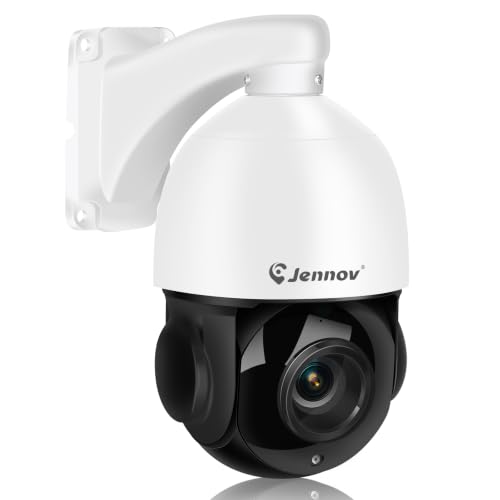
Pros
- 4K 8MP video with 20X optical zoom
- Auto tracking with adjustable human detection
- 320-foot IR night vision
- PoE connection uses one Ethernet cable
Cons
- Works only with Onvif PoE NVRs
- Tracks only one target at a time
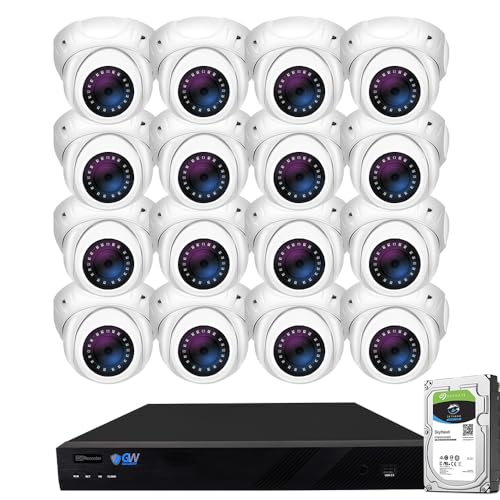
Pros
- Sixteen 5MP dome cameras with 130-foot night vision
- Smart AI facial, vehicle, and human detection
- Pre-installed 4TB storage expandable up to 20TB
- Single-cable PoE setup simplifies camera wiring
- NDAA compliant with US-based technical support
Cons
- Requires running physical Ethernet cables to every camera
- Large physical setup demands dedicated indoor equipment space

Pros
- High 5MP resolution at 2592 x 1944 pixels
- Single-cable PoE data and power delivery
- Smart human and vehicle motion detection
- Night vision reaches up to 80 feet
Cons
- Requires separate PoE switch or injector
- Limited one-year manufacturer warranty

Pros
- Sharp 3K resolution with 123-degree field of view
- Smart dual-light color night vision up to 30 meters
- Onboard AI detection for people and vehicles
- Pre-installed 1TB hard drive for continuous recording
Cons
- One-way audio with no two-way talkback speaker
- Requires running PoE network cables to every camera

Pros
- 20X optical zoom captures distant details clearly
- True 4K 8MP sensor for crisp target identification
- Motorized 360-degree pan and 90-degree tilt coverage
- AI auto-tracking follows detected human movement
Cons
- Wired installation requires PoE or 12V DC cabling
- Large 12.2-inch housing requires substantial mounting clearance

Pros
- Vivid 4K 8MP resolution with CMOS sensor
- Smart dual lights switch to color night vision
- Built-in 2TB hard drive for 24/7 recording
- AI detection filters human and vehicle motion
- IP67 weather resistance on outdoor turret housings
Cons
- Wired PoE setup requires running network cables
- Six cameras included for eight available channels
Standalone IP Units Versus Bundled Recorder Kits
Single cameras give you the freedom to choose your own video management software or network storage. You run one Ethernet cable from each camera to an existing PoE switch, then configure streams through network protocols. This path suits anyone who already manages an active home server or prefers modular hardware upgrades.
Turnkey camera bundles route every line back to a dedicated video appliance. If you are unfamiliar with local network storage, learning what is an NVR and how is it different from a DVR clarifies how modern network recorders process full digital data streams. Bundled setups remove network configuration friction because the central recorder powers the cameras and handles video indexing automatically.
| Camera Type | Primary Strengths | Ideal Location |
|---|---|---|
| Fixed Bullet | Narrow focus and reach | Driveways and fence lines |
| Fixed Turret | Wide angle and compact | Porches and exterior eaves |
| Motorized PTZ | 360 degree active tracking | Large yards and intersections |
Optical Zoom and Perimeter Tracking Realities
Motorized pan-tilt-zoom hardware allows a single camera to scan wide yards and close in on distant property lines. Fixed lenses rely entirely on digital cropping, which rapidly degrades clarity when identifying far away vehicle plates or human visitors. Optical glass elements preserve sensor resolution throughout the entire zoom range, keeping details sharp at long distances.
Automated motion tracking requires realistic expectations around property layouts. Single PTZ lenses can follow only one moving subject at a time, leaving the rest of the perimeter unmonitored during the cruise cycle. Combining a moving camera with static wide-angle units ensures you do not miss simultaneous events across other zones.
Network Bandwidth Demands: Running multiple 4K cameras on an unmanaged home router can saturate local switch bandwidth. Use isolated network switches to prevent video traffic from slowing personal devices.
Night Illumination and AI Filtering Accuracy
Infrared LEDs provide stealthy night vision, but they capture only black and white footage. Dual light systems activate supplemental white spotlights when motion occurs, restoring full color details during critical security incidents. Understanding what do the lights on a security camera mean helps prevent unwanted spotlight activations that irritate neighbors.
Onboard smart detection separates tree branches and passing pets from vehicles and human intruders. Higher tier units also process stored profiles to answer whether security cameras have facial recognition built into their event alerts. Hardware compliant with standards from the Federal Communications Commission limits interference across your wired home network.
Expert Examined
From Marcus Bell

The mistake I see most often is running exterior Ethernet cables without drip loops or waterproof connector jackets. Moisture wicks straight through the RJ45 jack during heavy downpours, corroding the camera board within months.
Read more about Marcus BellPro Tip: Always terminate outdoor cable runs with solid copper Category 6 wire rather than copper clad aluminum to prevent voltage drops over long distances.
Matching Hardware to Your Property Layout
For an expansive property needing active gate surveillance, I would point you to the Jennov 4K 8MP Outdoor PTZ IP POE Camera with Pan. Its 20X optical zoom and 320 foot infrared reach allow clear tracking across deep driveways without losing image clarity at night.
If you want a complete property overhaul in a single box, I recommend the ANNKE 8CH 4K PoE Security Camera System. The six included 8MP turret cameras feature smart dual lighting and an IP67 rating, while the preinstalled 2TB hard drive handles continuous recording out of the box.
For homeowners who already run a home server or third party network video software, I suggest adding the Tennoz 5MP PoE IP Bullet Camera Outdoor. Its open protocol support and 105 degree field of view make it an efficient way to cover secondary side yards on a budget.
The Bottom Line
Many buyers buy high resolution cameras without planning where the high bitrate footage will actually live. High resolution continuous streams quickly overwhelm modest storage drives and cheap networking gear. Verify your switch wattage budget and drive capacity before mounting a single bracket.
Your first step should be mapping physical wire pathways from your central utility space to each exterior mounting point. Getting physical Ethernet cables pulled safely through walls establishes a reliable foundation that will support your cameras for decades to come.
FAQs
Do PoE cameras work if the home internet goes down?
Yes, PoE cameras record continuously to local hard drives or network video recorders without internet access. An internet connection is only needed when you want to view live video feeds or receive push alerts on your phone away from home.
How far can an Ethernet cable run to a PoE camera?
A standard Category 5e or Category 6 Ethernet cable supports reliable data transmission and power delivery up to 328 feet. Running cable beyond that distance requires an inline PoE extender or an intermediate powered network switch.
What is the difference between a turret and a dome camera?
Turret cameras feature an exposed ball and socket design that prevents internal infrared glare from bouncing back into the lens. Dome cameras enclose the lens inside a clear glass shell, offering better vandal resistance but requiring frequent cleaning to avoid haze.
Can you mix different camera brands on one recorder?
Yes, as long as both the camera and the recording hub support the ONVIF profile protocol. Some specialized AI features like facial recognition or custom spotlight triggers may only function when cameras match the recorder brand.
Sources
- Federal Communications Commission www.fcc.gov
- Institute of Electrical and Electronics Engineers www.ieee.org