
Shopping for the best outdoor smart plugs for Home Assistant requires one safety check before comparing features: none of these listed models is described as weatherproof or outdoor-rated. That makes weather protection and Home Assistant connection the key split, especially for anyone automating patio lights, pumps, or seasonal decorations.

Pros
- Matter support across major smart home platforms
- Compact design helps preserve nearby outlet access
- UL certified flame-retardant design
- Scheduling, timers, app, and voice control
Cons
- 2.4 GHz Wi-Fi only
- Limited to 15A/1800W maximum
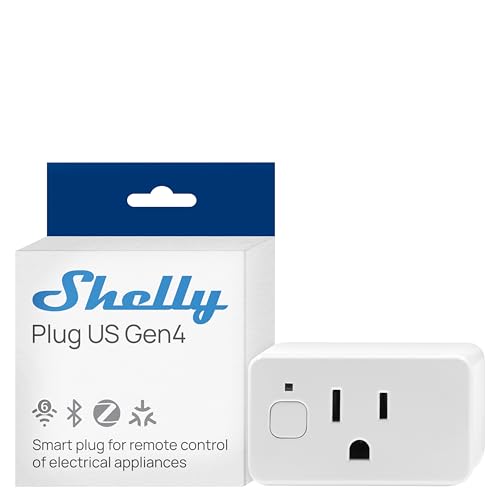
Pros
- Real-time power monitoring
- Wi-Fi, Matter, Bluetooth, and Zigbee
- UL Certified
- Built-in schedules and timer
- Three-year warranty and support
Cons
- Best suited to small appliances
- App-based control requires setup

Pros
- Controls two devices independently or together
- Matter certified for major smart-home platforms
- Energy monitoring for connected devices
- ETL certified with improved load capacity
Cons
- Requires neutral wiring for installation
- 2.4GHz Wi-Fi required for setup

Pros
- Real-time energy monitoring
- 15A outlet rating
- Zigbee repeater functionality
- ETL certified
- Space-saving design preserves adjacent socket
Cons
- Zigbee hub required
- Energy monitoring needs supported hub

Pros
- Matter support across major smart-home platforms
- 15A/1800W capacity for household electronics
- Remote control, timers, and scheduling
- FCC certified with overload protection
Cons
- Hub required for most listed platforms
- 2.4GHz Wi-Fi and IPv6 network only

Pros
- Matter support for major smart home platforms
- 15A/1800W capacity
- Remote app control from anywhere
- Voice control with Siri and Alexa
- Timers and schedules for automation
Cons
- Requires 2.4GHz Wi-Fi and IPv6
- Hub required for most Matter platforms
Start With the Outdoor Enclosure
A smart plug intended for outdoor use needs protection from rain, sprinklers, condensation, and direct sunlight. The product information supplied for these six choices describes indoor smart plug or in-wall features, but it does not provide an outdoor rating. Treat that omission seriously rather than placing a plug in an exposed receptacle.
For a covered porch, you still need a suitable weather-resistant enclosure and a protected receptacle. Keep the plug and connection away from standing water, and do not assume that a flame-retardant, UL-certified, or ETL-certified design means the device is outdoor-rated. The US Consumer Product Safety Commission is a useful safety authority for household electrical hazards.
Before You Mount It: Outdoor placement requires more than a smart-home compatibility label. Do not expose an unlisted plug or its connection to rain, irrigation, or wet ground.
Match the Radio to Home Assistant
THIRDREALITY is the clearest fit for a Home Assistant setup in the supplied specifications. Its Zigbee plug requires a compatible hub, supports Home Assistant, acts as a Zigbee repeater, and provides real-time energy monitoring through Home Assistant. That makes it attractive when you already operate a Zigbee network.
Matter models offer a different route. The TP-Link Tapo and Linkind plugs can communicate with Matter-certified platforms over the local network, while Linkind requires a Matter controller for Apple Home, Alexa, Google Home, or SmartThings. The Shelly model adds Wi-Fi, Bluetooth, Zigbee, and Matter, plus power monitoring, but you should confirm the exact Home Assistant integration and controller arrangement before buying.
<table]
Connection type | Main requirement | Best placement
Zigbee | Compatible hub | Covered area
Matter Wi-Fi | Matter controller | Dry enclosure
In-wall outlet | Neutral wiring | Indoor wall
[/table]
For broader context on Zigbee ecosystems, see these Zigbee devices for Home Assistant. A radio that works indoors can still lose reliability outdoors if the wall, enclosure, or distance weakens the connection.
Expert Examined
From Marcus Bell

I keep the radio decision separate from the weather decision because they fail differently in real homes. The mistake I see is putting a compatible plug outside first, then trying to solve moisture and signal problems afterward. Choose the protected location and hub path before routing power.
Read more about Marcus BellCompare Monitoring, Control, and Installation
Energy monitoring is useful for outdoor loads that run on schedules, particularly when you want to notice unusual consumption. THIRDREALITY and Shelly specifically include real-time monitoring, while the Tapo in-wall outlet tracks connected-device energy use and controls two devices independently or together.
Compact plug-in models are simpler to move between locations. The Tapo mini and both Linkind versions support scheduling, remote control, voice control, and 15A/1800W capacity, while the Linkind products require 2.4GHz Wi-Fi and IPv6. The Tapo mini also supports local Matter control when internet service is unavailable.
An in-wall outlet is a larger commitment because the Tapo P210M requires neutral wiring. It can be useful for a permanent indoor installation, but it is not a shortcut to outdoor protection. For smart-home planning beyond plugs, the site’s smart sensors and home automation section covers related device categories.
FYI: Matter describes a smart-home interoperability standard, not a weatherproofing certification. A Matter label can simplify platform control while saying nothing about rain, water, or outdoor installation.
Which Plug Fits Your Setup
I would point Zigbee users toward the THIRDREALITY ZigBee Smart Plug 4 Pack when Home Assistant is already built around a compatible Zigbee hub. Its repeater function, Home Assistant support, energy monitoring, and configurable power-restore behavior address the control needs of a distributed setup, though the plug still needs a protected location.
I would choose the Shelly Smart Plug UL WiFi Bluetooth Zigbee Matter for a household that values protocol flexibility and power data. Its combination of Wi-Fi, Bluetooth, Zigbee, and Matter gives you more connection paths, while local schedules, notifications, and a protective socket cover add practical control indoors.
For a simple Matter rollout, I would consider the TP-Link Tapo Matter Supported Smart Plug Mini. Its compact design, 2.4GHz Wi-Fi, LAN control, scheduling, and support for major platforms make it easy to place inside a properly protected enclosure, but the supplied specifications do not establish outdoor certification.
The Bottom Line
The biggest mistake is treating Home Assistant compatibility as proof that a smart plug can survive outdoors. Zigbee, Matter, Wi-Fi, UL, and ETL features help with control or safety, but they do not replace an outdoor rating and weather protection.
If you do only one thing first, identify a dry, protected installation point and verify the electrical enclosure and receptacle requirements. Then choose THIRDREALITY for a compatible Zigbee path, Shelly for multi-protocol flexibility, or Tapo for compact Matter control.
FAQs
The supplied specifications do not identify any of the six models as weatherproof or outdoor-rated. Use them only in a location and enclosure that meet applicable electrical requirements, and keep connections away from rain, sprinklers, and standing water. THIRDREALITY specifically lists Home Assistant support through Zigbee and supports energy monitoring and power-restore settings. Matter can provide local network control, but you need a compatible Matter controller and should confirm the integration you plan to use. The THIRDREALITY plug requires a Zigbee hub, while Linkind requires a Matter controller for several major platforms. Wi-Fi models connect through Wi-Fi, but platform requirements and local-control features still vary by product. UL and ETL certification can indicate that a product meets relevant evaluated safety requirements, but the label does not automatically mean the plug is suitable for outdoor exposure. Check for explicit outdoor or weather-resistant approval before placing a device outside.Can any of these smart plugs be used outdoors?
Is Zigbee or Matter better for Home Assistant?
Do outdoor smart plugs need a hub?
What does UL or ETL certification mean here?
Sources
- UL Solutions and product safety standards. www.ul.com
- US Consumer Product Safety Commission and electrical safety. www.cpsc.gov
- National Fire Protection Association and electrical safety guidance. www.nfpa.org