
Shopping for the best outdoor smart locks gets easier once you separate entry doors from fence gates, because the right access method and weather rating differ. This selection suits homeowners choosing between app-connected deadbolts, Apple Home Key models, and a battery-free mechanical gate lock.

Pros
- Six entry methods, including fingerprint recognition
- Apple Home Key via iPhone or Apple Watch
- Thread support for Apple Home connectivity
- Stores up to 100 fingerprints and passcodes
Cons
- Remote access requires a Thread-enabled hub nearby
- Uses eight AA alkaline batteries
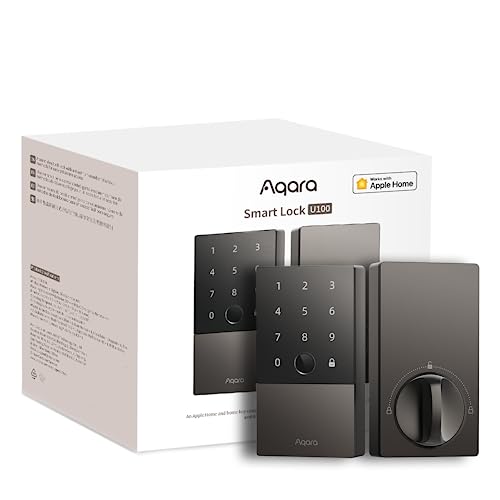
Pros
- Apple Home Key with iPhone and Apple Watch
- Fingerprint reader stores up to 50 prints
- Four AA batteries last up to 8 months
- IP65 zinc-alloy body, emergency USB-C charging
Cons
- Aqara Zigbee hub required for remote passwords
- NFC card sold separately

Pros
- Mechanical keypad operation, no batteries
- Custom 4 to 6 digit code
- Weather-resistant zinc alloy construction
- Works with left or right opening doors
Cons
- Manual deadbolt requires hand locking
- Not compatible with glass doors

Pros
- Up to 200 customizable access codes
- Remote app control with activity timestamps
- Backlit tactile keypad for nighttime use
- BHMA Grade 3 and IP54 rated
Cons
- AA batteries require periodic replacement
- Remote features use Wi-Fi and the app

Pros
- Apple Home Key and Thread support
- Fingerprint, keypad, app, and key entry
- Up to 100 fingerprints and passcodes
- IP65 weatherproof construction
Cons
- Remote access requires a nearby Apple hub
- Uses eight AA alkaline batteries

Pros
- Apple Home Key support with iPhone and Apple Watch
- Touchscreen keypad with temporary and one-time passwords
- IPX5-rated zinc alloy lock body
- Rekeyable cylinder supports an existing five-pin key
Cons
- Aqara hub required for remote access features
- NFC card sold separately
Match the Lock to the Opening
A standard exterior door usually calls for a deadbolt that fits common door thicknesses and latch backsets. The ThorBolt X1 models, Aqara Smart Lock U100, Aqara Smart Lock U50, and Tapo Smart Wi-Fi Deadbolt Door Lock are designed around door hardware rather than a fence latch, so measure the existing opening before ordering.
A garden gate, patio gate, or detached storage entrance may need a different approach. The Keyless Gate Locks for Outdoor Fence uses a manual deadbolt and a four- to six-digit code, making it suitable where you want outdoor access without batteries, an app, or a wireless connection.
For an outward-opening door, the strike plate and frame deserve attention as much as the keypad. Review these strike plate basics before replacing the lock, especially if the existing frame has loosened screws or shallow reinforcement.
Before You Mount It: A weather rating does not correct a poor fit. Confirm door thickness, backset, hole size, opening direction, and clearance around the keypad before installation.
Weather Protection and Power Are Different Questions
IP ratings describe resistance to dust and water exposure, but they do not tell you how often batteries need attention. The ThorBolt X1 models have an IP65 rating and use eight AA alkaline batteries, while the Aqara U100 has IP65 protection and uses four AA batteries with an emergency USB-C port.
The Aqara U50 lists IPX5 protection, four included AA batteries, emergency USB-C charging, and up to six months of battery life. Tapo lists IP54 protection, four included AA batteries, and up to 200 days in Wi-Fi mode or 300 days in Bluetooth mode.
| Device type | Access method | Best placement |
|---|---|---|
| Battery smart deadbolt | App, keypad, or biometric | Exterior entry door |
| Mechanical gate lock | Manual code | Fence or patio gate |
| Thread deadbolt | Home Key or fingerprint | Apple-connected door |
Choose a battery format you can replace easily and keep the emergency charging port accessible. A covered porch may reduce direct exposure, but it should not replace checking the stated rating or protecting the lock from standing water.
Pro Tip: Add a recurring battery check to your home-maintenance calendar, and keep the mechanical backup key or emergency power method available to an authorized household member.
Choose the Smart-Home Path Before Buying
Apple households have the clearest match among these choices. The ThorBolt X1 models and both Aqara models support Apple Home Key, while the ThorBolt locks use Thread and the Aqara models list Matter over Thread support. Remote features may depend on the required hub, so confirm that your existing setup supports the connection you want.
The Tapo lock emphasizes Wi-Fi app control, Bluetooth nearby access, voice commands with PIN verification, access groups, alerts, and activity timestamps. Aqara adds broader third-party integration through its Zigbee 3.0 hub, including Alexa, Google, and IFTTT support.
Expert Examined
From Marcus Bell

I keep the access plan simple for outdoor doors. The mistake I see is choosing a lock for its app first, then discovering the gate or door geometry does not fit. Measure the hardware and decide who needs access before comparing ecosystems.
Read more about Marcus BellSecurity also depends on account settings and local habits. Use separate codes for household members and visitors where supported, review activity records periodically, and read more about smart-lock security risks before connecting a new device.
Which Lock Fits Your Property
I would point Apple households with a standard exterior deadbolt toward the ThorBolt X1 Smart HomeKit Keyless Entry when long battery life, fingerprint access, Home Key, and Thread matter together. Its stated fit range covers common US and Canadian door dimensions, and it supports multiple access methods through the lock and app.
I would choose the Aqara Smart Lock U100, Apple Home Key for a household that wants Apple Home access plus fingerprint entry, guest access, and third-party automation through an Aqara hub. Its local encrypted data storage, emergency USB-C port, and IP65 rating add useful details for an exposed entry door.
For a fence, patio, or detached storage gate, I would put the Keyless Gate Locks for Outdoor Fence first. It avoids batteries and wireless dependencies, supports left- or right-opening doors, and lets you set a four- to six-digit code, provided the gate thickness and backset match.
The Bottom Line
The biggest mistake is treating every outdoor opening like a front door. A connected deadbolt can suit a standard entry door, but a gate may need a manual keypad lock, and a lock with a stronger water rating still fails if its dimensions do not match.
Start by measuring the door or gate, including thickness, backset, hole size, and opening direction. Then choose the access ecosystem and battery arrangement that your household can maintain throughout the year.
FAQs
Some are, but door deadbolts and gate locks use different hardware layouts. The Keyless Gate Locks for Outdoor Fence is specifically described for fences, gates, patios, garages, and similar openings, while the listed smart deadbolts are intended for standard door installations. Look for an IP rating stated by the manufacturer and compare it with the lock’s intended exposure. IP65 appears on the ThorBolt X1 and Aqara U100, IPX5 appears on the Aqara U50, and IP54 appears on the Tapo model. Battery models may provide an emergency charging port, a mechanical key, or both. The Aqara U100 and U50 list USB-C emergency charging, while the Tapo model lists USB-C emergency power and backup keys. BHMA Grade 3 is a stated residential security standard for the Aqara U100, Aqara U50, and Tapo model. It does not confirm that every installation is secure, so the door frame, strike plate, fit, and mounting still matter.Are outdoor smart locks suitable for fence gates?
What weather rating should an outdoor smart lock have?
How do outdoor smart locks handle a dead battery?
What does BHMA Grade 3 mean for a smart lock?
Sources
- UL Solutions www.ul.com
- US Consumer Product Safety Commission www.cpsc.gov