
The best multi zone smart thermostats are separated less by screen design than by the heating or cooling system they control. Your key decision is whether you need central HVAC balancing, ductless AC control, or a thermostat made for electric baseboards.

Pros
- Supports 229+ AC brands and 8,000+ models
- Alexa and Google Home voice control
- Daily schedules and smart automation
- Built-in temperature and humidity sensor
Cons
- Requires Tuya Smart or Smart Life app
- Not a standalone AC or heat pump

Pros
- Works with 120V to 240V electric heating
- Humidity sensor and touchscreen
- Scheduling and geofencing support
- Apple Home, Alexa, and Google compatible
Cons
- Requires a neutral or second live wire
- Limited to electric baseboards and fan-forced heaters

Pros
- Built-in air quality sensor
- Controls compatible AC and mini splits
- Geofencing helps reduce wasted cooling
- Apple HomeKit, Google Home, Alexa support
Cons
- Requires a remote-controlled AC unit
- App and WiFi or Bluetooth setup required
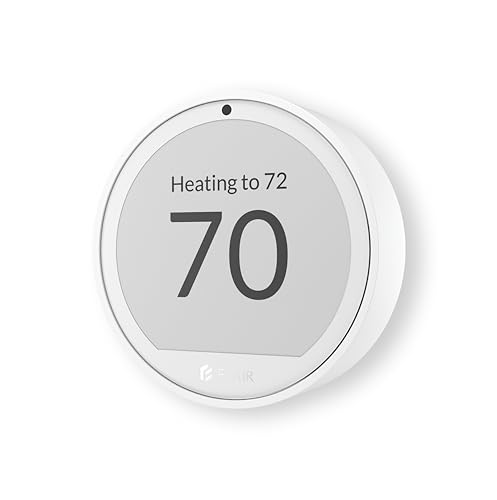
Pros
- Room-by-room temperature and humidity monitoring
- Works with 200+ mini split brands
- Up to 1-year battery life
- Alexa and Google Assistant support
Cons
- Flair Bridge required for central HVAC
- Smart Vents needed for airflow balancing

Pros
- Learns schedules and outdoor temperature effects
- Temperature Sensor included for hot and cold spots
- No C wire required in most homes
- Works with Google Home, Alexa, and Siri
Cons
- C wire may be needed in some homes
- System compatibility varies by heating setup

Pros
- Included SmartSensor manages hot and cold spots
- Built-in air quality monitor with alerts
- Energy STAR certified, saves up to 26%
- Siri, Alexa and Google Home support
Cons
- Smoke alerts require an ecobee security subscription
- Siri requires an Apple home hub
Match the thermostat to the system
Central HVAC households should start with compatibility, then consider how the device handles rooms. The ecobee Smart Thermostat Premium – WiFi includes a SmartSensor, while the Google Nest Learning Thermostat (4th gen) includes a Nest Temperature Sensor (2nd gen). Both are aimed at improving comfort beyond the hallway reading.
Ductless, window, and portable AC owners need a different type of controller. Smart Air Conditioner Controller works through infrared control across many listed AC models, while 3 Pack Sensibo Air PRO – Air Conditioner is designed for remote-controlled AC and mini split systems. Flair Puck 2 Temperature Sensor & Thermostat can control compatible ductless equipment and can also work with Flair Smart Vents for central HVAC balancing.
Pro Tip: Confirm your equipment type before choosing a thermostat. A room sensor cannot make an incompatible heating or cooling system compatible.
Electric baseboard users should pay close attention to voltage and wiring. Mysa Smart Thermostat V2 for Electric Baseboard supports 120V to 240V electric baseboards and electric fan-forced heaters, and it requires one neutral or a second live wire.
| System type | Room strategy | Best placement |
|---|---|---|
| Central HVAC | Sensors balance rooms | Hallway plus occupied rooms |
| Ductless AC | IR controller or puck | Main living space |
| Electric baseboard | Line-voltage thermostat | Heated room wall |
Room sensors change the buying decision
A multi-zone setup is useful when one temperature reading does not represent the rooms you use. ecobee uses occupancy information from its included SmartSensor, and Google lets you place its included sensor in another room and set the temperature that room should reach at a particular time.
Flair takes a broader room-by-room approach when paired with Flair Smart Vents. Its app can show rooms individually or system-wide, with scheduling and active or inactive room controls. That makes it more relevant for households dealing with hot and cold rooms than for someone who only wants remote adjustment.
Humidity sensing can also matter in rooms that feel uncomfortable even when the temperature looks acceptable. Smart Air Conditioner Controller and Sensibo Air PRO include temperature and humidity monitoring, while Flair Puck 2 monitors both in each room.
Before You Wire It: Line-voltage equipment is not interchangeable with standard 24V HVAC equipment. Verify the system voltage and required wiring before connecting a thermostat, and use qualified help if the wiring is unclear.
Installation, control, and connected features
Installation expectations vary widely. Mysa describes a quick installation with online instructions, but its wiring requirement still matters. Google says its thermostat works with most 24V systems and usually does not require a C wire, while ecobee includes a Power Extender Kit for homes without one.
Wireless placement is simpler for Flair Puck 2 when used with its Bridge for central HVAC, although the Bridge is optional for mini splits in USB-powered Solo Mode. Sensibo Air PRO uses WiFi or Bluetooth and can sit on a flat surface, so it does not require the wall wiring expected from a conventional thermostat.
Voice control is available across several choices, including Alexa and Google support on the SENCKIT controller, Flair, ecobee, Google Nest, Mysa, and Sensibo. For broader connected-home context, you can also review our smart energy and climate control category.
Expert Examined
From Marcus Bell

I keep seeing room comfort problems blamed on the thermostat when the real issue is choosing a controller for the wrong equipment. Start at the furnace, heat pump, mini split, or baseboard, then decide how many rooms need separate sensing.
Read more about Marcus BellWhich setup fits your home
I would point central-HVAC households with uneven room temperatures toward the ecobee Smart Thermostat Premium – WiFi. Its included SmartSensor, occupancy-based adjustment, air quality monitor, and Power Extender Kit address both room comfort and installation flexibility. It is also compatible with most HVAC systems, subject to its compatibility checker.
I would choose the Google Nest Learning Thermostat (4th gen) when you want learning features, a larger display, and a bundled room sensor for a mostly 24V system. Its Google Home control, Matter compatibility, and permission-based schedule changes make it a strong fit for households already using Google services.
For electric baseboard heating, I would put the Mysa Smart Thermostat V2 for Electric Baseboard first on the shortlist. It is specifically built for 120V to 240V baseboards and fan-forced heaters, with app adjustment, scheduling, and geofencing. For ductless or window AC, I would instead consider the Smart Air Conditioner Controller or Flair Puck 2 based on model compatibility and whether you need room-by-room Flair controls.
The Bottom Line
The biggest mistake is treating every smart thermostat as a universal multi-zone controller. Central HVAC, ductless equipment, infrared-controlled AC, and electric baseboards use different control methods, so a useful room sensor cannot fix a system mismatch.
First, identify the equipment and wiring in the rooms you want to control. Then choose between a thermostat with an included room sensor, a wireless puck system, or an AC controller that works with your existing remote-controlled unit.
FAQs
Room sensors are not always required, but they help when a hallway thermostat does not reflect the temperature in occupied rooms. ecobee and Google include room sensors with the listed thermostat packages, while Flair Puck 2 is designed around room-level monitoring and control. That depends on the system and accessories. Flair Puck 2 can work with Flair Smart Vents for room airflow balancing, while ecobee and Google use sensors to respond to conditions in selected rooms rather than creating separate heating equipment zones. The supplied product information does not promise operation during a power outage. Wired thermostats and wireless controllers should be evaluated according to the power arrangement of the equipment, Bridge, controller, and home network. Compatibility means the thermostat can communicate with the heating or cooling system and has the required wiring or control method. Check the equipment type, voltage, and manufacturer compatibility information before installation. The [acms_link asin="B09XXS48P8"]ecobee Smart Thermostat Premium – WiFi[/acms_link] and Google Nest listings both direct buyers to compatibility information.Do multi-zone thermostats need room sensors?
Can one smart thermostat control multiple rooms?
Do smart thermostats work during a power outage?
What does HVAC compatibility mean?
Sources
- U.S. Department of Energy, Energy Saver. www.energy.gov
- UL Solutions, Standards and certification information. www.ul.com