
Choosing the best line voltage smart thermostats starts with matching the thermostat to your heater and available wiring. This selection suits shoppers replacing controls for baseboards, fan-forced heaters, convectors, or radiant floors, where 120V to 240V compatibility matters more than standard HVAC features.

Pros
- Works with 120V to 240V electric heating
- Humidity sensor and touchscreen
- Scheduling and geofencing support
- Apple Home, Alexa, and Google compatible
Cons
- Requires a neutral or second live wire
- Limited to electric baseboards and fan-forced heaters
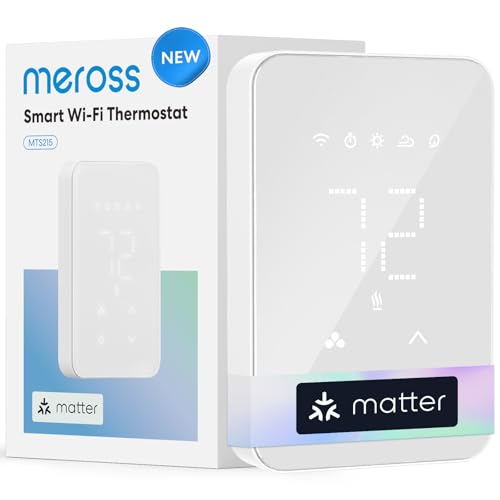
Pros
- Supports 120 to 240V electric heating
- Matter compatibility across major smart-home platforms
- 24/7 scheduling for automated temperature control
- Real-time and historical energy monitoring
Cons
- Not compatible with 24V HVAC systems
- Requires Wi-Fi for remote app control

Pros
- Smartphone control from anywhere
- Alexa and Google Assistant compatible
- 7-day programmable energy-saving schedule
- 15-foot floor sensor included
Cons
- Requires a compatible underfloor heating system
- Smart controls depend on WiFi and app setup

Pros
- 1°F temperature accuracy
- Works with Apple Home, Alexa, and Google Home
- 7-day programmable heating schedule
- Energy monitoring with historical reports
Cons
- Requires four or more installation wires
- Electric baseboard heater not included

Pros
- Supports 120V and 240V heating cables
- Built-in Class A GFCI protection
- Smart-home and voice-assistant integration
- App-based energy usage tracking
- Three-year limited warranty
Cons
- Maximum 15-amp load
- Larger systems need an additional power module
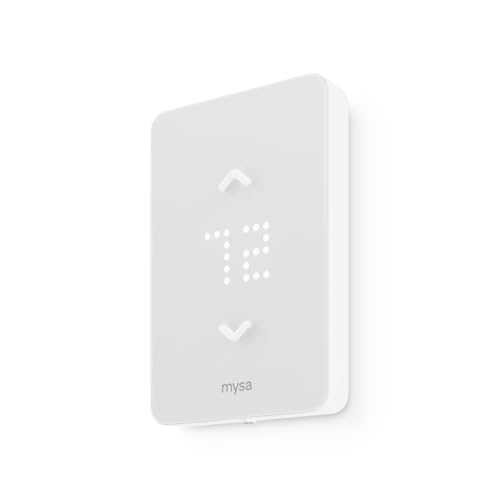
Pros
- Supports 120V and 240V electric heating
- 7-day scheduling with no subscription
- HomeKit, Alexa, and Google compatibility
- Remote control, geofencing, and vacation mode
Cons
- Requires four wires, including neutral or second live
- Not compatible with 24V furnaces or heat pumps
Match the Thermostat to the Heating System
Start by identifying the heater, not the app you want to use. Mysa and meross offer models for electric baseboards, convectors, and fan-forced heaters, while MAXKOSKO and Schluter focus on underfloor or floor-heating applications. A thermostat designed for radiant flooring may not be the right choice for a wall-mounted baseboard.
Voltage is the next filter. The products in this selection are intended for 120V, 240V, or both, but the wiring requirements differ. The meross Matter model is not compatible with 24V HVAC equipment, and Mysa LITE is also not intended for 24V furnaces or central heat pumps.
Pro Tip: Check the heater label and existing thermostat wiring before ordering. Confirm both voltage and heater type, then compare those details with the product requirements.
Wiring Determines Installation Fit
Smart line-voltage controls need more than a WiFi connection. Mysa Smart Thermostat V2 for Electric Baseboard requires one neutral or a second live wire, while Mysa LITE requires four wires, including a neutral or second live wire. The standard meross Smart Thermostat also requires four or more wires in the electrical box.
That makes the wire count a practical dividing line between models. Mysa V2 advertises installation in 15 minutes or less with online instructions, and the standard meross model states installation takes less than 30 minutes, but high-voltage work still deserves caution.
Before You Mount It: Turn off power at the breaker and follow the manufacturer’s wiring instructions. Hire an electrician if local code requires it or if you are not comfortable working with line voltage.
| Heating focus | Wiring detail | Useful fit |
|---|---|---|
| Baseboard or convector | Neutral or extra live wire | Wall heating control |
| Electric floor heating | Floor sensor included | Radiant heating zones |
| Floor cables | Built-in Class A GFCI | Safety-focused floor control |
Smart Features Worth Prioritizing
Remote control is available across several choices, but the supporting features vary. Mysa models include scheduling, geofencing, and app control, while meross adds energy monitoring and open-window detection. MAXKOSKO combines remote floor-heating control with a 15-foot floor sensor and Smart Life app support.
Voice and platform compatibility can also narrow the field. The meross Matter model supports Apple Home, Alexa, Google Home, and SmartThings at once. The other models list selected support for Apple Home, Alexa, Google Home, or voice assistants, so check the ecosystem you already use before installing.
For broader smart-home planning, the Smart Energy & Climate Control category provides related coverage. I keep the thermostat’s control platform consistent with the rest of the home because switching between apps makes schedules harder to manage.
Expert Examined
From Marcus Bell

I keep seeing wiring treated as an afterthought in this category. The safer approach is to photograph the existing connections only after power is off, identify the heater type, and stop if the box does not match the replacement instructions.
Read more about Marcus BellWhich Thermostat Fits Your Home
I would point you to Mysa Smart Thermostat V2 for Electric Baseboard if you have 120V to 240V baseboard or fan-forced heating and want app control, scheduling, geofencing, and a touchscreen. Its requirement for a neutral or second live wire should be confirmed first.
For a lower-cost choice with broad platform support, I would consider meross Matter Smart Thermostat for Electric. It suits compatible high-line-voltage baseboards, convectors, and fan-forced systems, and its Matter support avoids locking your controls to one listed ecosystem.
Radiant-floor households have two more targeted options. I would choose MAXKOSKO WiFi Smart Radiant Underfloor Heating when a 15-foot floor sensor and Smart Life app fit the installation. For floor heating where built-in Class A GFCI protection and a three-year limited warranty matter, Schluter Ditra-Heat-E-WiFi Programmable deserves attention. The HomeKit device coverage can also help if Apple Home is central to your setup.
The Bottom Line
The mistake most buyers make is treating a line-voltage thermostat like a standard 24V HVAC control. Heater type, voltage, load, and wire availability must match the model before app features enter the decision.
If you only do one thing first, turn off the breaker and verify the existing heater and wiring against the thermostat’s stated requirements. That single check can eliminate incompatible choices before installation begins.
FAQs
Most products here are designed for 120V to 240V electric heating rather than 24V HVAC. The meross Matter model and Mysa LITE specifically state that they are not compatible with 24V systems, including certain furnaces or heat pumps. MAXKOSKO is designed for underfloor heating and includes a 15-foot floor sensor. Schluter Ditra-Heat-E-WiFi is designed for home floor heating and supports 120V and 240V heating cables. Line-voltage thermostats may need a neutral, a second live wire, or four or more wires in the electrical box. Compare the existing wiring with the exact product requirement before ordering, and use an electrician when needed. A Class A GFCI automatically cuts power to help prevent electrical shock. Schluter Ditra-Heat-E-WiFi includes this feature, which is particularly relevant to its floor-heating application.Are line-voltage thermostats compatible with 24V HVAC systems?
Which smart thermostat is suited to radiant floor heating?
Why do wiring requirements vary between models?
What does Class A GFCI mean on a thermostat?
Sources
- National Fire Protection Association www.nfpa.org
- UL Solutions www.ul.com
- US Consumer Product Safety Commission www.cpsc.gov