
Installing the best Kidde hardwired smoke detectors ensures your ceiling alarms sound across the entire house during an electrical outage. The primary decision involves choosing between sealed ten-year lithium cells and traditional replaceable backup batteries. Property owners must match these units to their existing junction boxes to maintain safety codes.
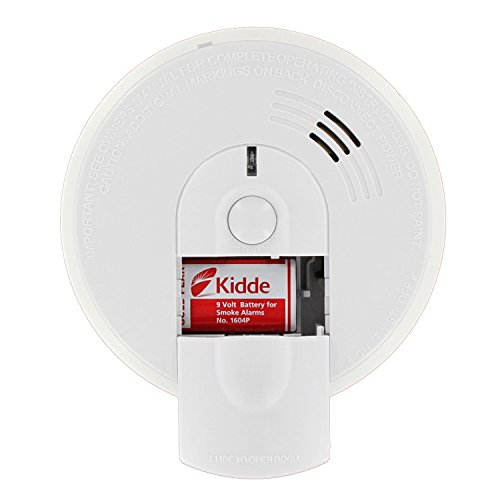
Pros
- Front-loading door for easy battery replacement
- Nine-volt battery backup sustains power during outages
- Pre-stripped harness wiring speeds up installation
- Hush control button silences nuisance alarms
- Rotatable 360-degree bracket aids ceiling alignment
Cons
- Requires an existing hardwired electrical connection
- Standard 9V battery requires periodic replacement
- Lacks integrated carbon monoxide detection

Pros
- Built-in 10-year battery backup eliminates annual replacements
- Spoken voice alerts announce Fire alongside 85 dB horn
- Wired interconnect triggers all linked alarms together
- Meets UL 217 10th Edition safety standards
- Enhanced sensing cuts nuisance cooking and steam alerts
Cons
- Requires dedicated 120V AC electrical wiring
- Lacks carbon monoxide detection capabilities
- Interconnect limited to compatible Kidde alarms

Pros
- Wired interconnect triggers all linked Kidde alarms
- Meets UL 217 10th Edition safety standards
- Dual AA battery backup covers power outages
- Nuisance resistance reduces false cooking and steam alarms
- Loud 85 dB horn with red visual LED
Cons
- Requires 120V AC junction box wiring
- Backup AA batteries require routine replacement
- Detects smoke only, no carbon monoxide sensor

Pros
- Ionization smoke and electrochemical CO sensors
- Hardwired 120-volt power with 9-volt backup
- Interconnects with up to 18 Kidde alarms
- Test-Hush button silences nuisance steam alarms
- UL Listed with 10-year limited warranty
Cons
- Requires existing 120-volt hardwired electrical line
- Replaceable 9-volt backup requires periodic swapping
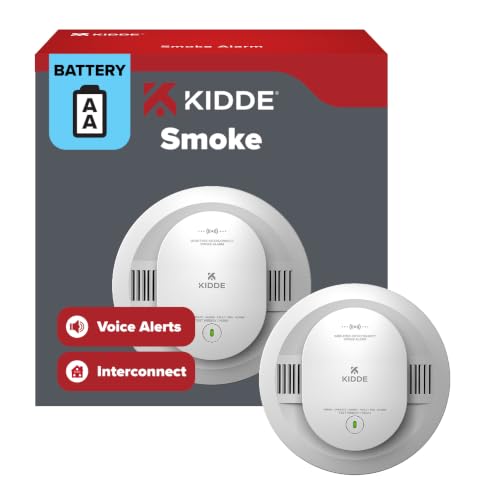
Pros
- Wireless interconnect for up to 12 alarms
- Voice alerts paired with loud 85 dB alarm
- Certified to UL 217 10th Edition standard
- No wiring needed, two AA batteries included
- Ten year limited warranty coverage
Cons
- Detects smoke only, no carbon monoxide sensor
- Requires periodic AA battery replacements over time

Pros
- Ionization smoke sensing
- Battery backup during power failures
- Interconnects up to 24 devices
- Alarm memory identifies the initiating unit
Cons
- Hardwired installation required
- Ionization sensing may not suit every room
Backup Power Formats and Maintenance Demands
Hardwired alarms draw primary operating current from standard household wiring, but safety regulations require a secondary power source. Kidde models offer distinct backup choices including sealed ten-year lithium cells, front-loading 9-volt drawers, and dual AA battery compartments. Choosing sealed internal batteries eliminates low-voltage chirping and ladder climbs for the entire decade.
Replaceable alkaline options provide a lower initial purchase point but demand scheduled upkeep. Units featuring front-facing battery compartments simplify this routine by avoiding the need to detach the device from its ceiling mounting bracket. These power configurations represent a foundational part of broader home safety equipment.
| Backup Type | Upkeep Needs | Best Location |
|---|---|---|
| Sealed Lithium | Zero replacements | Vaulted ceilings |
| 9-Volt Alkaline | Annual swap | Standard rooms |
| AA Alkaline | Regular swap | Common hallways |
Pro Tip: Select sealed ten-year backup models for high ceilings where climbing a stepladder creates unnecessary household fall hazards.
Sensor Standards and Cooking Vapor Triggers
Modern safety requirements encourage advanced sensor capabilities that differentiate between actual structural fires and everyday kitchen vapors. The UL 217 10th Edition standard requires modern detectors to resist nuisance triggers caused by cooking smoke while reacting quickly to real flames. Older hardware often lacks this distinction, causing unnecessary frustration in open-concept homes.
Alarms featuring updated detection components minimize false triggers without sacrificing response speed. According to guidelines from the National Fire Protection Association, maintaining active alarms outside every sleeping area is essential for family survival. Disabling sensitive units near kitchens removes that vital line of defense.
Never Disconnect Alarms: Never remove backup batteries or unplug the electrical wiring harness to silence cooking vapors, as this leaves the entire household unprotected.
Hardwired Communication and Wire-Free Expansion
Hardwired interconnectivity enables all compatible ceiling alarms to communicate along an interconnected signal line. When a basement sensor identifies smoke, every linked device throughout the house sounds its 85-decibel siren at once. Pairing these interconnected units alongside wider security networks ensures complete multi-room awareness.
Older buildings frequently lack the necessary three-wire cable connecting different living spaces. Specialized units overcome this barrier through wire-free link technology, allowing new additions or renovated lofts to communicate with existing alarms. This approach connects bedrooms without tearing open finished drywall.
Expert Examined
From Marcus Bell

In my work with residential wiring, mixing older legacy alarms with new generation models on the same signal line frequently triggers random chirps at night. I advise homeowners to replace all interconnected units at the same time to ensure reliable communication.
Read more about Marcus BellMatching the Alarm to Your Floor Plan
For primary hallways and bedroom corridors, I would point you to the Kidde Smoke Detector, Hardwired & 10-Year Battery. It runs on 120V household power with a built-in ten-year battery backup, eliminating annual replacements while meeting the UL 217 10th Edition standard. Its voice alert announces “Fire” alongside the 85-decibel siren and red LED light, providing unambiguous warnings during night emergencies.
For rental units or standard ceilings where upfront affordability is critical, I suggest the Kidde Hardwire Smoke Detector with 9V Battery. Its front-load battery drawer lets you switch the 9-volt backup without taking the unit off its 360-degree mounting bracket, and the hush button silences nuisance triggers quickly.
If you are expanding protection to detached rooms or un-wired basements, I recommend the Kidde Smoke Detector, AA Battery-Powered. It uses wire-free interconnect to link up to 12 alarms without running cables, complementing comprehensive security installations.
The Bottom Line
The single thing most buyers get wrong is assuming that all interconnected ceiling alarms share identical wiring plugs and protocols. Installing incompatible detectors on the same traveler wire creates erratic false alarms, while neglecting backup battery formats leads to annoying midnight battery chirps.
If you only do one thing, inspect the wiring connector behind your current ceiling alarms before purchasing any replacement hardware. Confirming whether you have a three-wire hardwired setup or an un-wired junction box ensures you select compatible units that install quickly without electrical complications.
FAQs
Do Kidde hardwired smoke detectors work during a power outage?
Yes, hardwired smoke alarms continue operating during an electrical blackout by switching to their backup batteries. Depending on the model, they draw emergency power from a sealed ten-year lithium cell, a 9-volt alkaline battery, or dual AA batteries. This guarantees uninterrupted protection when storm damage cuts household electricity.
Can different Kidde hardwired smoke alarms interconnect with each other?
Yes, compatible Kidde hardwired detectors connect using the red or orange traveler wire present in standard electrical boxes. When any single alarm detects smoke, it transmits a signal that activates the 85-decibel sirens on all interconnected units throughout the home. This provides rapid warning across every floor.
How often do Kidde hardwired smoke alarms need replacement?
The National Fire Protection Association mandates replacing smoke alarms every ten years from their manufacturing date. Internal sensing components degrade over a decade of continuous exposure to air, dust, and humidity. Replacing expired units ensures that your alarms maintain peak sensitivity and reliable operation.
What causes false alarms in hardwired detectors?
False triggers typically stem from cooking fumes, bathroom steam, or internal dust buildup inside the optical or ionization sensing chamber. Upgrading to models certified to UL 217 10th Edition standards helps alarms distinguish kitchen steam from real fires. Using the hush button temporarily quiets these nuisance events.
Sources
- National Fire Protection Association www.nfpa.org
- US Consumer Product Safety Commission www.cpsc.gov
- UL Solutions Standards www.ul.com