
Shopping for the best inline water leak detectors means deciding whether an alert is enough or the water supply must close automatically. This selection suits homeowners choosing between appliance-level sensors, wired shutoff kits, and smart main-line valves.

Pros
- NSF certified for potential insurance discounts
- Ultrasonic pressure, temperature, and flow monitoring
- WiFi control and alerts without a hub
- Daily and monthly water usage tracking
Cons
- Requires continuous power, with no built-in battery
- Fits only 3/4-inch DN20 main water lines

Pros
- 100dB alarm with mute function
- Four rear leak detection probes
- Two front drip detection probes
- IP66 waterproof surface shell
Cons
- No WiFi or Bluetooth connectivity
- Cannot connect to METAK W13 gateway

Pros
- 100dB alarm for audible leak warnings
- Front and rear water-sensitive probes
- Wireless placement with no installation required
- Over two years standby time
- IP66 waterproof ABS and stainless steel build
Cons
- 2 AAA batteries require periodic replacement
- Mute function requires pressing the alarm button

Pros
- Automatic hot and cold water shutoff
- Floor sensor detects water behind washer
- Built-in alarm sounds when water is detected
- Certified lead free under S. 3874 and AB1953
Cons
- Requires access to both hose bibs
- Sensor placement is needed behind the washer
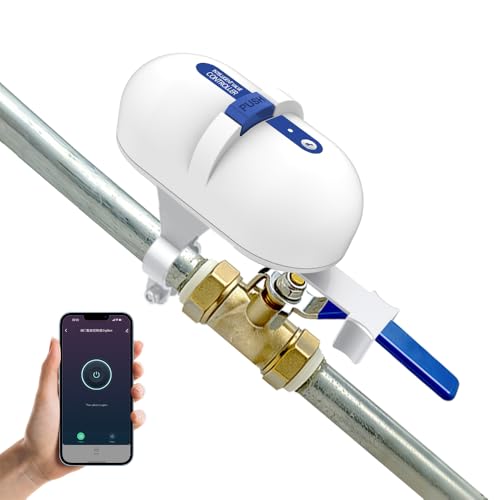
Pros
- No hub required
- Remote control through Smart Life or Tuya
- Alexa and Google voice control
- Fits 1/2-, 3/4-, and 1-inch valves
Cons
- Requires 2.4 GHz WiFi
- App setup needed for remote features

Pros
- Automatic water shutoff on leak detection
- Wired sensor for precise leak monitoring
- Supports 3/4-inch, 1-inch, and 1.25-inch pipes
- No professional plumbing required
Cons
- Plug-in power required
- Wired sensor limits placement flexibility
Start With the Protection Zone
A small sensor belongs near a likely source, such as a washing machine, sink, toilet, water heater, or basement drain. The METAK alarm units use front drip probes and rear moisture probes, so they can warn when a slow drip or floor-level flood reaches the device. They do not close a pipe by themselves.
An inline valve is different because it acts on the water line. The FloodStop kit is aimed at a washing machine, with valves on the hot and cold hose bibs and a floor sensor that closes them when water reaches the sensor. A main-line system covers more of the house, but it also needs a suitable pipe location and continuous access to power when required.
Before choosing a placement, identify the first surface water would reach. The advice in where water leaks start in a house can help you prioritize appliances and rooms instead of scattering sensors randomly.
Pro Tip: Place a floor sensor where a leak will arrive first, not on a raised shelf or inside a cabinet that could delay contact with water.
Match Detection to the Valve
There are three practical formats in this group. Standalone alarms are wireless and inexpensive to distribute, retrofit valve controllers operate an existing valve, and complete shutoff systems combine a valve with a dedicated leak sensor. That distinction matters more than a long feature list because only some designs can interrupt water without someone reaching the shutoff.
| Device type | Key distinction | Best location |
|---|---|---|
| Standalone alarm | 100dB local warning | Under sinks |
| Retrofit controller | Remote valve operation | Main shutoff |
| Valve with sensor | Automatic water closure | Appliance supply |
The Blindsmart controller connects directly to 2.4 GHz Wi-Fi, supports Smart Life or Tuya Smart, and can link with Alexa or Google Home. It fits many existing valves and offers remote operation, but the product data does not describe a built-in moisture probe. Pair its role with separate alarms if you need water detection as well as remote control.
For broader monitoring, the Haozee valve adds pressure, temperature, and flow tracking, app alerts, usage history, and automatic thresholds. Its 3/4-inch DN20 fit, IP66 rating, and requirement for continuous power should be checked before installation. Learn how water sensors shut the water off before assuming every detector can do so.
Before You Mount It: Do not confuse a leak alarm with a shutoff valve. A loud sensor can identify water, but it will not stop a failed hose unless it is connected to a compatible valve system.
Power, Connectivity, and Maintenance
Battery alarms are convenient in places without an outlet. The METAK single sensor uses one battery rated for more than two years under normal use, while the five-pack uses two AAA batteries per unit and includes low-battery alerts. Neither model provides Wi-Fi or Bluetooth connectivity, so the alarm must be audible where you can hear it.
Connected valves provide remote status and alerts, but they introduce network and power considerations. Haozee works on 2.4 GHz and 5 GHz Wi-Fi and has no hub requirement, while Blindsmart connects through 2.4 GHz Wi-Fi. Brezoo uses wired leak detection and plug-in power, with compatibility for 3/4-inch, 1-inch, and 1.25-inch pipes.
Expert Examined
From Marcus Bell

I keep standalone alarms near every high-risk appliance even when a main shutoff is installed. The mistake I see is treating one central valve as a substitute for local detection, especially when a small leak starts far from the main sensor.
Read more about Marcus BellCheck battery warnings, sensor contact points, and valve access on a regular schedule. During cold weather, temperature monitoring can be useful for freezing concerns, and the cold-weather frozen pipe advice explains why vulnerable plumbing deserves extra attention.
Which Setup Fits Your Home
I would point you to the <a href="Haozee NSF Certified Smart Water Main Shutoff"]Haozee NSF Certified Smart Water Main Shutoff when you want whole-home monitoring from a 3/4-inch main line, app alerts, and automatic thresholds. Its NSF certification is also relevant if your insurer recognizes qualifying shutoff equipment, although you should confirm eligibility directly with the insurer.
I would put the <a href="New Floodstop Washing Machine Valve Shutoff Kit"]New Floodstop Washing Machine Valve Shutoff Kit behind a washing machine where a dedicated hot-and-cold supply cutoff makes more sense than replacing the main valve. For a lower-complexity setup across several rooms, I would choose the <a href="5 Pack Water Leak Detectors for Home"]5 Pack Water Leak Detectors for Home, placing units under the washer, sink, toilet, and near the water heater. The five wireless alarms provide local 100 dB warnings and low-battery alerts, but they do not provide automatic shutoff.
NSF certification describes a recognized standard for the Haozee valve, not a promise that every home qualifies for an insurance discount. The NSF organization explains its role in standards and certification, while your insurer determines whether documentation affects your policy.
The Bottom Line
The most common mistake is buying a loud floor alarm while expecting it to close the water line. Decide first whether you need notification only, a valve for one appliance, or automatic control of the main supply.
If you only do one thing first, map the highest-risk water sources and identify the pipe size or valve type at each location. That quick check prevents choosing a device that cannot fit, cannot reach the leak, or cannot provide the response you actually need.
FAQs
Standalone alarms sense water at their probes and sound locally, but they do not normally close a pipe. Inline shutoff systems connect detection with a valve, allowing the water supply to be interrupted when the system detects a leak. Place it on the floor where water would collect first, near washing machines, sinks, toilets, water heaters, dishwashers, and basement plumbing. Avoid raised surfaces that could delay contact between the probes and water. The METAK alarms work without Wi-Fi or Bluetooth and use batteries. Connected valve products need Wi-Fi, while Haozee requires continuous power, so check the outlet and network conditions at the installation point. NSF certification indicates that the product meets applicable NSF standards recognized by some insurers. It does not automatically guarantee a discount, so keep certification documentation and ask your insurer about eligibility.Are standalone water leak alarms the same as inline detectors?
Where should I place a water leak sensor?
Do these detectors need Wi-Fi or constant power?
What does NSF certification mean for a shutoff valve?
Sources
- National Fire Protection Association www.nfpa.org
- U.S. Consumer Product Safety Commission www.cpsc.gov
- NSF www.nsf.org