
Installing the best 8 camera security systems eliminates blind spots across wide perimeters, but the physical cabling infrastructure dictates how well the setup performs. The primary division centers on whether you run digital Power over Ethernet lines or traditional analog coaxial cables. Planning your recording bandwidth and storage drives ahead of time ensures continuous footage without frame drops.

Pros
- Pre-installed 3TB drive records fifteen days locally
- AI person and vehicle detection reduces false alerts
- IP67 weatherproofing rated down to minus 40 degrees
- Works on local monitor without internet connection
Cons
- Spotlight color night vision limited to four channels
- One-way audio only, lacking two-way talk
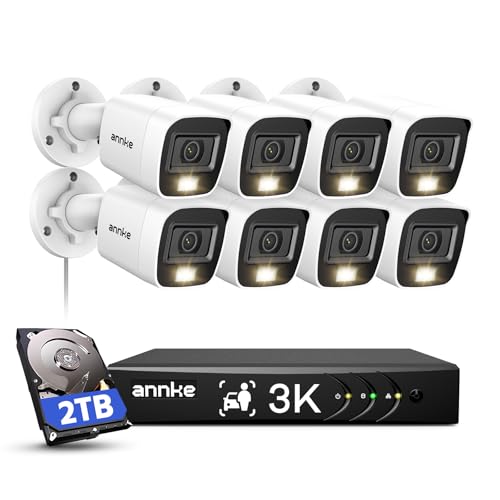
Pros
- Eight 3K cameras with integrated audio recording
- Smart dual-light switches to color upon detection
- Weatherproof IP67 rating from -40°F to 140°F
- Included 2TB hard drive expandable up to 10TB
Cons
- Wired analog installation requires running physical cables
- Frame rate is limited to 20fps at 3K resolution

Pros
- 4K 8MP footage with 100-foot night vision
- AI person and vehicle detection alerts
- 4TB local storage, no monthly cloud fees
- IP66 metal cameras for indoor or outdoor use
Cons
- 32-channel expansion requires a separate ZOSI PoE switch
- Large 16 x 11 x 11-inch system footprint
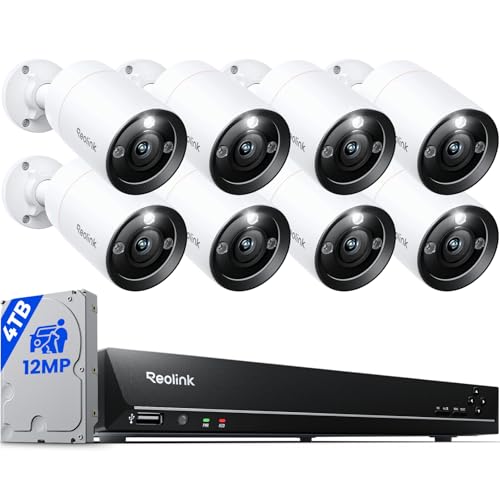
Pros
- 12MP ultra high-definition resolution across eight cameras
- Motion-activated spotlight enables full-color night vision
- Smart shape detection filters people, vehicles, and pets
- Built-in speaker supports two-way talk deterrence
- Pre-installed 4TB storage expandable up to 24 channels
Cons
- Requires dedicated PoE cabling to each camera location
- Battery camera expansion restricted to three specific models

Pros
- Eight 4K 8MP dome cameras included
- Pre-installed 4TB hard drive for 24/7 recording
- Smart shape detection filters out animals and shadows
- Plug-and-play PoE setup using single network cables
- 16-channel NVR supports storage expansion up to 16TB
Cons
- Requires physical ethernet cable runs for each camera
- Best viewing clarity requires a separate 4K monitor

Pros
- AI human and vehicle detection reduces false alerts
- 80-foot night vision in total darkness
- IP66 weatherproof rating for outdoor mounting
- H.265+ video compression maximizes recording space
Cons
- Requires separate purchase of a SATA hard drive
- Internal storage capacity capped at 2TB
PoE Network Architecture Versus Coaxial Cables
Eight-camera surveillance bundles rely on two distinct wiring designs to transmit video back to your hub. Network video recorders supply DC power and receive high-bitrate video streams through individual Cat5e or Cat6 Ethernet cables. This single-line design simplifies wall penetrations and prevents the signal degradation common with long copper runs.
Analog high-definition systems use Siamese BNC cables paired with a digital video recorder. While these kits often reduce hardware expenses, the physical cabling remains stiffer and requires separate power splitters near the base station. Learning what is an NVR and how is it different from a DVR helps you decide which wiring layout matches your attic or crawlspace access.
Cable Run Limitations: BNC analog runs past 100 feet often suffer from radio interference and ghosting. For long exterior perimeter runs, Ethernet cabling paired with a network recorder provides far cleaner signal transmission.
Balancing Resolution and Hard Drive Capacity
Continuous recording across eight dedicated channels creates massive data demands that easily overwhelm standard computer hard drives. Modern systems utilize H.265 or H.265+ video compression algorithms to cut incoming file sizes roughly in half without degrading image sharpness. Even with efficient encoding, 4K resolution streams can exhaust a small drive within a few days of nonstop writing.
| System Type | Cable Standard | Best Location |
|---|---|---|
| PoE NVR | Cat5e/Cat6 | Attic routing |
| Analog DVR | RG59 Coaxial | Short base runs |
| Hybrid NVR | Mixed Network | Mixed outbuildings |
Surveillance-grade internal hard drives handle constant thermal stress and simultaneous read-write cycles across all channels. If you record at 8MP or 12MP resolution, look for base stations housing at least 3TB to 4TB of storage out of the box. Many property owners also look into whether security cameras have facial recognition to filter storage playback down to critical human events.
Expert Examined
From Marcus Bell

I frequently see homeowners mount all eight cameras at roof peaks, leaving them with clear views of the tops of heads and zero usable facial details. Stagger your mounting heights so critical entry points have cameras positioned no higher than eight to ten feet off the ground.
Read more about Marcus BellNight Illumination and Enclosure Ratings
Exterior security hardware must endure severe weather while delivering identifiable footage in total darkness. Look for housings carrying an IP66 or IP67 ingress protection rating to prevent moisture intrusion through wind-driven rain and snow. Durable metal housings also dissipate internal sensor heat more effectively than lightweight plastic shells during summer months.
Night vision hardware splits between discreet infrared LEDs and visible white-light spotlights. Infrared models generate clean black-and-white images without drawing attention to the camera itself. Understanding what the lights on a security camera mean ensures your perimeter hardware deters trespassers rather than creating unwanted glare against nearby siding.
Pro Tip: Check that exterior cameras comply with safety and radio emissions standards verified by the FCC to prevent wireless interference with home routers.
Matching the System to Your Property
For large residential lots requiring pristine detail along extended driveways, I would point you to the REOLINK 16CH 12MP Security Bullet Camera System. Its massive 12MP sensors and motion-activated spotlights deliver exceptional night clarity, while the 16-channel PoE base station leaves ample room to add extra lenses down the road.
If you prefer a low-profile aesthetic under soffits and porches, I would select the REOLINK 16CH 4K Security Dome Camera System. The dome form factor resists outdoor tampering, and the pre-installed 4TB storage drive handles 24/7 recording across all eight 4K channels without recurring fees.
Budget-focused buyers with easy wall access should consider the Hiseeu 4K Wired Security Camera System,8PCS 8MP. It combines crisp 8MP analog sensors, human detection algorithms, and a generous 3TB internal drive that operates reliably without requiring an active internet connection.
The Bottom Line
The most common misstep when buying an eight-camera package is prioritizing maximum pixel resolution while ignoring the hard drive capacity required to hold that footage. High-resolution streams overwrite previous days rapidly, leaving you with little historical evidence when an incident occurs while you are traveling.
Map your physical wire paths through your structure before purchasing any hardware bundle. Confirming whether you can fish flexible Ethernet lines or bulky coaxial cables through your walls will immediately tell you whether to buy a digital PoE kit or an analog DVR setup.
FAQs
Can an 8 camera security system work without internet access?
Yes, wired NVR and DVR camera bundles function entirely offline for local 24/7 recording and live viewing on a connected monitor. An internet connection is only necessary if you want mobile app push notifications, remote viewing away from home, or offsite firmware updates.
How many days of footage will a 4TB hard drive hold for 8 cameras?
With continuous 24/7 recording across eight 4K cameras using modern H.265 compression, a 4TB hard drive typically retains roughly six to eight days of footage. Configuring the recorder for motion-triggered events or lowering frame rates can extend that storage window past three weeks.
What is the maximum cable distance for PoE cameras?
Standard Power over Ethernet runs using quality Cat5e or Cat6 solid copper cabling support distances up to 328 feet (100 meters) from the NVR switch without signal or power loss. Exceeding this distance requires dedicated PoE extenders or remote network switches.
Do dome cameras work better than bullet cameras outdoors?
Dome cameras provide superior physical protection against vandalism and make it difficult for intruders to discern the lens angle, making them ideal for low overhangs. Bullet cameras offer longer focal lengths and simpler directional adjustments, which suits open yard and driveway monitoring.
Sources
- Federal Communications Commission Equipment Authorization www.fcc.gov
- UL Solutions Standards for Video Surveillance Systems www.ul.com