
Shopping for the best water leak detection systems for home means deciding whether a phone alert is enough or whether the water supply should close automatically. Renters and small-space owners may need compact sensors, while homeowners protecting a basement or utility room often need valve control and outage-ready operation.

Pros
- Detects water levels as low as 0.5 mm
- Phone notifications and local hub alarm
- Compact wireless placement, no screws required
- IP67 waterproof housing with rust-proof coating
Cons
- Requires a separately sold Aqara Hub
- Not compatible with hubs from other brands

Pros
- Automatic shutoff when leaks are detected
- Three wireless sensors plus one wired sensor
- Matter over WiFi, no hub required
- Fits ¾-inch to 1.5-inch ball valves
Cons
- Fits only quarter-turn ball valves
- Remote control requires a WiFi connection

Pros
- Automatic valve closure after leak detection
- LoRa range up to 2,034 feet
- Three leak sensors included
- No pipe cutting for installation
Cons
- D2D pairing required for offline protection
- Controller battery lasts up to two years
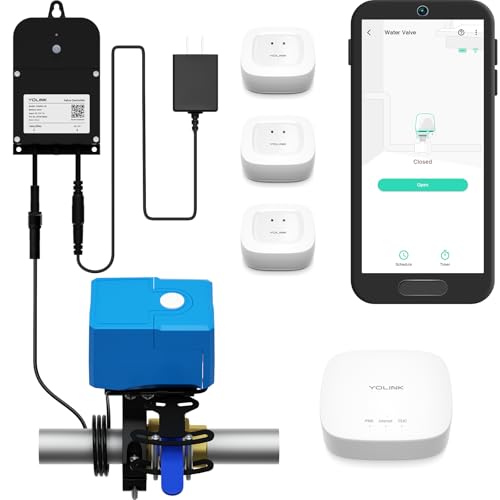
Pros
- Automatic shutoff after D2D pairing
- Three leak sensors included
- LoRa range up to 2,034 feet
- No pipe cutting required
Cons
- Offline protection requires initial pairing
- SMS alerts are limited monthly

Pros
- Shuts off water within 2 seconds
- 80 dB alarm with flashing LED indicators
- 19.68-foot sensor cable reaches tight spaces
- Manual open, close, and reset buttons
Cons
- Requires compatible 3/4-inch NPT plumbing
- Includes only one water-sensing probe
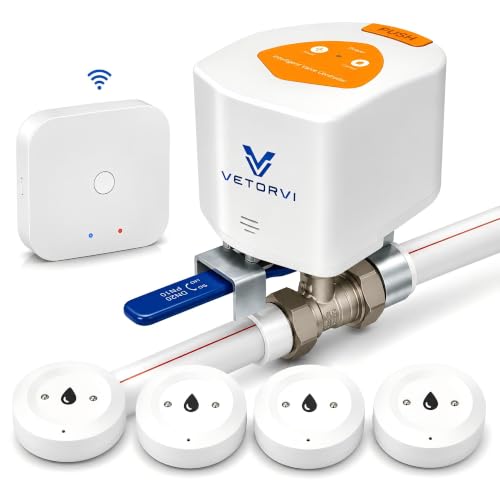
Pros
- Automatic valve shutoff after leak detection
- Four sensors cover multiple leak-prone areas
- Local operation without internet
- Alexa, Google Home, and SmartThings compatible
Cons
- Batteries and UPS sold separately
- Limited to compatible 1/2-inch or 3/4-inch valves
Alerts or Automatic Shutoff
A sensor-only system identifies moisture and sends an alert, but it does not stop water flow by itself. The Aqara Water Leak Sensor 3 Pack is built around that simpler approach and requires an Aqara Hub, making it a practical fit when you already use Aqara automation.
Valve kits add a second layer of protection. EcoNet Controls EVC400-MW-SK3-WLS1M Bulldog Matter includes three wireless sensors, one wired sensor, and a valve robot that can close an existing quarter-turn ball valve. YoLink kits also pair sensors with a controller and valve operator, so a leak can trigger shutoff after the local D2D setup is complete.
Pro Tip: Place one sensor beside each high-risk appliance before adding sensors to lower-risk rooms.
Match the Kit to Your Plumbing
Valve compatibility is more important than app compatibility. EcoNet Controls supports standard 3/4-inch through 1.5-inch quarter-turn ball valves, while E-SDS is designed for 3/4 NPT plumbing. VETORVI is designed for compatible 1/2-inch and 3/4-inch standard ball valves without replacing the existing valve or using an adapter.
Before buying a shutoff kit, identify the main valve type and size, then check whether there is enough room for the controller. If you do not want plumbing changes, the YoLink EVO and Bulldog valve operators attach to an existing system without pipe cutting. The water main shutoff steps can also help you locate the valve and understand its position.
| System type | Key distinction | Best placement |
|---|---|---|
| Sensor only | Hub and app alerts | Sinks and appliances |
| Valve kit | Automatic water shutoff | Main supply valve |
| Long range | LoRa communication | Remote rooms |
Coverage, Range, and Outages
Wireless range varies by protocol and home layout. Aqara recommends keeping its Zigbee sensor within about 10 meters of the Aqara Hub, while YoLink states a range of up to 2,034 feet between devices and its hub. Long-range communication can matter in detached areas, attics, or distant storage rooms.
Power failure behavior deserves equal attention. YoLink describes device-to-device shutoff after pairing, even during power or network disruption. VETORVI can trigger local shutoff without internet after configuration, but its gateway needs compatible UPS backup for household power outages. Its batteries are sold separately, so plan maintenance rather than treating the kit as maintenance-free.
Before You Mount It: A leak sensor cannot protect a room if it is placed where water cannot reach its probes. Keep sensors near likely leak paths, and do not expose equipment to conditions beyond its stated installation requirements.
Expert Examined
From Marcus Bell

I keep seeing homeowners place one sensor beside a water heater and assume the entire house is covered. The better approach is to map every likely leak path, then reserve automatic shutoff for the supply line that can affect the most rooms.
Read more about Marcus BellFor broader placement advice, review where water leaks start in a house. Maintenance also includes checking batteries, confirming the hub remains connected, and keeping probes clean and accessible.
Which System Fits Your Home
I would point you to the Aqara Water Leak Sensor 3 Pack when you want compact sensors for a kitchen, bathroom, basement, or appliance area and already accept the Aqara Hub requirement. Its probes detect water as low as 0.5 mm, and the IP67 housing suits common damp-room placements.
For a homeowner seeking automatic protection without plumbing modifications, I would choose the YoLink Water Shutoff Kit with the EVO operator when long range and local device-to-device action matter. If your existing valve is a compatible quarter-turn model and Matter support is valuable, the EcoNet Controls EVC400-MW-SK3-WLS1M Bulldog Matter is the more direct fit because it connects over Wi-Fi without a hub and includes four sensing points.
The Bottom Line
The biggest mistake is buying a sensor-only product while expecting it to close the water supply. Check whether the system includes a valve controller, then confirm that the operator fits your existing valve before considering smart-home integrations.
If you only do one thing first, locate and identify your main water valve. Once you know its size and style, you can choose between compact alert sensors and a complete automatic shutoff system with far less risk of an incompatible installation.
FAQs
Should I buy leak sensors or an automatic shutoff kit?
Leak sensors are suitable when phone alerts and local alarms meet your needs. An automatic shutoff kit is more appropriate when a leak could continue while you are away, but you must confirm valve compatibility first.
Where should water leak sensors be placed?
Place them near toilets, sinks, water heaters, washing machines, dishwashers, sump pumps, and other likely leak paths. The probes must contact water when a leak reaches the floor or mounting surface.
How often do water leak detector batteries need attention?
Battery life depends on the product and usage. Check battery status periodically, replace batteries when alerts appear, and remember that some systems require separately purchased batteries or backup power.
What does Matter or Zigbee mean for a leak detector?
Matter is a smart-home connectivity standard supported by compatible platforms, while Zigbee is a wireless protocol often used with a gateway or hub. Neither term alone confirms valve fit, local shutoff behavior, or operation during a power outage.
For broader household safety recommendations, the US Consumer Product Safety Commission provides consumer guidance on home hazards. Plumbing and installation decisions should still follow the product requirements and applicable local rules.
Sources
- US Consumer Product Safety Commission www.cpsc.gov
- NFPA home safety resources www.nfpa.org
- UL Solutions safety information www.ul.com