
Choosing the best smart thermostats for 3 zones means deciding whether you need a central HVAC thermostat, room sensors, or separate controllers for ductless and window units. The right fit depends on how your three areas are heated or cooled and whether each zone needs its own temperature reading.

Pros
- Supports 229+ AC brands and 8,000+ models
- Alexa and Google Home voice control
- Daily schedules and smart automation
- Built-in temperature and humidity sensor
Cons
- Requires Tuya Smart or Smart Life app
- Not a standalone AC or heat pump

Pros
- Built-in air quality sensor
- Controls compatible AC and mini splits
- Geofencing helps reduce wasted cooling
- Apple HomeKit, Google Home, Alexa support
Cons
- Requires a remote-controlled AC unit
- App and WiFi or Bluetooth setup required

Pros
- Three sensors for multiple rooms
- Battery lasts up to three years
- App scheduling for room temperatures
- Supports up to six rooms
Cons
- Works only with select Nest thermostats
- App needed for setup and control
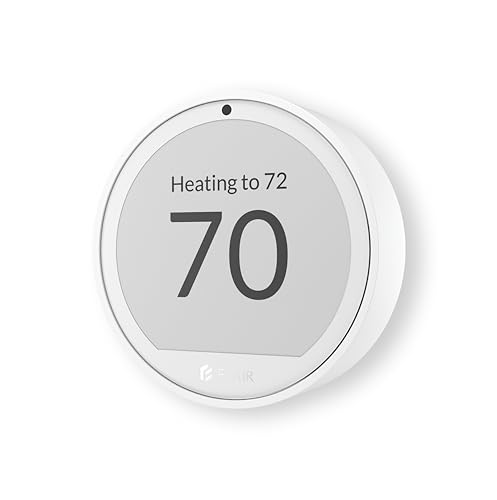
Pros
- Room-by-room temperature and humidity monitoring
- Works with 200+ mini split brands
- Up to 1-year battery life
- Alexa and Google Assistant support
Cons
- Flair Bridge required for central HVAC
- Smart Vents needed for airflow balancing

Pros
- Learns schedules and outdoor temperature effects
- Temperature Sensor included for hot and cold spots
- No C wire required in most homes
- Works with Google Home, Alexa, and Siri
Cons
- C wire may be needed in some homes
- System compatibility varies by heating setup

Pros
- Included SmartSensor manages hot and cold spots
- Built-in air quality monitor with alerts
- Energy STAR certified, saves up to 26%
- Siri, Alexa and Google Home support
Cons
- Smoke alerts require an ecobee security subscription
- Siri requires an Apple home hub
Start With the Equipment in Each Zone
A central HVAC system usually benefits from a thermostat that can use room sensors to address hot and cold spots. The ecobee Smart Thermostat Premium – WiFi includes a SmartSensor, while the Google Nest Learning Thermostat (4th gen) includes a Nest Temperature Sensor and supports additional Nest sensors.
Mini splits, portable ACs, and window units need a different approach because many are controlled by infrared remotes rather than a conventional wall thermostat. The Smart Air Conditioner Controller works with 229+ major AC brands and 8,000+ models, while Flair Puck 2 supports more than 200 brands of mini splits, portable ACs, and window units.
For a home with different equipment in each area, Sensibo Air PRO is designed for remote-controlled AC or mini split systems and can connect through WiFi or Bluetooth. Confirm that every room’s equipment is supported before assigning one controller to each zone.
Pro Tip: Match each zone to its actual equipment first. A room sensor cannot replace an infrared AC controller, and an AC controller does not turn a conventional central system into three independently wired HVAC systems.
Use Sensors to Prioritize the Rooms That Matter
Room sensors are useful when the thermostat sits in a hallway but the bedroom, office, or living area feels different. Google Nest Temperature Sensor (2nd Gen) 3 Pack can be placed in up to six rooms, with scheduling for the temperature a room should reach at a particular time.
Flair Puck 2 adds temperature and humidity monitoring in each room and can pair with Flair Smart Vents for central HVAC airflow balancing. It also works with ecobee, Honeywell, Nest, and Sensi thermostats, making it a possible choice when the goal is room-by-room airflow rather than only one thermostat reading.
ecobee uses occupancy information from its included SmartSensor to adjust comfort toward rooms that are actually being used. For broader air-quality information, its thermostat has a built-in monitor that can issue alerts when air quality drops. You can also read about smart energy and climate control for related home automation considerations.
| Device type | Separating feature | Best placement |
|---|---|---|
| Central thermostat | Room sensor scheduling | Main HVAC area |
| IR AC controller | Remote equipment control | Near AC unit |
| Room sensor puck | Temperature and humidity | Occupied room |
Plan Power, Connectivity, and Control
Power details matter when three zones depend on several devices. Google Nest Learning Thermostat (4th gen) does not require a C wire in most homes, while ecobee includes a Power Extender Kit for homes without a C wire. Flair Puck 2 is battery-powered, with up to one year of battery life, and requires a Flair Bridge for central HVAC systems.
App control keeps the zones manageable from one place, but the platforms differ. SENCKIT uses Tuya Smart or Smart Life, Sensibo works with Apple HomeKit, Google Home, and Amazon Alexa, and Google Nest uses the Google Home app. Voice control is available across several products, but compatibility should match the smart-home platform already in your home.
Before You Mount It: A sensor placed in direct sunlight, beside a draft, or too close to an AC outlet can misrepresent the room. Keep each sensor where people actually spend time and use the manufacturer’s app placement options.
I keep separate room readings tied to real schedules rather than treating every sensor as an independent thermostat. The mistake I see is placing all sensors near the main unit, which hides the very hot or cold spots the zoning plan is meant to address.
Expert Examined
From Marcus Bell

I keep separate room readings tied to real schedules rather than treating every sensor as an independent thermostat. The mistake I see is placing all sensors near the main unit, which hides the very hot or cold spots the zoning plan is meant to address.
Read more about Marcus BellFor central systems, look at the thermostat’s compatibility information before installation. The ENERGY STAR program identifies ecobee’s thermostat as ENERGY STAR certified, but certification does not remove the need to verify wiring and HVAC compatibility.
Which Setup Fits Your Three Zones
I would point you to the Google Nest Temperature Sensor (2nd Gen) 3 Pack when one Nest thermostat serves a home with three rooms that need different schedules. Its multi-room placement and room-priority settings make it a straightforward sensor-based approach, provided your thermostat is a supported Nest model.
I would choose the ecobee Smart Thermostat Premium – WiFi for a central HVAC home where occupancy, air quality, and one included room sensor are more important than controlling separate infrared units. Its Power Extender Kit also helps homes without a C wire.
For three ductless or room AC zones, I would consider the Smart Air Conditioner Controller when broad AC brand support and Tuya or Smart Life control fit your setup. I would instead point you to Flair Puck 2 when central HVAC airflow balancing, humidity readings, and Flair Smart Vents are the priority.
The Bottom Line
The biggest mistake is assuming that every smart thermostat creates three true HVAC zones. Some products add room sensing, while others control remote-operated AC equipment, so the system type must come before the feature list.
If you do only one thing first, identify the equipment serving each room and whether it uses a conventional thermostat or a remote. Then match the sensor or controller to that equipment before deciding where to place the three zones.
FAQs
Room sensors help a compatible thermostat prioritize temperatures in different rooms, but they do not automatically create separate heating and cooling circuits. Flair Puck 2 can pair with Flair Smart Vents for airflow balancing, while Nest and ecobee use sensors to guide comfort decisions. Place each sensor in the room it represents, where people spend time, rather than beside the main thermostat or an air outlet. Avoid direct sunlight and drafts because those conditions can distort the room reading. The Google Nest Temperature Sensor (2nd gen) battery lasts up to three years. Flair Puck 2 offers up to one year of battery life, while wired thermostat power depends on the home’s HVAC wiring and included installation accessories. No. ecobee and Google Nest are designed for compatible central HVAC systems, while SENCKIT and Sensibo focus on remote-controlled AC equipment. Flair Puck 2 supports both central HVAC and several ductless or room AC setups, with a Bridge required for central HVAC. ENERGY STAR certification identifies the ecobee Smart Thermostat Premium as meeting the program’s efficiency requirements. You still need to confirm that the thermostat matches your HVAC system and wiring before installation.Do room sensors create separate HVAC zones?
Where should I place sensors for three zones?
How often do the batteries need attention?
Does every option work with central HVAC?
What does ENERGY STAR certification tell me?
Sources
- ENERGY STAR program www.energystar.gov
- US Department of Energy www.energy.gov