
Shopping for the best smart thermostats for gas furnace means checking HVAC compatibility before getting distracted by app features. The key split is whether your system has a C-wire and which heating stages it supports, making this selection especially important for homeowners replacing a conventional gas thermostat.

Pros
- 7-day scheduling for Home, Sleep, and Away
- Phone app control from anywhere
- Family members can share control
- Capacitive touchscreen controls
- Supports electric baseboard, boiler, and heat pump
Cons
- IP20 rating limits environmental protection
- No battery details listed

Pros
- Conventional and heat-pump compatibility
- Matter certified for smart-home integration
- Flexible seven-day scheduling options
- Auto-away and filter reminders
- Indoor humidity display option
Cons
- Requires a 24 VAC C-wire
- Not compatible with 120 to 240V baseboard heat
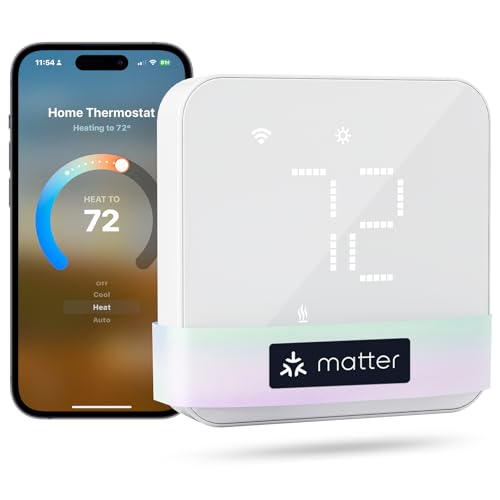
Pros
- Matter support for major smart-home platforms
- Flexible 24/7 heating and cooling schedules
- Remote app and voice control
- Smart alerts for filters and malfunctions
Cons
- C-wire may be required and is not included
- Not compatible with electric baseboard heaters

Pros
- Smartphone app enables remote temperature changes
- Alexa and Google Assistant voice control
- 3.5-inch full-color responsive touchscreen
- Supports single- and multi-stage HVAC systems
Cons
- C-wire required for steady power
- C-wire converter purchased separately

Pros
- Energy Star certified
- Works with conventional systems and heat pumps
- Free C-wire adapter included
- Remote control through iOS and Android app
Cons
- Not compatible with mini split systems
- Remote features depend on the mobile app

Pros
- Works with 95% of 24VAC residential systems
- Remote temperature and schedule management
- 3.5-inch full-color touchscreen display
- Alexa and Google Assistant voice control
Cons
- Requires a C-wire for continuous power
- C-wire converter purchased separately
Start With Your Furnace Wiring
Most of these thermostats are intended for standard 24VAC HVAC systems, but their wiring requirements are not identical. Honeywell Home X2S Smart Wi-Fi Thermostat, White requires a C-wire, while meross Matter Smart Thermostat for Home also warns that some configurations need one and excludes two-wire systems.
Cielo Smart Thermostat Eco for Central HVAC includes a C-wire adapter, which may suit a home where the existing wall wiring lacks a C-wire. SITERWELL Smart Thermostat Programmable Home Wifi and Siterwell Smart Thermostat WiFi Programmable require you to confirm C-wire availability, with the converter purchased separately.
Before You Wire: Do not assume a gas furnace automatically makes a thermostat compatible. Confirm the system voltage, terminals, heating stages, and C-wire situation before removing the existing control.
Match Heating Support to Your System
Gas-furnace owners may have conventional heating, multi-stage heating, or a setup that also controls cooling, humidity, or auxiliary heat. Honeywell Home X2S supports up to two heat and two cool conventional stages, while Cielo supports two conventional heating stages and two cooling stages.
meross is designed for many HVAC arrangements, including furnaces, boilers, humidifiers, and dehumidifiers, but it is not for electric baseboard heaters, millivolt thermostats, or two-wire systems. SITERWELL describes support for single and multi-stage systems using gas, oil, and electric heat sources.
| System consideration | Important specification | Suitable feature |
|---|---|---|
| Conventional furnace | Heating stages | Single or multi-stage support |
| Missing C-wire | Power arrangement | Adapter or confirmed C-wire |
| Smart-home control | Platform compatibility | Alexa, Google, or Matter |
For broader background on connected household controls, the Smart Energy and Climate Control category provides useful context without replacing the manufacturer’s wiring information.
Choose the Controls You Will Actually Use
All six options offer remote control through an app, but scheduling features vary in emphasis. Yechiry 7 Days Programmable Touchscreen creates Home, Sleep, and Away schedules for each day, while Honeywell Home X2S offers several programming formats plus auto-away operation.
meross adds flexible schedules, usage tracking, alerts for filter life and system malfunctions, and Matter integration with Apple Home, Amazon Alexa, Google Home, Home Assistant, and SmartThings. Cielo adds Home, Away, and Asleep schedules, vacation mode, energy-use patterns, and integrations including Alexa, Google Assistant, Siri Shortcuts, and Home Assistant.
Pro Tip: Before installation, write down the schedule you want for home, sleep, and away periods. Choosing a thermostat is easier when you know whether you need simple programming, vacation protection, or shared app control.
I also recommend checking the display and account features if several people adjust the temperature. Yechiry supports shared family control, while the SITERWELL models provide full-color touchscreens, humidity information, voice control, PIN protection, and three-year warranties.
Expert Examined
From Marcus Bell

I keep seeing homeowners focus on remote access while overlooking the wiring label behind the old thermostat. The safer approach is to document the existing terminals first, then compare them with the new thermostat’s compatibility notes before making any connection.
Read more about Marcus BellFor general household safety information, the U.S. Consumer Product Safety Commission is a useful authority for safety guidance, though thermostat compatibility still comes from the product documentation.
Which Thermostat Fits Your Furnace Setup
I would point homeowners without a C-wire toward Cielo Smart Thermostat Eco for Central HVAC, because its included C-wire adapter addresses a common installation obstacle. Its support for gas, electric, oil, hot water, and heat-pump systems also gives it a broad fit for compatible 24V HVAC equipment.
For a household already using Matter-enabled smart-home platforms, I would choose meross Matter Smart Thermostat for Home. It combines flexible scheduling with local Matter integration and alerts for filter life or system malfunctions, but I would first rule out a two-wire or millivolt setup.
I would reserve Honeywell Home X2S Smart Wi-Fi Thermostat, White for a conventional or heat-pump system with a confirmed C-wire. Its auto-away feature, multiple schedule formats, humidity display option, filter reminders, and Matter certification make it a practical choice for households wanting established scheduling flexibility.
The Bottom Line
The biggest mistake gas-furnace buyers make is treating every 24V thermostat as interchangeable. C-wire requirements, two-wire exclusions, supported heating stages, and compatibility with conventional or heat-pump equipment can change the right choice completely.
If you only do one thing first, identify the existing thermostat wires and system type before choosing a model. Then select the thermostat whose documented compatibility matches those details, rather than choosing from app features alone.
FAQs
A thermostat designed for compatible 24VAC conventional HVAC systems can work with a gas furnace, but the exact heating stages and wiring still matter. Check whether the model supports gas or forced-air heating and whether it excludes two-wire, millivolt, or other configurations. Some models require a C-wire for continuous power, while others include or support a C-wire adapter. Confirm the wiring requirement before purchase, because the products in this category do not all handle missing C-wires in the same way. Yes, selected models support single-stage and multi-stage heating. Check the stated number of heat stages and confirm that it matches your furnace and any connected cooling equipment before installation. Matter certification indicates that a compatible thermostat can integrate with supported smart-home platforms using the Matter standard. Honeywell Home X2S and meross offer Matter-related integration, but you should still confirm platform compatibility for your household.What type of smart thermostat works with a gas furnace?
Does a gas furnace smart thermostat need a C-wire?
Can a smart thermostat control multiple heating stages?
What does Matter certification mean for a thermostat?
Sources
- U.S. Consumer Product Safety Commission, home safety information. www.cpsc.gov
- UL Solutions, product safety and certification information. www.ul.com