
Shopping for the best high voltage smart thermostats starts with the wires behind your existing control, not the app on your phone. The key split is whether your heater needs a single-pole or double-pole setup and whether the thermostat has the required neutral or second live wire. That makes these choices especially useful for homeowners replacing controls on electric baseboards, convectors, or fan-forced heaters.

Pros
- Works with 120V to 240V electric heating
- Humidity sensor and touchscreen
- Scheduling and geofencing support
- Apple Home, Alexa, and Google compatible
Cons
- Requires a neutral or second live wire
- Limited to electric baseboards and fan-forced heaters
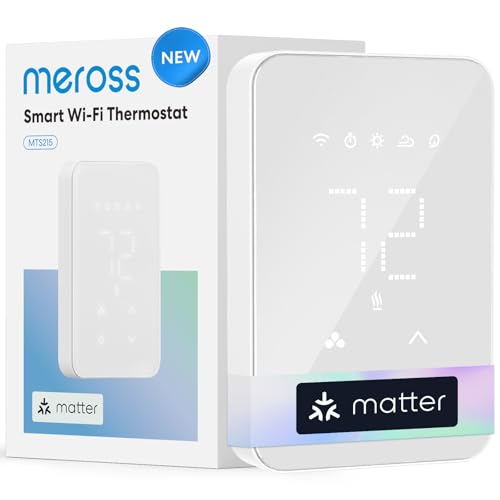
Pros
- Supports 120 to 240V electric heating
- Matter compatibility across major smart-home platforms
- 24/7 scheduling for automated temperature control
- Real-time and historical energy monitoring
Cons
- Not compatible with 24V HVAC systems
- Requires Wi-Fi for remote app control

Pros
- 1°F temperature accuracy
- Works with Apple Home, Alexa, and Google Home
- 7-day programmable heating schedule
- Energy monitoring with historical reports
Cons
- Requires four or more installation wires
- Electric baseboard heater not included

Pros
- WiFi programming through the Hoot smartphone app
- Large LCD touchscreen display
- 120/208/240V multi-volt compatibility
- Thermistor control accurate to ±1°F
Cons
- Requires double-pole, four-wire installation
- Temperature range limited to 41°F to 90°F

Pros
- Works with 120, 208, or 240V systems
- Hoot smartphone app programming
- Large LCD touchscreen display
- Thermistor control accurate to plus or minus 1°F
Cons
- Single-pole, three-wire installation required
- Temperature range limited to 41°F to 90°F
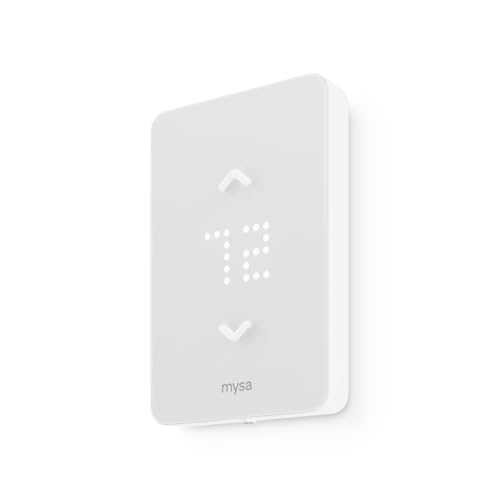
Pros
- Supports 120V and 240V electric heating
- 7-day scheduling with no subscription
- HomeKit, Alexa, and Google compatibility
- Remote control, geofencing, and vacation mode
Cons
- Requires four wires, including neutral or second live
- Not compatible with 24V furnaces or heat pumps
Start With Voltage and Wiring
These thermostats are intended for line-voltage electric heating rather than 24V HVAC equipment. The Mysa models support 120V to 240V systems, while the meross options also specify electric baseboard, convector, and fan-forced applications. The older meross model requires four or more wires, and Mysa Smart Thermostat V2 requires a neutral or second live wire.
Wire count matters more than a familiar wall-box shape. The KING K901-B is a single-pole, three-wire thermostat, while the KING K902-B is a double-pole, four-wire model. The two products are not interchangeable simply because both support 120V, 208V, and 240V systems.
Before You Mount It: Turn off the breaker before opening a line-voltage thermostat box. If the wiring does not match the product requirements or local electrical rules, stop and use a qualified electrician.
For additional smart-home planning, the Smart Energy & Climate Control category provides related context, but your heater wiring remains the first filter.
Match the Control Style to Your Home
Remote adjustment is common across the selection, but the surrounding controls differ. Mysa Smart Thermostat V2 adds a touchscreen and humidity sensor, while the Mysa LITE uses on-device buttons and includes scheduling, geofencing, away, and vacation functions without a subscription.
The meross Matter model is the broadest fit for homes that use several platforms because it supports Apple Home, Alexa, Google Home, and SmartThings through Matter. The other meross model offers the same named smart-home integrations, while KING relies on the Hoot smartphone app and provides a large LCD touchscreen.
| Model type | Wiring distinction | Useful fit |
|---|---|---|
| Mysa V2 | Neutral or second live | Touchscreen and humidity |
| meross Matter | 120V to 240V line voltage | Multi-platform households |
| KING Hoot | Single or double pole | Existing KING-style wiring |
If Apple Home compatibility is central to your setup, you can also compare how connected devices fit together in the HomeKit doorbell camera coverage. Keep the thermostat choice tied to the heating circuit rather than choosing by ecosystem alone.
Scheduling and Energy Visibility
Every model offers programmable control, but the features are not identical. The KING thermostats support four or six time periods per day, Mysa LITE offers seven-day scheduling and geofencing, and the meross models add energy monitoring through the app.
The meross products also include open-window detection, which pauses heating when an open window is detected. Mysa Smart Thermostat V2 offers remote adjustment from an Android or iOS device, while Mysa LITE adds a stated potential heating saving of up to 26% through scheduling and away controls.
Pro Tip: Before ordering, photograph the existing wiring with the breaker off and compare each terminal with the manufacturer’s compatibility instructions.
Expert Examined
From Marcus Bell

I keep seeing line-voltage projects treated like ordinary furnace thermostat swaps. The mistake is ordering around the app first; identify the pole configuration and available wires before deciding which smart features matter.
Read more about Marcus BellFor broader household energy planning, the smart thermostat category can help you organize compatible climate controls without losing sight of the electrical requirements.
Which Thermostat Fits Your Setup
I would point you to Mysa Smart Thermostat V2 for Electric Baseboard if you want a touchscreen, humidity sensing, remote control, scheduling, geofencing, and compatibility with 120V to 240V electric baseboards. It is the most feature-rich Mysa choice here, provided your box has a neutral or second live wire.
I would choose meross Matter Smart Thermostat for Electric for a household that wants Matter support across Apple Home, Alexa, Google Home, and SmartThings. Its energy monitoring and open-window detection make it particularly suitable when you want usage visibility as well as remote control.
For a single-pole installation, I would consider KING K901-B Hoot WiFi Line Voltage. It is specified for three-wire, single-pole installation and includes a touchscreen, maximum-temperature lock, and four or six daily periods. Check the circuit carefully before selecting it.
The Bottom Line
The biggest mistake is treating every high-voltage thermostat as a direct replacement. Single-pole and double-pole wiring, required wire count, and the difference between line-voltage heating and 24V HVAC determine whether a model can work in your wall box.
If you do one thing first, turn off power and identify the voltage, pole configuration, and available conductors. Then select the control features and smart-home platform that fit your routine.
FAQs
These models are specified for high-line-voltage electric systems, including baseboard, convector, and fan-forced heaters. They are not presented as 24V furnace or central heat-pump thermostats, so confirm the heating system before ordering. Check the existing thermostat and circuit requirements, then compare them with the product specification. The KING K901-B is single pole and three wire, while the KING K902-B is double pole and four wire. The supplied product information describes wired 120V to 240V installation and does not list a replaceable battery format. Follow the installation instructions for the selected model and turn off the breaker before handling wiring. Matter is identified on the meross Matter model as a way to work with several supported smart-home platforms, including Apple Home, Alexa, Google Home, and SmartThings. It does not remove the need to verify line-voltage and wire compatibility.What type of heater works with these smart thermostats?
How do I know whether I need single-pole or double-pole wiring?
Do these thermostats need batteries?
What does Matter compatibility mean for a thermostat?
Sources
- National Fire Protection Association www.nfpa.org
- UL Solutions www.ul.com