
Shopping for the best smart locks for patio doors starts with the mortise pocket, not the app. The key split is whether your frame accepts a standard or deep pocket, making this especially important for homeowners replacing an existing sliding-door lock.

Pros
- Five entry methods for family or rental access
- Stores up to 300 users
- Reversible handle for left or right opening
- IP65 weatherproof housing with emergency power backup
Cons
- Not a universal fit without mortise measurements
- Battery operation requires monitoring low-power alerts
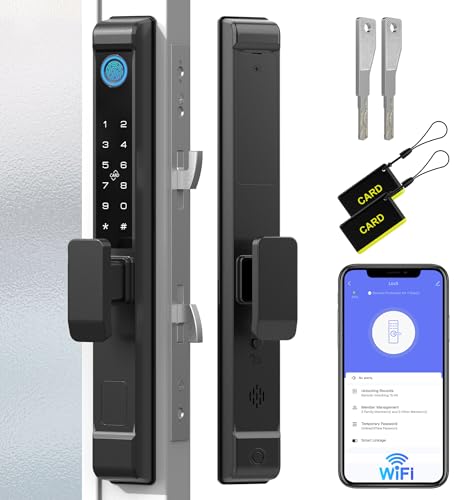
Pros
- Five entry methods, including fingerprint access
- WiFi remote control through mobile app
- Tamper alarm and 90-second lockout
- Low-battery warning with power-bank backup
Cons
- Requires compatible mortise and door dimensions
- Battery life rated for about eight months
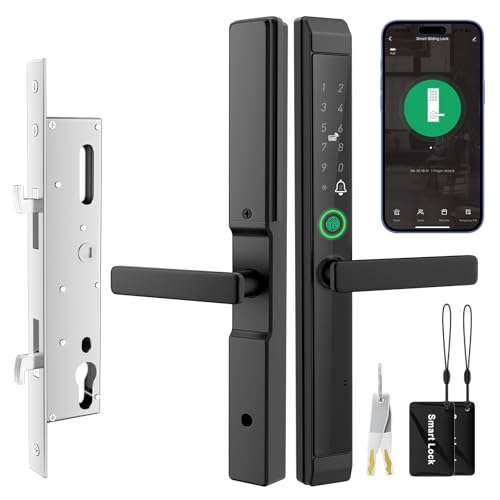
Pros
- Fingerprint, IC card, PIN, app, and key access
- Fits 1-3/16 to 2-3/16-inch doors
- Peek-proof PIN code with temporary access codes
- IP65 dust and water resistance
Cons
- Requires a 2.4 GHz Wi-Fi network
- Four AA batteries are not included

Pros
- One-touch keypad locking
- Key-free design, no cylinder
- 9V battery backup
- Compatible with several Andersen door types
Cons
- Compatibility limited to listed Andersen door series
- Backup power requires a 9V battery

Pros
- Five entry methods
- Stores up to 300 users
- Reversible handle for left or right opening
- IP65 weatherproof housing
Cons
- 2885 mortise requires a 1.8-inch frame
- Careful door measurements required before ordering
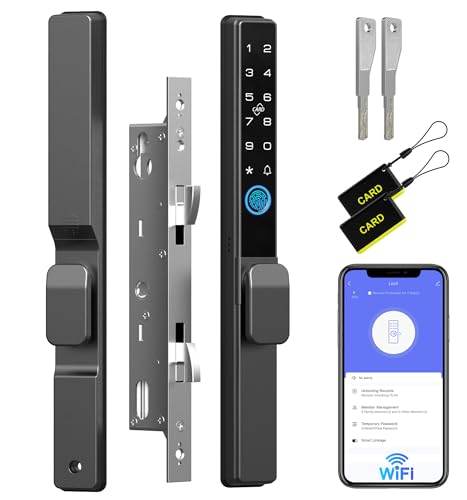
Pros
- Five access methods, including fingerprint and RFID
- WiFi remote control through mobile app
- 90-second shutdown after five invalid attempts
- Up to eight months of battery life
Cons
- Requires compatible mortise and door dimensions
- Frame must be at least 1.6 inches wide
Measure the Door Before Choosing Features
Sliding patio locks are not interchangeable just because they offer fingerprints and keypad entry. The Eseesmart and Anweller options use mortise configurations, while the JNZCH model fits doors from 1-3/16 to 2-3/16 inches thick and includes a trimmable spindle.
The 2085 Eseesmart model is intended for standard pockets, while its 2885 sibling requires a frame at least 1.8 inches wide. Anweller’s 2885 model has the same 1.8-inch frame requirement, but the Anweller 2085 model specifies a minimum frame width of 1.6 inches.
Before You Mount It: Measure the door thickness, frame width, mortise depth, and opening direction before ordering. A lock that fits the glass panel but not the existing pocket can still require a return or replacement.
For general background on the hardware behind a door lock, review this explanation of what a strike plate does. With sliding doors, the mortise and hook arrangement deserve equal attention.
Match Entry Methods to Your Household
Fingerprint access is convenient for residents who do not want to carry keys, while RFID cards can suit children, guests, or staff. App access matters more for landlords and hosts who need temporary codes or remote control rather than simply replacing a key.
Eseesmart models offer fingerprint, passcode, app, RFID card, and backup-key entry, plus capacity for up to 300 users. Anweller models provide the same five entry methods and add a 90-second shutdown after five invalid codes or RFIDs, along with a tamper alarm.
| Lock type | Key access | Best fit |
|---|---|---|
| 2085 mortise | Five methods | Standard pocket |
| 2885 mortise | Five methods | Deep pocket |
| Yale patio lock | Keypad only | Compatible Yale doors |
The Yale Security Assure Lock for Andersen Patio is a more specialized choice. It is designed for specified Andersen patio and folding door configurations, uses one-touch keypad locking, and has no cylinder, so compatibility matters more than broad door thickness claims.
Expert Examined
From Marcus Bell

I keep seeing patio-door decisions start with the keypad and end with a fit problem. The safer order is to photograph the door edge, record the measurements, and confirm the mortise before comparing access features.
Read more about Marcus BellPlan for Weather and Battery Interruptions
Outdoor-facing hardware needs more than a convenient unlocking method. The Eseesmart models and JNZCH model have IP65 ratings, while the listed operating ranges cover cold and hot conditions suitable for exposed patio-door locations.
Battery planning is also part of the installation. Eseesmart and Anweller specify up to eight months of battery life, while JNZCH specifies up to six months and uses four AA batteries. Each provides low-battery information and emergency power-bank support, while Yale uses a 9V battery backup.
Remote access can make a household more flexible, but it also creates account and code-management responsibilities. Read practical advice about how smart locks can be hacked, and remove temporary access when a guest, tenant, or contractor no longer needs it.
Pro Tip: Save the measurement photo, mortise size, battery type, and emergency-power instructions with your household records so another person can manage the lock later.
Which Lock Fits Your Patio Door
I would point most standard-pocket patio-door owners toward the keyless access discussion and the Eseesmart Sliding Door Smart Lock. Its 2085 pocket targets most US sliding patio doors, the handle reverses for either opening direction, and the five entry methods work well for a family sharing access.
I would choose the Eseesmart Sliding Glass Door Lock when the measurement confirms a deep 2885 pocket. It keeps the same broad access and weather-focused feature set, but the frame must be at least 1.8 inches wide.
For an Andersen owner with one of the listed compatible door families, I would consider the Yale Security Assure Lock for Andersen Patio. Its keypad-only approach is simpler, but it is not the flexible choice for an unknown sliding-door mortise.
The Bottom Line
The mistake most patio-door buyers make is treating a smart lock as universal hardware. Mortise depth, frame width, door thickness, and compatible door families determine whether the installation is viable before fingerprints or remote codes matter.
If you do only one thing first, measure the door edge and frame, then compare those numbers with the model’s requirements. That single step narrows the choice more reliably than price, appearance, or the number of unlocking methods.
FAQs
A mortise smart lock is appropriate when its pocket and hook arrangement match the existing door. A keypad model made for a specific patio-door family may be better when compatibility is clearly identified, such as the listed Andersen configurations. Measure the door thickness, frame width, mortise depth, and opening direction. Compare those measurements with the model requirements, especially the 2085 versus 2885 pocket distinction. The listed models specify battery life ranging from up to six to eight months, depending on the product. Use low-battery alerts, keep the required replacement batteries available, and understand the emergency power method before installation. IP65 indicates protection against dust and water jets, according to the product specifications. It does not remove the need to verify the lock’s temperature range and install it according to the door design.Which type of smart lock suits a sliding patio door?
How do I know whether a patio lock will fit?
How often do smart patio door locks need battery attention?
What does an IP65 rating mean for a patio lock?
Sources
- UL Solutions www.ul.com
- US Consumer Product Safety Commission www.cpsc.gov