
Shopping for the best ONVIF doorbell cameras means checking more than image quality: the real split is whether you need an ONVIF-friendly camera for an existing recorder or a simpler smart-home doorbell. These picks suit homeowners choosing between PoE stability, Wi-Fi installation, local recording, and ecosystem support.

Pros
- 2K video with 180-degree diagonal view
- 4:3 aspect ratio covers more vertically
- Chime V2 included with 10 tunes
- No subscription for Reolink software service
Cons
- PoE power supply not included
- WiFi is not supported

Pros
- PoE connectivity
- Lightweight 0.75-pound design
- Compact 1.04 x 1.57 x 5.39-inch size
- White finish
Cons
- PoE connection required
- Sensor details not provided
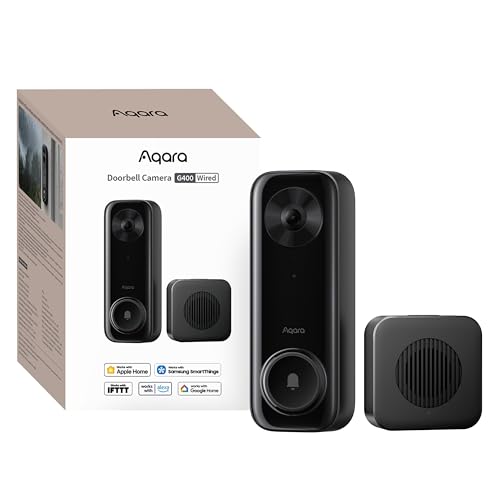
Pros
- 2K video with 165-degree head-to-toe view
- Local person and zone intrusion detection
- HomeKit, Alexa, Google, and SmartThings support
- PoE or 8–24V wired power options
Cons
- Requires wired power or PoE installation
- HomeKit needs iCloud+ and an Apple home hub

Pros
- 2K Super HD with HDR and 3D DNR
- 4:3 view with 180-degree coverage
- Local storage without a subscription
- Included chime with 10 selectable tunes
Cons
- Hardwired only, requires compatible power
- Free rich notifications limited to 25 images daily
ONVIF Compatibility Is the First Filter
ONVIF support is specifically stated for the Aqara Doorbell Camera G400 with Chime, Wired/PoE, along with RTSP and NVR integration. That makes it the clearest fit if your doorbell needs to participate in a broader compatible surveillance setup rather than operate only through a brand app.
The REOLINK Video Doorbell PoE 2K Wired Outdoor supports Reolink PoE NVRs, microSD storage, FTP, and NAS, but its product information says a third-party NVR is not supported. The REOLINK Video Doorbell WiFi 2K Wired Camera is also recommended with Reolink NVR equipment and related Reolink accessories, so check recorder compatibility before choosing either model.
Pro Tip: Confirm the recording system’s supported protocols and camera requirements before running cable or reusing an existing NVR.
PoE, Wi-Fi, and the Wiring Decision
PoE is the cleaner choice when Ethernet already reaches the entryway or you want data and power through one network cable. The REOLINK PoE model requires a PoE switch, injector, or compatible Reolink PoE NVR, while the Aqara model can use PoE or existing 8–24V AC/DC wiring.
Choose the REOLINK Video Doorbell WiFi 2K Wired Camera if pulling Ethernet is inconvenient but hardwired power is available. It supports 2.4GHz and 5GHz Wi-Fi, while the Aqara model adds Wi-Fi 6 on both bands. A wired camera still needs dependable electrical power, so inspect the existing doorbell wiring before deciding.
Before You Mount It: Do not treat a PoE doorbell as a wireless replacement. The REOLINK PoE model does not support Wi-Fi, and its power supply is not included.
View the Threshold, Not Just the Visitor
Doorstep framing changes what you can identify. A tall 3:4 view is useful for seeing packages near the ground, while a wide 4:3 frame shows more surrounding activity. The Aqara G400 provides 165° head-to-toe coverage, and both REOLINK doorbells advertise a 4:3 view with a 180° diagonal angle.
Use the included wedge kit when the doorframe points the camera too far across the porch. For broader placement advice, see how to angle a video doorbell down. You should also keep the lens clear of direct glare and position the camera so visitors cannot stand outside the main view.
| Connection | View design | Best placement |
|---|---|---|
| PoE | 4:3, 180° diagonal | Ethernet-ready entry |
| Wi-Fi | 4:3, 180° diagonal | Wired power, no Ethernet |
| PoE or AC/DC | 3:4, 165° | Package-focused threshold |
Storage, Alerts, and Indoor Awareness
Local recording is a major reason to favor these wired models. The REOLINK PoE doorbell supports microSD cards up to 512GB, Reolink NVR storage, FTP, and NAS, while the Aqara G400 supports continuous microSD recording up to 512GB and automatic SMB-compatible NAS backup.
For fewer irrelevant alerts, the REOLINK PoE model offers humanoid detection and motion zones. Aqara adds local person recognition and zone intrusion detection, plus custom replies and a voice-changing intercom. Both REOLINK models include a Chime V2, while Aqara includes a plug-in chime, so indoor notification does not depend only on a phone.
Apple households should note that Aqara works with HomeKit Secure Video, Alexa, Google Assistant, and SmartThings, but HomeKit Secure Video requires an iCloud+ plan and Apple home hub. Its resolution is limited to 1200p when connected to Apple HomeKit, or when Aqara Home and HomeKit are used together. Apple’s platform requirements are also covered in our HomeKit doorbell camera coverage.
Expert Examined
From Marcus Bell

I keep the recorder and doorbell requirements together before choosing a mounting location. The mistake I see is assuming that any camera with ONVIF in its description will work with every NVR, so verify the exact integration path first.
Read more about Marcus BellONVIF is an interoperability standard, not a promise that every feature will appear in every recorder interface. The ONVIF organization explains the standard’s role, but the camera and recorder manufacturers still determine practical compatibility.
Which Doorbell Fits Your Setup
I would point you to the Aqara Doorbell Camera G400 with Chime, Wired/PoE when ONVIF, RTSP, NVR integration, and smart-home choice all matter. Its 3:4 head-to-toe view suits a porch where packages sit below the visitor’s face, and local detection plus microSD and SMB-compatible NAS recording gives you several storage paths. It is especially appealing for Apple households, provided you already meet the HomeKit Secure Video hub and iCloud+ requirements.
I would put the REOLINK Video Doorbell PoE 2K Wired Outdoor at an Ethernet-ready entrance where stable recording and no monthly fee matter more than third-party NVR flexibility. The included chime, six-second pre-roll, humanoid detection, and microSD, NAS, FTP, or Reolink NVR options make it a practical Reolink-centered setup.
If you need Wi-Fi instead of Ethernet, I would choose the REOLINK Video Doorbell WiFi 2K Wired Camera. It keeps the wide 4:3 view, hardwired power, included chime, two-way talk, and 2.4GHz or 5GHz connectivity, making it the more convenient option where network cabling is difficult.
The Bottom Line
The biggest mistake buyers make with ONVIF doorbell cameras is treating the label as universal NVR compatibility. Aqara explicitly lists ONVIF and RTSP support, while the REOLINK models emphasize their own recorder and software paths, so the recorder relationship matters as much as resolution.
If you do only one thing first, identify the recording system you already own and confirm which camera protocols it accepts. Then choose PoE, Wi-Fi, or AC/DC wiring based on the entryway’s actual infrastructure, not on the connection type that sounds easiest.
FAQs
The Aqara Doorbell Camera G400 with Chime, Wired/PoE explicitly supports RTSP and ONVIF, plus NVR integration. Confirm the exact NVR requirements before purchase because recorder interfaces and supported features can vary. PoE suits an entryway with Ethernet and provides a wired network connection. Wi-Fi is more convenient when hardwired power exists but network cable installation is difficult; the Aqara and REOLINK Wi-Fi models support wireless connectivity. Aim the camera toward both faces and the package drop area, using a wedge kit if the doorway angle is too wide. A 3:4 view favors ground-level packages, while a wider 4:3 view can show more activity around the entrance. ONVIF describes an interoperability standard intended to help security products communicate across compatible systems. It does not guarantee that every camera feature will work through every NVR, so check the camera and recorder documentation together. Storage depends on the model. The listed options include microSD cards, brand-specific NVRs, FTP, NAS, and SMB-compatible NAS backup, with Aqara and REOLINK offering different combinations.Which doorbell camera is best for an ONVIF NVR?
Should I choose PoE or Wi-Fi for a doorbell camera?
Where should a doorbell camera be mounted?
What does ONVIF mean on a doorbell camera?
How do wired doorbell cameras store video?
Sources
- ONVIF and interoperability standards. www.onvif.org
- UL Solutions and security product standards. www.ul.com