
Choosing the best security camera systems often starts with deciding between a unified wired network and a modular wireless setup.
Pros
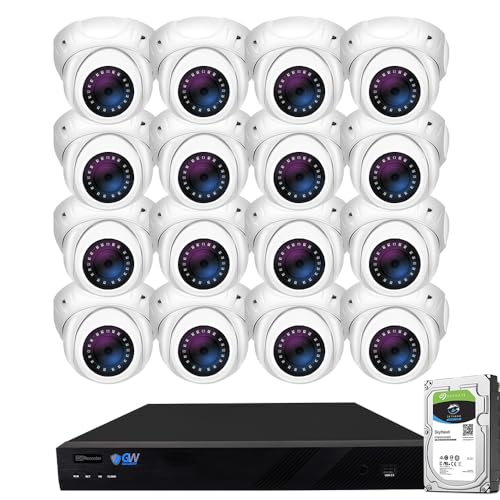
- Sixteen 5MP dome cameras with 130-foot night vision
- Smart AI facial, vehicle, and human detection
- Pre-installed 4TB storage expandable up to 20TB
- Single-cable PoE setup simplifies camera wiring
- NDAA compliant with US-based technical support
Cons
- Requires running physical Ethernet cables to every camera
- Large physical setup demands dedicated indoor equipment space

Pros
- AI human and vehicle detection filters alerts
- 80-foot night vision range via IR LEDs
- IP66 weatherproof rating against rain and snow
- Mobile app remote access with no monthly fees
Cons
- Hard drive not included, required for recording
- One-way audio only, lacks two-way conversation

Pros
- Sharp 3K resolution with 123-degree field of view
- Smart dual-light color night vision up to 30 meters
- Onboard AI detection for people and vehicles
- Pre-installed 1TB hard drive for continuous recording
Cons
- One-way audio with no two-way talkback speaker
- Requires running PoE network cables to every camera

Pros
- PoE single cable setup for power and data
- Four 5MP indoor and outdoor cameras included
- Pre-installed 500GB hard drive for 24/7 recording
- Person, pet, and vehicle smart detection
Cons
- Small 500GB drive fills quickly during continuous recording
- Requires running physical Ethernet cables to each camera

Pros
- Eight 3MP PoE cameras included
- IP67 weather rating down to minus 22 degrees
- Color night vision up to 66 feet
- Smart human and vehicle motion detection
Cons
- No hard drive included for video storage
- HDMI output limited to 1080p resolution

Pros
- Motorized 355-degree pan and 90-degree tilt tracking
- Pre-installed 500GB hard drive with zero subscription fees
- Expandable 16-channel NVR supports up to 16 cameras
- Records locally to a monitor without internet service
Cons
- Requires an electrical outlet near each camera location
- Remote smartphone viewing and alerts require Wi-Fi
Understanding Wired Connectivity and Power
Most reliable setups utilize Power over Ethernet (PoE) to carry both electricity and data through a single cable. This approach ensures your NVR remains connected without relying on a congested home Wi-Fi signal. Wired installations eliminate the latency often associated with cloud-based hardware.
Reliable connections are vital for is security camera footage admissible in court considerations, as stable recording prevents gaps in coverage. When planning your layout, ensure your cable runs remain under 300 feet to avoid signal degradation.
| System Type | Best For | Connection Method |
|---|---|---|
| PoE NVR | Stable Recording | Ethernet Cable |
| Wireless NVR | Flexible Setup | Wi-Fi Signal |
| Hybrid NVR | Expanded Arrays | Mixed Cables |
Integrating Smart Detection and Alerts
Modern surveillance relies heavily on human and vehicle detection to filter out motion from wind-blown trees or roaming pets. These AI algorithms send push notifications only when a genuine security event occurs, saving you from constant false alarms.
Privacy is just as important as protection, so utilize the privacy masking features found on models like the SANNCE 2K 3MP PoE Security Camera System. You can black out windows or public sidewalks within the camera field of view to comply with neighborhood standards.
Check Local Ordinances: Check local laws regarding public space surveillance before angling your cameras toward a street or neighbor’s property to avoid potential privacy disputes.
Storage Capacity and Retention
A high-definition system generates a massive amount of data, necessitating efficient compression like H.265+ to save drive space. You must ensure your recorder supports a large enough hard drive to handle at least two weeks of continuous footage.
Expert Examined
From Marcus Bell

I always recommend upgrading your storage capacity beyond the default hard drive if your system supports it. Managing footage becomes much easier when you have a buffer for unexpected incidents that might take several days to notice.
Read more about Marcus BellYou can learn more about managing your home setup through family & personal safety resources to ensure your recording strategy matches your risk profile.
Selecting Your Ideal System
I would point property owners with large areas to the GW Security 16 Channel 6K NVR 5MP 30FPS AI because the high channel count allows for total coverage of complex perimeters. The AI detection handles the heavy lifting of identifying specific vehicles, which is invaluable for large driveways.
If you are looking for a balanced system for a standard residential property, I prefer the ANNKE 8CH 5MP PoE Security Camera System, 1TB HDD. Its dual-light night vision is effective for identifying intruders in complete darkness, and the included storage is sufficient for most homeowners to start recording immediately.
The Bottom Line
The most common error users make is underestimating the storage space required for high-resolution cameras. Without proper HDD capacity, the system will overwrite critical evidence long before you have a chance to review it.
Prioritize your installation by placing cameras at high-traffic entry points first. Once these are secured, expand the network to cover blind spots or detached garages to build a comprehensive security perimeter.
FAQs
Do I need internet access for these systems to record?
No, most of these systems are designed for local storage on an NVR. You can record 24/7 without an internet connection, though you will need a network link to receive alerts or use a smartphone app for remote viewing.
How does night vision work on these models?
Many systems use infrared LEDs for black-and-white night vision, while others utilize dual-light technology. Dual-light cameras switch to a bright white LED upon detecting motion, which captures full-color details of intruders or vehicles.
Is it hard to run Ethernet cables for PoE cameras?
Running cables requires some planning, such as using existing attic crawl spaces or outdoor conduit. However, the reliability of a wired connection is superior to wireless for continuous, non-stop surveillance duty.
Sources
Sources
- US Fire Administration www.usfa.fema.gov
- UL Solutions www.ul.com