
Investing in the best outdoor security cameras without subscription demands balancing local drive capacity against wireless battery life. Cloud-free monitoring keeps recorded video on your own premises, eliminating recurring monthly charges. Homeowners seeking reliable exterior surveillance must choose whether individual memory cards or a central hub fits their property layout.
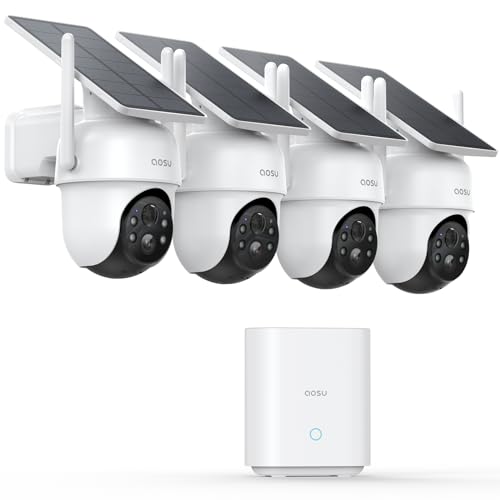
Pros
- 32GB local hub storage with zero subscription fees
- Integrated solar panels eliminate separate power cords
- 2K resolution with 360-degree pan-tilt auto tracking
- Full-color night vision via built-in spotlights
Cons
- Base station requires a wired router Ethernet connection
- App-only live view with no HDMI or TV output
- Event-triggered recording only with no continuous mode

Pros
- 2K resolution with automatic spotlight color night vision
- Local microSD recording up to 128GB without a subscription
- IP65 weatherproof housing rated down to minus 20 degrees
- PIR motion sensing range of 25 to 30 feet
Cons
- AI recognition and activity zones require a subscription
- Incompatible with Alexa, Google Assistant, and 5GHz WiFi
- Internal battery is non-replaceable by the user

Pros
- 4K Ultra HD detail
- 360° PTZ surveillance
- Full-color night vision
- 32GB local storage, no subscription
Cons
- Requires H200 base station
- 2.4GHz WiFi only

Pros
- Spotlight-free color night vision with f/1.2 aperture
- Full 360-degree pan and tilt with AI auto-tracking
- IP66 weatherproofing for indoor or outdoor mounting
- Continuous 24/7 recording with no subscription fees
Cons
- Requires continuous wired power and a nearby outlet
- Incompatible with Apple HomeKit and HomeBase 2
- MicroSD card for local storage not included

Pros
- Integrated solar panel, continuous power with 3 hours sunlight
- Local 8GB eMMC storage, no subscription fees
- Sharp 2K resolution with f/1.6 aperture lens
- Wire-free setup requiring only a single drilled hole
- AI human detection with optional HomeBase 3 pairing
Cons
- Black-and-white night vision only, lacks spotlight color
- Limited to 2.4GHz Wi-Fi networks

Pros
- 4K Ultra HD video with 8MP sensor resolution
- 360-degree PTZ coverage with auto motion tracking
- Detached solar panels for flexible wire-free power
- Local video storage expandable up to 1TB
Cons
- Base unit includes only 32GB of starter storage
- Face and plate clarity drops beyond 33 feet
Local Hubs Versus Standalone Memory Cards
Local video storage divides into two physical architectures. Standalone cameras place a microSD card slot directly on the camera body, keeping individual unit costs lower. However, if an intruder physically steals or damages the camera, your evidence vanishes with the hardware.
Hub-based networks link multiple exterior cameras wirelessly to an indoor base station connected to your router via Ethernet. The indoor base station houses the solid-state drive or hard drive safely inside your living room. Understanding what is an NVR and how is it different from a DVR helps clarify why centralized recording protects critical files from physical tampering.
| Storage Format | Tamper Risk | Best Placement |
|---|---|---|
| Hub Base Station | Very low risk | Multi-camera yards |
| Internal eMMC | High if stolen | High wall perimeters |
| Onboard MicroSD | High if stolen | Enclosed patio areas |
Indoor base units also run continuous background processing without exhausting outdoor battery cells. Central hubs can integrate video streams across multiple angles into a single incident timeline, simplifying clip exports when sharing evidence with neighbors or authorities.
Power Management and Continuous Recording Realities
True 24/7 continuous video recording demands a hardwired electrical connection. Battery and solar units rely on passive infrared sensors to sleep until heat and movement wake the optical sensor. For continuous background recording on a driveway, you must route continuous plug-in power.
Solar Placement Trap: Mounting solar cameras directly under roof eaves blocks essential overhead sunlight. A panel requires two to three hours of direct, unfiltered sun daily to maintain a operational charge through winter weather.
Integrated solar panels simplify setup because they require no secondary bracket or dangling cables. Even so, detached panels remain superior for shaded north-facing walls because you can run an extension lead to a sunlit roofline. Always confirm that your regional winter temperatures fall within the operating limits stated by the manufacturer.
Expert Examined
From Marcus Bell

The mistake I see most often is mounting battery cameras too high above driveways to capture clear faces. Keep lens heights between eight and nine feet so the PIR motion sensor triggers before an approaching visitor reaches your doorstep.
Read more about Marcus BellWireless units also transmit status updates via status indicators. Deciphering what do the lights on a security camera mean during initial network pairing prevents outdoor connection drops after you tighten the final mounting bracket.
Night Vision Optics and Target Resolution
Resolution numbers alone do not guarantee identifiable nighttime footage. While 4K sensors produce exceptional daytime detail, night capture relies heavily on sensor aperture and auxiliary lighting. Large apertures collect ambient light to preserve true colors without relying on glaring floodlights that wash out reflective license plates.
Pro Tip: Infrared black-and-white night vision uses less battery power than integrated spotlights, extending wireless operation during cloudy seasons.
Spotlights provide deterrence and full-color night video, but they draw battery reserve rapidly when wind triggers tree branches. Look for onboard artificial intelligence that distinguishes humans and vehicles from background foliage to keep false triggers from draining the cell. The Federal Communications Commission oversees the wireless spectrum standards used by these 2.4GHz monitoring networks to prevent household interference.
Matching Hardware to Your Property
I would point single-family homeowners needing full perimeter coverage toward the aosu D1 Max, 4-Cam Kit, 4K Solar Security Cameras. It combines 4K imaging with detached solar panels and a centralized base station that expands up to 1TB of local storage. The cross-camera tracking stitches multi-angle movement into a unified event timeline, saving hours of footage scrubbing.
For monitoring an outbuilding or detached garage with heavy vehicle traffic, I would choose the BOTSLAB 4K Security Camera Wireless Outdoor. Its 10000mAh internal battery combined with 360-degree pan-and-tilt tracking eliminates blind spots around large driveways. The H200 base station handles storage expansion up to 16TB without ongoing fees.
For a narrow patio or apartment balcony where you have access to an outdoor outlet, I would put up the eufy Security Indoor/Outdoor Camera C31. Its plug-in design supports 24/7 continuous recording, and the f/1.2 aperture delivers bright night images without disturbing neighbors using harsh spotlights.
The Bottom Line
Most buyers mistakenly assume that zero-subscription cameras automatically record continuous 24/7 footage onto memory cards. Battery-powered units only capture short, motion-triggered clips to preserve battery reserves. Expecting a wireless solar camera to stream nonstop like a commercial wired system leads to dead batteries and missed activity.
Before purchasing, map the direct sunlight exposure and Wi-Fi signal strength at every planned mounting location. Pick a base station system if you want centralized hard-drive security, or select plug-in powered models if your priority is continuous around-the-clock recording.
FAQs
Do outdoor cameras without subscriptions still send instant phone notifications?
Yes, these cameras send push notifications directly to your smartphone through their companion mobile apps. The cameras process motion events locally on their internal processors or central base stations, dispatching an immediate alert over your home Wi-Fi network without requiring a monthly cloud service plan.
What happens to my security footage if an intruder steals a wireless camera?
If the camera stores footage on an internal microSD card, the recorded video is lost when the hardware is stolen. To prevent this vulnerability, choose a system that transmits and saves event clips immediately to an indoor base station housed securely inside your home.
Can security cameras function outdoors during an internet outage?
Most cameras with local storage continue recording motion events directly to their onboard memory card or paired base station during an internet outage. However, you will not receive live smartphone alerts or remote streaming until your home network reconnects to the broader internet.
How long does local storage hold recordings before overwriting files?
A 32GB drive typically stores between one and two months of motion-activated clips under normal residential activity. Once the storage drive fills completely, the operating system automatically loops over the oldest unprotected video files to write new events.
Sources
- Federal Communications Commission www.fcc.gov
- UL Solutions Standards www.ul.com