
Mounting the best outdoor security cameras with zoom solves the classic blind-spot dilemma where wide-angle views blur critical details at a distance. Property owners with long driveways or deep yards need clear identification rather than pixelated guesswork. Choosing between motorized optical telephoto lenses and dual-sensor configurations determines whether you maintain continuous perimeter awareness while zooming.
Pros
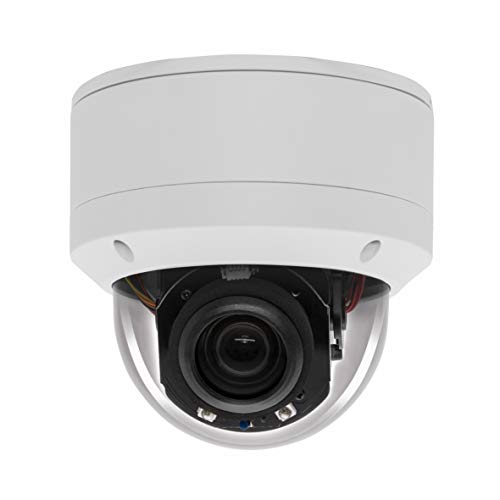
- 5MP resolution with 5x motorized optical zoom
- Wide 355-degree pan and 90-degree tilt range
- IP66 waterproof metal housing with surge protection
- Night vision reach up to 100 feet
Cons
- Power supply and PoE injector are not included
- Limited to a single year of warranty

Pros
- Detailed 4K 8MP video with 5X optical zoom
- Single-cable PoE setup for power and data
- AI detection filters out bugs and leaves
- IP66-rated weatherproof build for outdoor use
Cons
- No automatic target tracking capability
- Two-way audio requires Anpviz U Series NVR

Pros
- Dual-lens setup with up to 3K resolution and 8x zoom
- Full 360-degree pan-tilt coverage with AI auto-tracking
- Bright 2,000-lumen adjustable floodlight with 95dB siren
- Subscription-free local storage with 24/7 recording support
- Dual-band Wi-Fi 6 connectivity on 2.4GHz and 5GHz
Cons
- Hardwired outdoor installation required
- Resolution drops to 2K during AI tracking or dual views
- MicroSD card or HomeBase S380 needed for storage
Pros
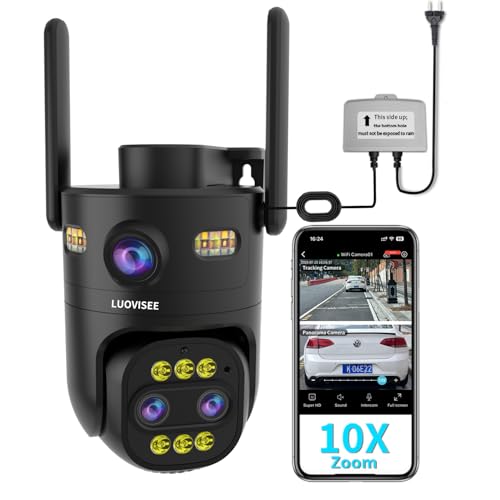
- Dual-band 2.4GHz and 5GHz Wi-Fi connectivity
- Triple-lens system with 10x hybrid zoom
- Motorized 355-degree pan and 90-degree tilt
- Full-color night vision with built-in spotlights
- Supports continuous 24/7 recording to NVR systems
Cons
- Requires access to an electrical outlet
- Storage card not included for local video

Pros
- 50X true optical zoom captures distant detail
- 6W solar panel with 12,000mAh backup battery
- Dual-lens system shows two live view angles
- Heavy-duty metal shell for outdoor durability
- Includes cellular SIM for major carrier networks
Cons
- No automatic motion tracking included
- Lacks Wi-Fi connectivity for standard home setups

Pros
- Dual 2K lenses for wide view and telephoto zoom
- Subscription-free AI detection for people, pets, and vehicles
- Local microSD storage supported up to 512GB
- IP65 weather-resistant housing for indoor or outdoor use
Cons
- Requires a 2.4 GHz Wi-Fi network connection
- Wired power setup limits cord-free placement
Optical Zoom Versus Dual-Lens Architectures
True optical zoom physically adjusts glass elements inside the lens barrel to preserve full sensor resolution at every focal length. This mechanical shift keeps license plates readable at fifty feet without degrading the video stream into blocky artifacts. Digital magnification, by contrast, simply enlarges existing pixels and rapidly loses sharpness.
Dual-lens architectures take an alternative path by pairing a wide-angle sensor with a dedicated telephoto module. The primary lens monitors broad perimeter movement while the secondary lens snaps into close focus on moving subjects. Knowing do security cameras have facial recognition helps clarify why high pixel density at focal range matters so much for identifying strangers.
| Zoom Type | Field Coverage | Best Placement |
|---|---|---|
| Motorized Optical | Narrowed Live View | Long Driveways |
| Dual-Lens Hybrid | Full View Retained | Busy Front Yards |
| Fixed Telephoto | Static Targeted Area | Remote Gate Entries |
When selecting between these systems, factor in whether you need continuous situational context. A motorized single lens leaves the rest of your yard unmonitored while zoomed in, whereas dual-sensor platforms keep a persistent watch over the broad perimeter.
Network Bandwidth and Power Delivery
Continuous high-resolution video streams demand dependable data throughput and stable power connections. Power over Ethernet supplies both electrical current and video transport across a single Cat6 run, eliminating Wi-Fi interference. If you are integrating with existing infrastructure, understanding what is an NVR and how is it different from a DVR ensures your recorder handles multiple high-bitrate video feeds.
Pro Tip: Run dedicated solid-copper Cat6 cabling for motorized pan-tilt-zoom hardware to prevent voltage drops over long exterior runs.
Wireless alternatives ease deployment on finished siding but depend heavily on robust network connectivity. Modern dual-band Wi-Fi 6 hardware manages dense video data better than legacy networks, though physical barriers still degrade packet transmission. Standardized protocols vetted by the Federal Communications Commission help regulate these wireless transmissions to avoid cross-device channel crowding.
Expert Examined
From Marcus Bell

The mistake I see most often is mounting a zoom camera directly under an overhang where the lens catches structural glare. Pull the housing forward past the fascia board so night-vision illumination does not bounce back into the sensor optics.
Read more about Marcus BellExterior Placement and Weather Resilience
Outdoor surveillance requires enclosures certified to withstand blowing rain, freeze cycles, and summer sun exposure. An IP66 or IP65 weather rating ensures the delicate mechanical motors responsible for panning and optical adjustment do not seize up from grit intrusion. Heavy metal housings disperse internal motor heat more efficiently than plastic shells during sustained daylight operation.
Mounting Caution: Never align zoom sensors directly toward high-intensity exterior lighting, as focused infrared backscatter blinds optical sensors during nighttime motion capture.
Deciding how visible you want the hardware affects both deterrence and legality. While obvious cameras discourage trespassers, reviewing whether is security camera footage admissible in court underscores the value of capturing clean, uncompromised evidence across your property boundary.
Matching the Hardware to Your Property
For dedicated hardwired installations requiring maximum image fidelity, I would point you toward the Anpviz 4K 8MP PoE PTZ Camera Outdoor. Its 5X optical motorized glass lens and 4K sensor maintain clean image clarity along extended driveways without relying on delicate Wi-Fi links.
If your home setup lacks network cabling and needs strong lighting alongside surveillance, I would install the eufy Security Floodlight Camera E340, Dual-Lens. The dual-lens setup pairs wide 3K coverage with a dedicated telephoto camera, letting you zoom up to eight times while keeping the entire driveway illuminated under bright floods.
For large perimeters or budget installations needing dual perspectives, the Tapo 2K Indoor/Outdoor Dual Lens Pan/Tilt Wired handles synchronized tracking effectively. It captures broad yard activity on its fixed wide-angle view while rotating its secondary telephoto lens onto movement without expensive infrastructure.
The Bottom Line
The single mistake buyers make with zoom cameras is purchasing high digital magnification instead of optical focal length. Digital enlargement crops into the video feed, transforming distant license plates into illegible squares right when crisp evidentiary detail is needed most.
Before buying hardware, measure the exact distance between your planned mounting location and your primary target zone. If that distance exceeds thirty feet, choose a camera with motorized optical glass or a secondary telephoto lens to protect your perimeter properly.
FAQs
Does optical zoom reduce image resolution on outdoor cameras?
No, optical zoom adjusts physical glass elements to magnify distant objects while preserving the sensor’s full native resolution. Unlike digital zoom, which crops and enlarges pixels, optical adjustment delivers the exact same pixel density across the target area at full zoom.
Can zoom cameras track moving people automatically?
Cameras equipped with pan-tilt motors and onboard artificial intelligence can follow moving subjects and adjust lens focal length. However, single-lens models lose wide-angle perimeter awareness while tracking, which is why dual-lens designs are better suited for simultaneous close-up and panoramic surveillance.
What weather rating should an outdoor zoom camera have?
Look for an IP65 rating at minimum, though an IP66 rating provides superior protection against pressurized water and wind-blown dust. Because motorized zoom mechanisms contain moving parts, robust environmental sealing is essential to keep moisture from ruining the internal gears.
Does zooming affect nighttime infrared illumination?
Yes, narrowing the field of view can cause infrared LEDs to create a bright center hotspot if the illumination beam remains wide. Advanced zoom cameras adjust their infrared output or rely on supplemental spotlights to balance night-vision lighting evenly across magnified targets.
Sources
- Federal Communications Commission Equipment Authorization www.fcc.gov
- National Electrical Manufacturers Association Enclosure Standards www.nema.org