
Homeowners shopping for the best outdoor security cameras are usually trying to monitor property lines without being inundated by false alerts from tree branches and rain. The primary decision is whether you want the convenience of battery power or the continuous surveillance of a wired line. Deciding on your power infrastructure first keeps installation straightforward.
Pros
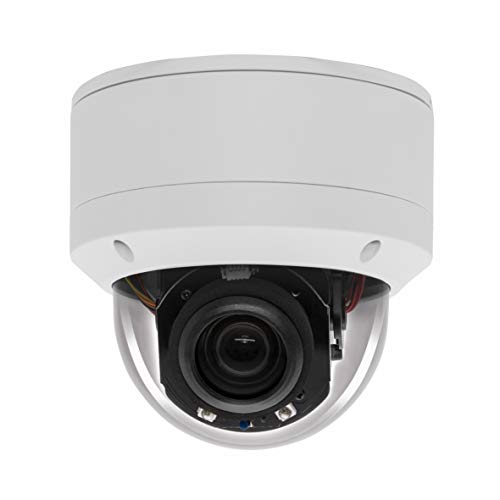
- 5MP resolution with 5x motorized optical zoom
- Wide 355-degree pan and 90-degree tilt range
- IP66 waterproof metal housing with surge protection
- Night vision reach up to 100 feet
Cons
- Power supply and PoE injector are not included
- Limited to a single year of warranty

Pros
- Includes 12 wired IP67 weatherproof cameras
- Smart human and vehicle motion filtering
- Full-color night vision reaches 66 feet
- Preloaded 2TB drive with H.265+ compression
Cons
- Requires running physical cables for every camera
- Requires direct router link for remote access
Pros
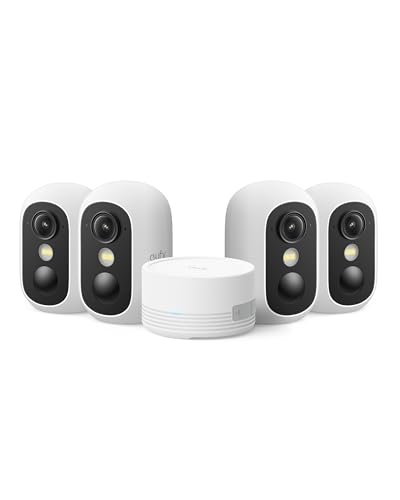
- Screw-free magnetic base for quick mounting
- Spotlight-free color night vision in darkness
- Local storage expandable up to 1TB
- IP67 weather resistance for outdoor use
- Facial recognition with zero subscription fees
Cons
- Incompatible with older HomeBase 2 systems
- Limited to 2.4 GHz Wi-Fi networks
- MicroSD card not included for standalone recording

Pros
- Crisp 5MP video resolution at 25fps
- Wide 108-degree viewing angle
- Up to 98ft infrared night vision
- IP66 waterproof and IK10 vandal-proof housing
Cons
- No onboard SD card slot for storage
- Power adapter not included in the box
- Incompatible with Mac Safari browser

Pros
- Pre-installed 1TB drive with no monthly fees
- Eight IP66 weatherproof cameras with 80ft night vision
- AI smart motion identifies people, vehicles, and pets
- Local recording operates without an internet connection
Cons
- Requires running physical BNC cables to every camera
- Camera resolution is limited to 1080p

Pros
- Sharp 3K resolution with 123-degree field of view
- Smart dual-light color night vision up to 30 meters
- Onboard AI detection for people and vehicles
- Pre-installed 1TB hard drive for continuous recording
Cons
- One-way audio with no two-way talkback speaker
- Requires running PoE network cables to every camera
Power Infrastructure and Video Feeds
Choosing outdoor equipment starts with how each unit draws electricity and transfers data. Battery-operated Wi-Fi models mount quickly to exterior trim, but they spend most of their time in low-power standby mode. As a result, they record only after motion wakes the sensor, which can cut off the opening seconds of an incident.
Hardwired configurations deliver uninterrupted recording without sleeping. Systems operating over Power over Ethernet carry electricity and video across a single network line, while analog setups depend on bundled coaxial wires. If you are debating storage gear, reading about what is an NVR and how is it different from a DVR clarifies which cabling run fits your attic or siding.
Pro Tip: Running Ethernet cables through exterior walls requires a drip loop. Curve the wire downward before it enters the drill hole so rainwater drips off instead of tracking inside.
| Camera Type | Power Delivery | Video Storage |
|---|---|---|
| Battery Wi-Fi | Rechargeable pack | Local SD or base |
| PoE IP Camera | Single Ethernet line | Dedicated NVR / NAS |
| Analog CCTV | BNC plus DC wire | Centralized DVR |
Sensor Resolution and Night Visibility
Resolution numbers alone do not guarantee a clear image when an incident occurs. A 5MP or 3K sensor provides the pixel density needed to read vehicle plates across an open driveway, but nighttime illumination determines image clarity after dusk. Standard infrared emitters produce sharp monochrome video, while integrated white spotlights switch on during motion to reveal clothing colors.
Some models rely on dual illumination, while others use sensitive sensors that produce color images using faint ambient light from porch fixtures. Paying attention to status lights is also critical, since understanding what do the lights on a security camera mean ensures your spotlights do not distract passing drivers or produce unwanted reflections.
Night Vision Reflection: Mounting a camera under deep eaves or directly against a white gutter can cause infrared glare. The LED light bounces straight back into the lens, washing out the image and blinding the sensor completely.
Weatherproofing and False Alert Filtering
Outdoor hardware must endure blowing rain, freezing winter air, and direct sun exposure. Check for an IP66 or IP67 rating to guarantee that water and dust cannot penetrate the casing. Cast metal dome enclosures also offer physical durability against wind-blown debris and accidental impacts.
Modern surveillance relies heavily on artificial intelligence rather than simple pixel-shift detection. Current processors ignore passing shadows by focusing strictly on human silhouettes and vehicle shapes. Certain hubs even check facial geometry, so learning do security cameras have facial recognition helps you decide if customized identity alerts are useful for your family. Verify that your equipment complies with standards established by the Federal Communications Commission for radio frequency emissions and wireless safety.
Expert Examined
From Marcus Bell

I frequently see homeowners point cameras straight toward the street without masking traffic lanes. The constant vehicle alerts drain wireless batteries within weeks and train you to ignore notifications altogether.
Read more about Marcus BellMatching Hardware to Your Property
If you need wide coverage around an exterior perimeter without running cables through finished drywall, I would point you to the eufy Security eufyCam C35 4-Cam Kit. Its magnetic base makes exterior mounting simple, while the HomeBase Mini manages local AI recognition without requiring recurring subscription payments.
For homes where routing network lines through an attic or crawlspace is practical, I recommend the ANNKE 8CH 5MP PoE Security Camera System, 1TB HDD. The 3K resolution paired with a 123-degree field of view provides broad driveway oversight, and its dual-light setup switches from infrared to color illumination whenever a person approaches.
When you have a single vulnerable location requiring focused zoom across a backyard or gate, the IP Security 5.0MP H.265 POE PTZ Dome Camera is my preferred pick. Its 5x optical zoom and 355-degree motorized panning track distant targets without sacrificing image clarity.
The Bottom Line
The single biggest mistake buyers make is prioritizing headline megapixel counts while overlooking power supply and recording continuity. A wire-free camera that wakes up two seconds late provides less security value than a continuous wired stream stored safely on an indoor drive.
Before purchasing hardware, inspect your eaves and measure cable paths to your router or utility closet. Establishing a dedicated, hardwired connection at your main entry point gives you dependable, all-weather coverage that never relies on battery recharges.
FAQs
What weather rating is necessary for outdoor cameras?
An IP66 rating protects against heavy rain and dust under standard roof eaves. For units installed on open posts or exposed walls subject to driving rain and snow, an IP67 rating offers better seal durability.
Can outdoor security cameras record without internet?
Hardwired PoE and DVR systems record continuously to their internal hard drives without an active internet connection. An internet connection is only necessary for remote smartphone viewing or off-site push alerts.
What height should outdoor cameras be mounted?
Mount outdoor units between eight and ten feet off the ground. This height prevents casual tampering while maintaining a downward angle that captures clear facial features rather than the tops of hats.
How much storage is needed for continuous recording?
A 1TB hard drive using modern H.265 video compression generally stores one to two weeks of continuous footage for a four-camera system before overwriting older clips.
Sources
- Federal Communications Commission www.fcc.gov
- UL Solutions Standards www.ul.com