
Mounting the best exterior security cameras often forces an immediate choice between running network cable or maintaining an analog DVR system. Property owners who already have coax lines need very different hardware than builders pulling clean Ethernet drops. Matching the transmission signal to your existing infrastructure avoids costly rewiring projects.

Pros
- Up to 100 feet night vision in darkness
- IP66 aluminum metal weatherproof housing
- Built-in microphone for one-way audio capture
- 1080P high-definition resolution with IR-cut filter
Cons
- Requires separate CCTV cable and power supply
- Compatible only with HD-TVI analog DVRs
- No speaker for two-way audio talk

Pros
- 8MP 4K resolution at 20 frames per second
- Full-color night vision reaching 65 feet
- Wide 105-degree field of view with 2.8mm lens
- PoE support for single-cable power and data
- Weatherproof IP66 metal turret dome housing
Cons
- Incompatible with Reolink, Lorex, and Amcrest NVRs
- Video capture capped at 20 frames per second
- Technical support limited to weekday business hours
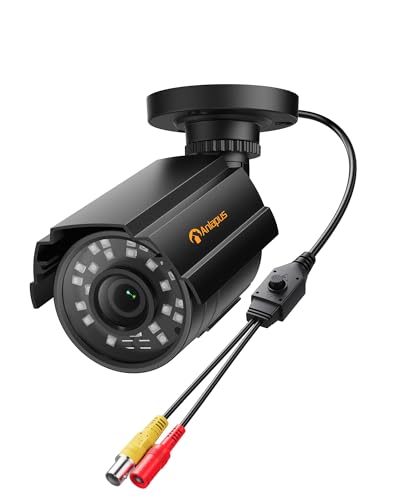
Pros
- Hybrid output supports TVI, AHD, CVI, CVBS
- 80ft night vision with 24 infrared LEDs
- Weatherproof IP66 rated aluminum alloy housing
- Built-in OSD menu switches signals quickly
Cons
- Requires separate DVR and cables to operate
- Cannot operate as an independent standalone camera
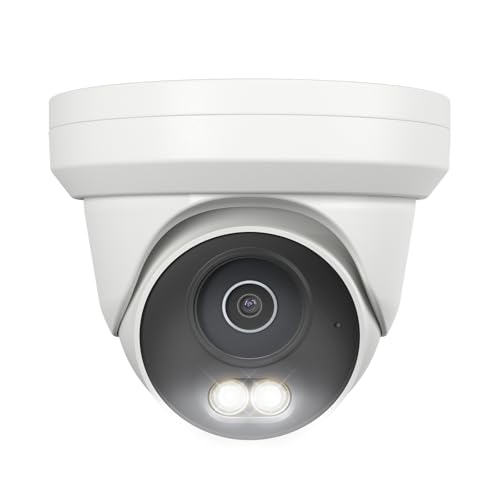
Pros
- 8MP 4K resolution with 110 degree viewing angle
- Smart 100ft color night vision with dual white lights
- Human and vehicle detection filters irrelevant motion
- PoE support carries power and data over one cable
- Built-in microphone records surveillance audio
Cons
- Ethernet cable and 12V power cord not included
- Video capture capped at 20fps in 4K

Pros
- Full-color night vision up to 65 feet
- Wide 105-degree view from 2.8mm lens
- IP67 weatherproofing with metal dome housing
- PoE support for combined power and data
Cons
- Incompatible with Reolink, Lorex, and Amcrest NVRs
- Video capture capped at 20fps in 4K

Pros
- Sturdy IP66 waterproof metal casing
- Night vision reaches up to 82 feet
- Supports ONVIF and RTSP video streams
- Combines humanoid detection with a siren alarm
Cons
- Maximum MicroSD card capacity capped at 128GB
- Video resolution tops out at 1080P
Wiring Architecture and Signal Types
Choosing an outdoor camera starts at the backhaul connection. Power over Ethernet models simplify new installations by carrying power and 4K digital video over a single Cat5e or Cat6 line. If your house relies on older coaxial lines, learning what is an NVR and how is it different from a DVR clarifies why IP and analog hardware cannot share the same recorder ports.
Analog systems remain relevant because replacing buried coax around a finished home can be prohibitive. Modern HD-TVI and AHD bullet units transmit high-definition video over existing cables without digital network overhead. However, they lack the onboard video processing and flexible network routing found in native IP hardware.
| Signal Type | Data Cable | Power Source |
|---|---|---|
| PoE IP | Ethernet cable | Shared network drop |
| Analog DVR | Coaxial cable | Separate power supply |
| Wi-Fi | Wireless signal | Dedicated power lead |
Check Recorder Protocols: Analog cameras requiring HD-TVI or AHD signals will not display video on mismatched DVR hardware without explicit format support.
Weatherproofing Ratings and Housing Materials
Exterior surveillance hardware must survive persistent moisture, blowing dust, and seasonal temperature swings. An IP66 rating confirms that the housing resists powerful water jets and heavy rain. Hardware rated at IP67 provides an additional layer of protection against temporary water immersion during severe yard flooding.
Metal housings cast from aluminum alloy protect internal circuitry from physical impacts and prolonged sun exposure. According to standards published by UL Solutions, durable enclosures also prevent water from breaching the wiring compartment over years of thermal expansion. Plastic enclosures tend to become brittle under continuous ultraviolet exposure.
Expert Examined
From Marcus Bell

I frequently see outdoor cameras mounted with their pigtail wire connections exposed directly to dripping gutters. Even an IP67 casing fails quickly if moisture wicks into the unsealed RJ45 or BNC connector.
Read more about Marcus BellNighttime Illumination and Color Modes
Standard infrared night vision illuminates dark yards using invisible light, producing high-contrast monochrome footage. While useful for general perimeter tracking, black-and-white feeds obscure vehicle colors and clothing details. Understanding what do the lights on a security camera mean helps prevent unwanted spotlight triggers in quiet residential neighborhoods.
Dual-light systems solve this limitation by remaining in infrared mode until an onboard algorithm detects a person or vehicle. When triggered, integrated white LEDs flood the area, switching the sensor to full color recording. Clear color identification makes a substantial difference when checking whether security camera footage is admissible in court after a property dispute.
Pro Tip: Position cameras so white spotlights illuminate walkways without reflecting off nearby soffits or blinding adjacent neighbors.
Matching Exterior Cameras to Your Perimeter
For homeowners pulling fresh low-voltage wiring to an IP system, I would point you to the UNILOOK 4K PoE Security Camera. Its 8MP resolution delivers crisp architectural coverage, while the smart dual lights activate color mode only when motion targets appear. This keeps your home dark until actual human or vehicle activity triggers the white illuminator.
If you have an existing analog system wired with Siamese coaxial cables, I recommend the Anlapus 1080P Hybrid 4-in-1 Security Camera. Its built-in OSD menu lets you toggle between TVI, AHD, CVI, and CVBS formats in seconds, making it compatible with older recorder hardware without requiring cable pulls. For detached structures like sheds or workshops where running cables is impractical, I would suggest the Topodome J10A ONVIF Bullet Outdoor WiFi Security, which provides local storage and two-way audio over a wireless link.
The Bottom Line
The single most common mistake buyers make is purchasing high-resolution cameras without checking their existing recorder protocols. A 4K PoE camera will not work on an analog coaxial DVR, and specialized IP cameras often require specific standalone recorders to enable their full feature sets.
Before purchasing any hardware, inspect your current wiring and the rear panel of your recording unit. Verify whether your system relies on BNC coaxial ports or RJ45 Ethernet jacks so you select cameras that link up on the first attempt.
FAQs
Can I connect a PoE exterior camera directly to a Wi-Fi router?
A PoE camera requires a PoE injector, a PoE network switch, or an NVR with built-in PoE ports to receive both electricity and network connectivity. Standard household routers do not output power over their Ethernet jacks.
What field of view is best for an outdoor security camera?
A 2.8mm lens providing a 100 to 110 degree field of view works best for broad areas like driveways and front yards. Narrower lenses offer greater optical reach but reduce overall situational awareness near building foundations.
How does cold weather affect exterior security cameras?
Hardwired metal cameras generate slight internal heat during operation, allowing them to function through sub-zero winter temperatures. Verify that the rated operating range matches your regional winter extremes before mounting hardware on exposed eaves.
Do exterior security cameras record audio legally?
Many outdoor models feature built-in microphones for audio capture, but legal restrictions vary by jurisdiction. Federal and state wiretap laws often require consent when recording private oral conversations in areas with a reasonable expectation of privacy.
Sources
- Federal Communications Commission www.fcc.gov
- UL Solutions www.ul.com
- U.S. Consumer Product Safety Commission www.cpsc.gov