
Installing the best 8 camera wireless security systems requires balancing signal range against continuous power needs. While the video stream travels over Wi-Fi, keeping eight lenses active around a large perimeter still demands dedicated power outlets at every mounting position.

Pros
- Eight 4K pan-tilt cameras with auto-tracking
- Pre-installed 2TB hard drive for continuous recording
- Three night vision modes including color spotlights
- Two-way audio built in with zero subscription fees
- NVR expandable up to 16 total channels
Cons
- Expanding past eight cameras requires a separate PoE switch
- Wired installation requires routing network cables to each spot

Pros
- Pre-installed 3TB hard drive with no subscriptions
- High-definition 5MP resolution with color night vision
- Dual-band 2.4GHz and 5GHz Wi-Fi connectivity
- IP66 weatherproof housings for outdoor placement
Cons
- Each camera requires an individual 12V DC outlet
- Remote monitoring requires the proprietary Hisee cloud app
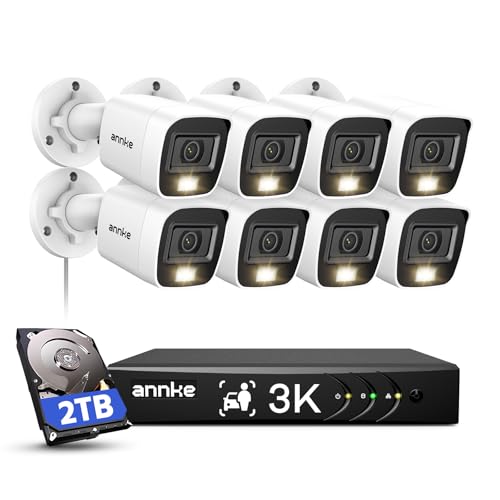
Pros
- Eight 3K cameras with integrated audio recording
- Smart dual-light switches to color upon detection
- Weatherproof IP67 rating from -40°F to 140°F
- Included 2TB hard drive expandable up to 10TB
Cons
- Wired analog installation requires running physical cables
- Frame rate is limited to 20fps at 3K resolution

Pros
- 4K 8MP footage with 100-foot night vision
- AI person and vehicle detection alerts
- 4TB local storage, no monthly cloud fees
- IP66 metal cameras for indoor or outdoor use
Cons
- 32-channel expansion requires a separate ZOSI PoE switch
- Large 16 x 11 x 11-inch system footprint

Pros
- Pre-installed 3TB drive, no monthly fees
- AI human detection filters pets and shadows
- IP66 weatherproofing down to -13 degrees
- Expandable 16-channel NVR for extra cameras
Cons
- Requires wired power outlets for each camera
- Wireless range limited to 100-foot distance

Pros
- Eight 5MP cameras with 100ft infrared night vision
- Plug-and-play PoE cabling for power and video
- Built-in microphones for ambient sound recording
- Smart detection filters people, vehicles, and pets
Cons
- Requires running physical Ethernet cables outdoors
- Heavy equipment package weighing over 27 pounds
Wireless Video Transmission Versus Dedicated Power
The label wireless refers strictly to how footage reaches the recorder. Each camera transmits high-definition streams over 2.4GHz or 5GHz radio bands, saving you the chore of running network cables through interior walls. However, continuous surveillance still demands a 12V DC plug nearby, meaning your exterior outlet layout dictates where you can mount each unit.
Broadcasting eight separate high-bitrate video feeds simultaneously can congest standard residential routers. Dedicated systems bypass this by pairing cameras directly to a private sub-network hosted on the recorder base. To understand the hardware handling these incoming signals, read about what is an NVR and how is it different from a DVR before purchasing.
| System Architecture | Data Delivery | Best Property Type |
|---|---|---|
| Standalone Wi-Fi NVR | Dual-Band Wireless | Finished suburban homes |
| PoE Wired NVR | Single Ethernet Line | New construction builds |
| Analog DVR | Coaxial BNC Cables | Pre-wired older properties |
Power Cord Reach: Do not assume wireless cameras eliminate exterior drilling. You must still pass low-voltage power cords through exterior walls or tap into weather-sealed junction boxes to maintain a 24/7 recording feed.
Bandwidth Management and Local Hard Drive Sizing
Eight cameras recording at 5MP or 4K resolution generate gigabytes of data every hour. Modern kits employ H.265 compression, which cuts bandwidth consumption in half compared to older formats. Without efficient encoding, eight streaming devices can cause video stuttering, latency spikes, and premature hard drive wear.
Local hard drive capacity determines how many days of history you retain before the recorder loops over old events. An eight-lens setup running 24/7 requires at least a 2TB to 4TB surveillance-grade drive. Reviewing property coverage laws is also wise, particularly whether your security camera footage is admissible in court if an incident occurs near your property line.
Expert Examined
From Marcus Bell

The mistake I see most often is owners setting all eight cameras to maximum bitrate on a single 2.4GHz network. I always move high-traffic driveway feeds to 5GHz or ethernet, leaving the slower band clear for static backyard views.
Read more about Marcus BellSmart Detection and Weather Resistance Standards
Older motion sensors triggered recordings whenever wind blew through tree branches or a moth fluttered past the lens. Modern hardware utilizes on-device artificial intelligence to filter movement, identifying people and vehicles before firing an alert. Some systems feature specialized optics, prompting buyers to wonder if security cameras have facial recognition built into their standard consumer firmware.
Outdoor durability relies on ingress protection ratings stamped on the chassis. An IP66 enclosure keeps driving rain and heavy dust storms from breaching internal electronics. For properties in severe winter climates, verify operating temperature limits, which typically span from sub-zero conditions up to 120 degrees Fahrenheit. The Federal Communications Commission regulates the wireless spectrum these outdoor transmitters use to avoid interfering with household electronics.
Pro Tip: Position outdoor cameras beneath roof eaves or soffits whenever possible. Even with an IP66 rating, direct sun exposure degrades plastic lens covers and creates harsh lens flare during morning and evening hours.
Selecting the Right Eight-Camera Kit
If you need true wireless convenience with zero monthly fees, I would point you to the Hiseeu 4K Home Security Camera System. It combines 8MP resolution with dual-band wireless transmission, and the included 3TB drive provides several weeks of continuous recording without subscription overhead.
For homes with existing exterior outlets where budget is paramount, the Hiseeu 5MP Outdoor WiFi Security Camera System delivers sharp 5MP footage, floodlight color night vision, and reliable local storage across ten expandable channels.
If you decide continuous physical cables outweigh the risk of wireless radio interference, I would put the ZOSI 16CH 4K PoE Security Camera System with 4TB on your short list. Its metal construction, generous 4TB hard drive, and room to expand up to 16 channels make it suited for expansive rural properties.
The Bottom Line
The single thing most buyers get wrong is assuming wireless systems require no installation tools. Every camera needs an uninterrupted source of power to deliver continuous recordings and color night lighting. Mapping your exterior electrical outlets before ordering equipment saves you from returning a kit that cannot reach a power source.
Begin by walking your perimeter with a smartphone to test Wi-Fi signal strength at every proposed mounting location. If your connection drops near the garage or backyard fence line, plan on adding a dual-band range extender or shifting to a hardwired configuration before mounting your cameras.
FAQs
Do wireless security camera systems work without an internet connection?
Yes, a wireless NVR communicates with its paired cameras over a private local radio signal. You can view live streams and record footage to the hard drive on a local monitor without internet, though remote phone alerts require a router connection.
How long does a 2TB hard drive last with eight cameras recording?
With eight cameras recording continuously at 5MP using H.265 compression, a 2TB hard drive typically stores five to seven days of footage. Enabling motion-only recording or upgrading to a 4TB drive extends that retention window to several weeks.
Can an eight-camera wireless system slow down my home Wi-Fi?
Systems that use a standalone NVR broadcast on their own closed wireless network, preventing camera feeds from clogging your main home Wi-Fi. Systems connecting directly to a standard household router can cause significant network congestion.
What is the maximum wireless distance between a camera and the NVR?
Most wireless systems reliably transmit signals up to 100 feet through open air. Solid obstacles such as brick walls, metal siding, and concrete foundations drastically reduce this operating range, often cutting transmission distance in half.
Sources
- Federal Communications Commission Equipment Authorization www.fcc.gov
- National Electrical Manufacturers Association Enclosure Standards www.nema.org