
Installing the best 4K outdoor security cameras means nothing if your recording hardware cannot decode the incoming video stream. The real decision splits between standalone PoE network models and proprietary system add-ons. Matching your wiring infrastructure to the right lens configuration ensures clear perimeter evidence when an incident occurs.

Pros
- 8MP 4K resolution at 20 frames per second
- Full-color night vision reaching 65 feet
- Wide 105-degree field of view with 2.8mm lens
- PoE support for single-cable power and data
- Weatherproof IP66 metal turret dome housing
Cons
- Incompatible with Reolink, Lorex, and Amcrest NVRs
- Video capture capped at 20 frames per second
- Technical support limited to weekday business hours
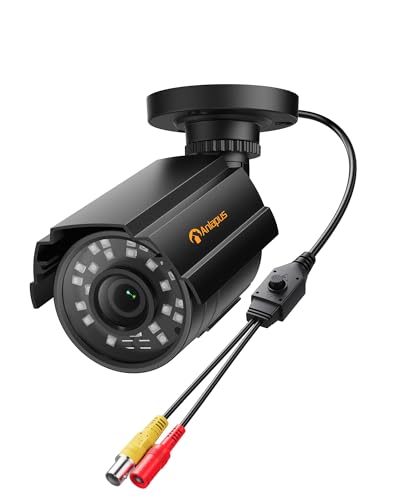
Pros
- Hybrid output supports TVI, AHD, CVI, CVBS
- 80ft night vision with 24 infrared LEDs
- Weatherproof IP66 rated aluminum alloy housing
- Built-in OSD menu switches signals quickly
Cons
- Requires separate DVR and cables to operate
- Cannot operate as an independent standalone camera

Pros
- 4K 8MP resolution with 20fps video
- Wide 105-degree field of view with 2.8mm lens
- Infrared night vision reaching up to 98 feet
- Weatherproof IP66 metal housing for outdoor mounting
- Single-cable PoE power and data delivery
Cons
- Incompatible with Reolink, Lorex, and Amcrest NVRs
- Frame rate tops out at 20fps in 4K
- Support limited to weekday business hours

Pros
- 4K Ultra HD from an 8MP image sensor
- 50X optical zoom for distant subjects
- 360° pan and 90° tilt coverage
- Two-way audio for remote communication
Cons
- PoE+ installation requires Ethernet cabling
- Large 5.2 x 5.2 x 9-inch housing
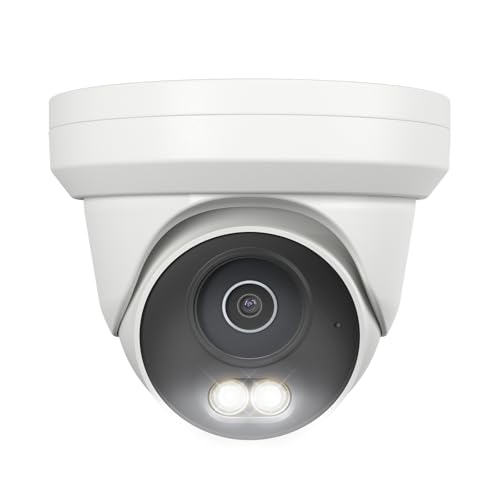
Pros
- 8MP 4K resolution with 110 degree viewing angle
- Smart 100ft color night vision with dual white lights
- Human and vehicle detection filters irrelevant motion
- PoE support carries power and data over one cable
- Built-in microphone records surveillance audio
Cons
- Ethernet cable and 12V power cord not included
- Video capture capped at 20fps in 4K

Pros
- Sharp 8MP 4K recording resolution
- 100-foot starlight night vision with spotlights
- AI person and vehicle detection alerts
- IP66 weatherproof rating for outdoor use
Cons
- Only works with select ZOSI 4K PoE NVR models
- Cannot operate standalone or with non-ZOSI systems
Understanding Video Compression and Recorder Compatibility
Ultra HD resolution generates massive amounts of digital information every second. Without modern H.265 compression, a 4K feed quickly saturates local hard drives and chokes network switches. Using efficient compression cuts file sizes by roughly half compared to older standards while preserving pixel density for digital enlargement.
Hardware compatibility creates the biggest stumbling block for homeowners expanding an existing setup. An IP camera transmitting 8MP streams requires a recorder equipped with sufficient processing bandwidth. Before buying, verify what is an NVR and how is it different from a DVR so your hardware matches your cabling.
Check Brand Protocols: Many 4K cameras use closed proprietary firmware. A camera tied strictly to one manufacturer protocol will not stream video to a different brand of recorder.
Night Vision Capabilities and Lighting Types
Night recording splits into conventional infrared illumination and full-color spotlight systems. Infrared keeps the camera discreet by casting light invisible to the human eye, though footage remains monochrome. Color night systems use onboard white LEDs to preserve vehicle paint shades and clothing hues after dark.
Some hardware combines both methods by resting in infrared mode until an onboard algorithm flags a person or vehicle. When triggered, the device activates visible spotlights to record full color while serving as an active deterrent. You can learn more about how active status indicators operate by reading about what do the lights on a security camera mean during perimeter monitoring.
| Camera Type | Primary Benefit | Best Location |
|---|---|---|
| Fixed Turret | Wide coverage | Entryways and porches |
| Long-Range PTZ | Deep optical zoom | Acreage and lots |
| Analog Bullet | Legacy wire support | Existing BNC setups |
Expert Examined
From Marcus Bell

I frequently see property owners mount wide-angle turret cameras thirty feet up on a gable where facial features wash out entirely. For crisp identification, position fixed 2.8mm lenses ten to twelve feet from the ground directly facing points of entry.
Read more about Marcus BellLens Angle Versus Optical Magnification
A broad field of view captures an entire yard, but wide angles spread the 3840 by 2160 pixel grid over a large surface. A fixed 2.8mm lens delivers roughly 105 degrees of horizontal coverage, which works exceptionally well across patios, driveways, and front gates. However, distant details like license plates blur quickly beyond thirty feet.
Properties requiring long-distance identification benefit from motorized optical zoom assemblies. Optical glass physically adjusts focal length without losing image resolution, unlike digital zoom which merely blows up existing pixels. The Federal Communications Commission sets standard operational guidelines for digital devices to ensure wired and wireless video equipment does not disrupt residential communications.
Pro Tip: Position cameras so daylight glare does not strike the lens directly at sunrise or sunset, preventing overexposed video during critical transition hours.
High-resolution video also plays an important role if an intruder causes damage or trespassing occurs. Knowing whether security camera footage is admissible in court helps you decide where to place cameras for legal verification.
Matching the Hardware to Your Property
If you need comprehensive yard coverage with intelligent notifications, I would point you to the UNILOOK 4K PoE Security Camera. Its 110-degree field of view combined with dual-light color night vision makes it ideal for managing suburban driveways and front walks without false alarms from swaying trees.
For large parcels, farms, or detached workshops, I would put the WELANC 4K PTZ Security Camera Outdoor on your list. The 50X optical zoom and 1000-foot infrared capability let you inspect distant fence lines and outbuildings that standard fixed lenses cannot resolve.
Homeowners who already own a compatible platform should consider the Real HD 8MP 4K PoE IP Full Color Night Vision. Its compact metal housing and constant color night imaging provide reliable entryway monitoring on standard network video recorders.
The Bottom Line
The single mistake most buyers make is purchasing high-resolution cameras without checking their recording backend. A 4K camera is useless if your network recorder lacks the processing channels, power budget, or protocol support to decode an 8MP video feed.
If you only do one thing before mounting hardware, map your cable runs and verify your network recorder specifications. Running a single direct Ethernet cable for Power over Ethernet ensures uninterrupted operation in harsh weather without the packet loss common to wireless options.
FAQs
Does an 8MP camera mean the same thing as 4K resolution?
Yes, 8MP and 4K refer to the same pixel density in video surveillance. Both deliver a frame size of 3840 by 2160 pixels, which offers four times the detail of standard 1080p high definition.
Can I run 4K cameras on an older 1080p NVR?
An older 1080p recorder cannot decode native 4K streams unless the camera allows sub-stream downscaling. To view and store full Ultra HD footage, your recorder must explicitly support 8MP decoding per channel.
How far can 4K cameras see clearly at night?
Standard fixed-lens models with infrared LEDs illuminate between 65 and 100 feet. Specialized pan-tilt-zoom units with high-output infrared arrays can cast nighttime beams reaching up to 1000 feet across open terrain.
Do 4K outdoor cameras require continuous internet access?
Hardwired PoE cameras do not need internet access to record locally to an on-site network video recorder. You only require an active internet connection if you want remote viewing and push alerts on your phone.
Sources
- Federal Communications Commission www.fcc.gov
- UL Solutions Standards www.ul.com