
Installing the best smoke detectors for garage spaces often leads to accidental false alarms from car exhaust, temperature shifts, and drifting sawdust. Garages demand a clear choice between thermal rate-of-rise sensors that ignore airborne particulates and sealed optical units positioned near the access door. Choosing the right mechanism protects your home without nuisance sirens interrupting your day.

Pros
- Photoelectric smoke and electrochemical CO sensors
- Sealed 10-year lithium battery eliminates battery swaps
- Informative LCD shows real-time CO levels in PPM
- Certified to both UL 217 and UL 2034 standards
- Includes mounting brackets, screws, and anchor plugs
Cons
- Standalone only, no wireless interconnection between units
- No Wi-Fi support or base station compatibility

Pros
- Rate-of-rise technology detects rapid temperature increases
- Microprocessor control minimizes nuisance false alarms
- Remote test and mute via household remotes
- Hardwired setup backed by 9V battery
Cons
- Requires hardwired electrical installation
- Compatible remote control is sold separately
- Heat detector only, does not sense smoke

Pros
- UL 217 10th Edition certified smoke sensing
- Electrochemical sensor reads CO up to 2000 ppm
- Sealed 10-year battery eliminates annual replacements
- Loud 85dB horn with silence button
Cons
- Non-replaceable battery requires replacing the whole unit
- Not hardwired for existing electrical junction boxes
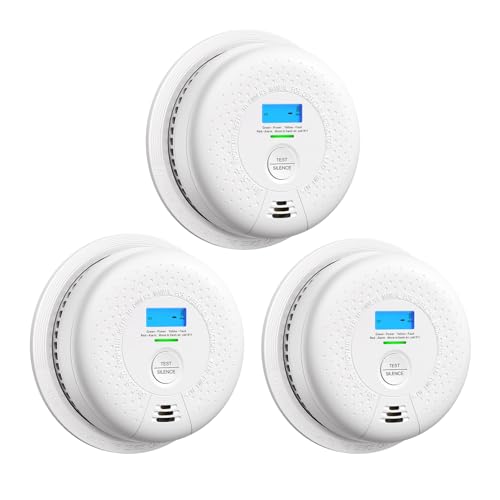
Pros
- 10-year sealed lithium battery, no rewiring
- Photoelectric and electrochemical combo sensing
- Real-time CO and battery LCD display
- Certified to UL 217 and UL 2034 safety standards
Cons
- No wireless interconnection between units
- No Wi-Fi support or base station pairing

Pros
- Thermistor sensor for dedicated heat detection
- Battery backup maintains coverage through power outages
- Wide 50-foot detection perimeter
- Loud 85 dB audible alert horn
Cons
- Requires existing 120-volt electrical wiring
- Senses heat only without smoke detection

Pros
- Interconnects up to 12 hardwired units
- Photoelectric sensor reduces cooking false alarms
- UL 217 listed with 85-decibel sounder
- Ten-hour silence mode delays night chirps
Cons
- Requires hardwired circuits in every ceiling
- Needs periodic 9V backup battery replacements
Why Garages Require Heat Detection Over Optical Chambers
Standard smoke detectors rely on optical chambers that sense airborne particles. In an unconditioned garage, vehicle exhaust fumes, wood dust, and ambient humidity easily penetrate these chambers. The National Fire Protection Association advises against placing standard smoke sensors in areas subject to heavy particulate contamination.
Thermal heat alarms solve this issue by measuring rapid temperature increases rather than floating particles. When a vehicle or fuel container ignites, the rate-of-rise sensor trips quickly without reacting to morning exhaust. Incorporating heat sensors into your broader home safety detection plan keeps the garage secure without false sirens.
The False Alarm Trap: Mounting an optical smoke alarm near your vehicle often leads to frequent nuisance alarms, prompting residents to pull the battery. A disabled alarm leaves your household completely unprotected against real vehicle or chemical fires.
Sensor Formats and Temperature Extremes
Garages experience severe temperature swings between summer heat and freezing winter weather. Standard residential alarms can suffer sensor errors when ambient temperatures drop below freezing or exceed normal indoor thresholds. The Consumer Product Safety Commission notes that environmental exposure can degrade sensing elements not rated for unconditioned spaces.
For detached workshops or open bays, a dedicated heat alarm delivers the most consistent baseline response. If you want smoke and toxic gas tracking, place the optical unit inside the adjoining hallway or utility space. Exploring our safety blog provides further insight into isolating hazardous garage zones.
| Sensor Type | Trigger Method | Best Location |
|---|---|---|
| Rate-of-Rise Heat | Rapid thermal increase | Unconditioned garage bay |
| Fixed Temp Heat | Set limit reached | Dusty workshop space |
| Photoelectric Smoke | Light beam obscuration | Adjacent interior hallway |
Power Connections and Audible Alert Networks
A garage alarm must produce a siren loud enough to wake sleeping residents through insulated walls and closed fire doors. Standalone units emit 85-decibel warnings, but sound drops sharply through solid partitions. Interconnected systems bridge this gap by sounding indoor sirens when a garage sensor activates.
Expert Examined
From Marcus Bell

I frequently see homeowners mount standard smoke alarms right over parked cars, only to pull the batteries after the first cold-morning exhaust trigger. If your garage lacks pre-existing 120-volt wiring for interconnected heat sensors, place your primary detection unit just inside the access door to the living quarters rather than directly over the vehicle.
Read more about Marcus BellHardwired models with backup batteries link directly into household warning circuits. If your garage lacks preexisting wiring, consider pairing battery units near access doors with your home security systems to maintain clear auditory alerts throughout your home.
Placement Tip: If you park gas-powered vehicles or operate fuel-burning equipment, place a dedicated carbon monoxide detector in the breezeway connecting the garage to your living space.
Selecting the Right Garage Alarm Setup
For an unconditioned garage bay with preexisting wiring, I would point you directly to the First Alert BRK Hardwired Heat Alarm with Battery. This dedicated unit utilizes rate-of-rise microprocessor technology rather than an optical chamber. It completely ignores vehicle exhaust fumes, paint vapor, and drifting sawdust while responding quickly to rapid temperature increases. Because it ties into standard 120-volt household wiring, an emergency starting in your garage immediately triggers the interconnected alarms across your bedrooms.
If your garage lacks wiring, I recommend mounting the Heiman smoke detector carbon monoxide detector inside the adjoining entryway. Its sealed 10-year lithium battery eliminates periodic replacements, while the UL 217 10th Edition certification helps resist false alarms from stray air currents. For an attached utility area where you want visible gas readings, I suggest the X-Sense Smoke Detector Carbon Monoxide Detector. Its built-in LCD screen provides immediate parts-per-million readouts for carbon monoxide alongside real-time battery status.
The Bottom Line
The most common error property owners commit is treating an unconditioned garage like an ordinary bedroom by installing a standard photoelectric smoke detector. Engine emissions, seasonal humidity shifts, and everyday garage dust inevitably cause nuisance triggering, which tempts residents into disconnecting the sensor entirely and creating a dangerous blind spot.
If you take only one action, check whether your ceiling has hardwired fire alarm wiring. If wiring is present, install a dedicated heat detector in the garage bay; if not, mount a sealed combination smoke and carbon monoxide detector on the conditioned home side of the interior entry door.
FAQs
Can you put a regular smoke detector in a garage?
Standard smoke detectors are not recommended for unconditioned garages because vehicle emissions, airborne dust, and humidity fluctuations trigger frequent false alarms. A dedicated rate-of-rise heat alarm is designed specifically for these conditions.
Where should a garage fire alarm be placed?
Mount heat alarms on the ceiling near the center of the garage bay, at least four inches away from side walls. If using a smoke or carbon monoxide detector, place it inside the adjoining hallway rather than in the garage itself.
Do garage heat alarms detect carbon monoxide?
No, dedicated heat alarms monitor rapid temperature changes and high heat thresholds, not toxic gas. If you store gas-powered equipment or vehicles, install a separate carbon monoxide detector inside the doorway of your living quarters.
What does the UL 217 10th Edition standard mean for garage alarms?
The UL 217 10th Edition standard mandates upgraded resistance to nuisance alarms, particularly from cooking smoke and transient particulates. While this enhances performance near kitchens and entryways, unconditioned garage bays still require heat detection.
Sources
- National Fire Protection Association www.nfpa.org
- UL Solutions www.ul.com
- US Consumer Product Safety Commission www.cpsc.gov