
Installing the best kidde smoke and carbon monoxide detectors protects your household from two silent threats with one ceiling bracket, but the wiring behind your drywall dictates which unit you can legally mount. Homeowners frequently run into trouble by mixing incompatible power setups across hallways and bedrooms.
Pros
- Combined smoke and carbon monoxide sensing
- Ten-year backup battery eliminates yearly replacements
- Spoken voice alerts identify fire or carbon monoxide
- Interconnected wiring activates all alarms simultaneously
- Meets UL 217 9th Edition and UL 2034 standards
Cons
- Requires existing 120V AC ceiling electrical wiring
- Interconnection options vary across different models

Pros
- Combined smoke and carbon monoxide detection
- Built-in 10-year battery with no replacements needed
- Voice alerts announce specific fire and CO hazards
- Tested to UL 217 10th and UL 2034 standards
- 85-decibel audible alarm with red LED light
Cons
- Lacks interconnect capability for linked alarms
- Sealed battery requires replacing the entire alarm

Pros
- Dual smoke and carbon monoxide sensing with voice alerts
- Wireless interconnect connects up to 12 alarms
- Operates without wiring using two included AA batteries
- Loud 85 decibel alarm with flashing red LED lights
- Meets UL 217 10th Edition and UL 2034 safety standards
Cons
- Requires periodic AA battery replacements
- Interconnect is limited to 12 compatible alarms

Pros
- Combined ionization smoke and carbon monoxide detection
- Spoken voice warnings clearly announce the active hazard
- Dual-AA battery backup protects through electrical blackouts
- Nine-minute test-hush button quickly quiets false alerts
- UL Certified with a 10-year limited warranty
Cons
- Requires hardwired 120VAC power, preventing battery-only installation
- Uses replaceable AA batteries instead of a sealed cell

Pros
- Dual smoke and carbon monoxide sensing
- Wired interconnect pairs with other Kidde alarms
- Certified to UL 217 10th and UL 2034 standards
- Loud 85-decibel alarm with red LED warning
- Backing from a 10-year limited warranty
Cons
- Requires 120V hardwired AC electrical setup
- AA backup batteries need manual replacement
- Interconnect limited to compatible Kidde brand devices

Pros
- Voice alerts specify fire or carbon monoxide hazards
- Hardwired 120V with 10-year built-in battery backup
- Meets UL 217 10th Edition and UL 2034 standards
- Hardwired interconnect syncs with other Kidde alarms
- Loud 85-decibel horn paired with red LED warning
Cons
- Requires existing 120V AC electrical hardwiring
- Interconnect feature functions only with Kidde alarms
Hardwired Versus Battery Power Constraints
Modern residential building codes generally mandate 120V AC hardwired alarms with battery backups in newly constructed homes. If your home already has junction boxes and interconnect cables routed between rooms, opting for hardwired models ensures compliance and uniform alerts during an emergency.
For older structures lacking existing electrical runs, battery-powered alarms eliminate the need to hire an electrician to snake wires through finished framing. You can expand your general Home Safety & Detection setup rapidly without altering plaster or drywall.
UL Standards Update: Modern units adhere to newer safety specifications, including UL 217 10th Edition for smoke detection and UL 2034 for carbon monoxide detection, which curb nuisance cooking alarms.
Sealed 10-year lithium batteries provide continuous operation without requiring annual replacements, saving you the hassle of midnight low-battery chirps. Units using standard alkaline AA cells remain functional alternatives if you prefer swapping cells yourself while maintaining budget flexibility.
Interconnection Methods Across Living Spaces
When a fire starts in a distant basement or garage, an isolated alarm upstairs might not wake sleeping family members in time. Interconnected alarms bridge this gap by signaling every linked horn in the house whenever a single unit senses danger.
| Interconnect Type | Power Source | Best Location |
|---|---|---|
| Traditional Wired | 120V AC Junction | Modern Construction |
| Wire-Free RF | AA Battery Pack | Basements and Lofts |
| Standalone Unit | 10-Year Lithium | Apartments and Dorms |
Wired interconnect relies on a third physical conductor inside your standard electrical cable run. In contrast, wireless interconnect units communicate through radio frequencies, allowing you to tie remodeled wings or detached workspaces into the rest of your alarm network seamlessly.
Expert Examined
From Marcus Bell

The mistake I see most often during retrofits is mounting standalone alarms in finished basements where no one can hear them from the master bedroom. I always ensure ground-floor and upper-level units share a wireless signal if there is no physical traveler wire connecting them.
Read more about Marcus BellCombining wire-free detectors into an older layout can supplement existing Home Security Systems by providing loud local notification without complex network hubs. Kidde models equipped with voice alerts take this further by stating the exact hazard clearly.
Sensor Standards and Voice Alert Benefits
Differentiating between kitchen smoke particles and life-threatening fires has historically caused headaches for homeowners. Newer sensor engineering distinguishes harmless steam and cooking grease from fast-burning synthetic fires, drastically reducing nuisance trips near cooking zones.
Mounting Proximity: Never install a combination smoke and carbon monoxide detector closer than ten feet to cooking appliances. Even units with advanced nuisance resistance can trigger false alarms if exposed directly to high heat and steam.
Voice notification adds critical clarity during panic situations. Instead of forcing occupants to decipher between intermittent high-pitched tones, the synthesized speaker announces whether to evacuate for a blaze or open windows and exit for invisible carbon monoxide accumulation.
According to fire safety guidance published by the U.S. Fire Administration, early audible notification directly correlates with lower residential casualty rates. Choosing units that loudly declare the hazard gives children and older residents unmistakable direction.
Matching the Alarm to Your Layout
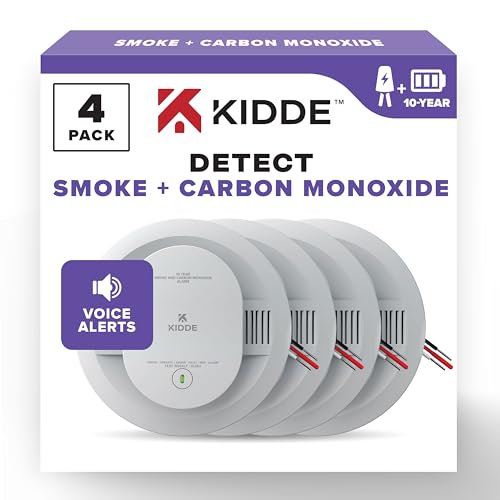
If your home features pre-existing 120V AC junction boxes with traveler wires, I would point you toward the Kidde Hardwired Smoke & Carbon Monoxide Detector. Its built-in 10-year lithium backup means you will never scramble for replacement batteries during late-night power outages, and its four-pack format covers an entire floor in one purchase.
For additions, attics, or finished basements that lack ceiling wiring, I would put the Kidde Smoke & Carbon Monoxide Detector into service. Its wire-free interconnect links up to 12 compatible devices over radio frequencies, ensuring that an alert triggered below ground sounds in upper bedrooms instantly.
If you rent an apartment or simply need to replace an aging standalone ceiling unit without touching wiring, the Kidde Smoke & Carbon Monoxide Detector provides a clean, self-contained solution with its sealed 10-year battery and updated UL compliance standards.
The Bottom Line
The single most frequent mistake homeowners make is buying standalone battery units when their local building codes or floor plans require interconnected alarms. Relying on an isolated horn across a large home severely reduces the evacuation window for residents sleeping on separate floors.
Inspect your existing ceiling brackets before buying anything. Check whether you have active 120V wiring harnesses or plain screw anchors, count the bedrooms requiring coverage, and select models that match that electrical infrastructure across all levels.
FAQs
How often should combination smoke and CO alarms be replaced?
Every combination detector must be fully replaced within ten years of its manufacturing date, regardless of battery life. Sensors degrade over time and lose sensitivity to toxic gases. Look at the date printed on the back label to know when to retire the hardware.
Can I mix hardwired alarms and battery alarms on the same interconnect?
Standard hardwired interconnect lines cannot link directly to traditional battery alarms. However, you can integrate battery-powered wire-free models if you use compatible wireless-bridge hardware designed specifically to link radio-frequency units together.
Where should combination smoke and carbon monoxide detectors be mounted?
Place one on every level of the home, outside sleeping areas, and inside each bedroom. Mount units on the ceiling at least four inches from adjacent walls, or high on walls between four and twelve inches from the ceiling ceiling line.
Why do some alarms use voice warnings instead of just beeps?
Voice warnings announce the exact threat, such as fire or carbon monoxide, helping occupants respond appropriately without second-guessing tone patterns. This is especially helpful for waking children and alerting guests unfamiliar with standard alarm cadences.
Sources
- National Fire Protection Association Standards on Smoke and Carbon Monoxide www.nfpa.org
- U.S. Consumer Product Safety Commission Carbon Monoxide Safety Guidelines www.cpsc.gov
- UL Solutions Safety Testing Standards for Smoke and Gas Alarms www.ul.com