
Replacing outdated units with the best 120V smoke detectors ensures your entire household hears an alert the second fire develops. Modern residential codes require line-voltage units to communicate across a shared interconnect wire, triggering every alarm simultaneously. The key split involves choosing between ten-year sealed battery backups and traditional replaceable batteries across your existing ceiling wiring.

Pros
- Factory locked 10-year backup battery
- Interconnects with up to 18 compatible alarms
- Latching indicator identifies the triggered unit
- Sensor technology limits cooking nuisance alarms
Cons
- Requires AC electrical hardwiring
- No integrated carbon monoxide detection

Pros
- Photoelectric smoke and carbon monoxide dual detection
- Hardwired 120V AC with 10-year battery backup
- Interconnects with up to 18 compatible alarms
- Conforms to UL 217 and UL 2034
- Includes mounting bracket and wiring harness
Cons
- Requires hardwired 120V AC electrical installation
- Interconnection limited to 18 compatible units

Pros
- 120V hardwired setup with battery backup
- Direct replacement fit for model I4618AC
- Compact five by five inch footprint
- Lightweight frame at just 0.75 pounds
Cons
- Requires hardwired 120V electrical junction
- Detects smoke only without carbon monoxide sensing

Pros
- Hardwired interconnect links up to 24 safety devices
- Pre-stripped wiring harness simplifies electrical connection
- Included 9V battery backup maintains protection during outages
- Alarm memory flashes red LED to identify initiating unit
- Dust cover protects ionization sensor during construction
Cons
- Requires existing AC electrical wiring and junction boxes
- No built-in carbon monoxide detection
- Standard 9V battery backup requires manual replacement

Pros
- Precision Detection cuts down cooking nuisance alarms
- Interconnect triggers all compatible alarms together
- Visual indicator pinpoints the initiating unit
- Quick Connect Plug speeds up replacement installation
- Battery backup maintains coverage during outages
Cons
- Requires existing AC wiring, no battery-only operation
- Lacks integrated carbon monoxide detection
- Bulk twelve-pack format exceeds single-room needs
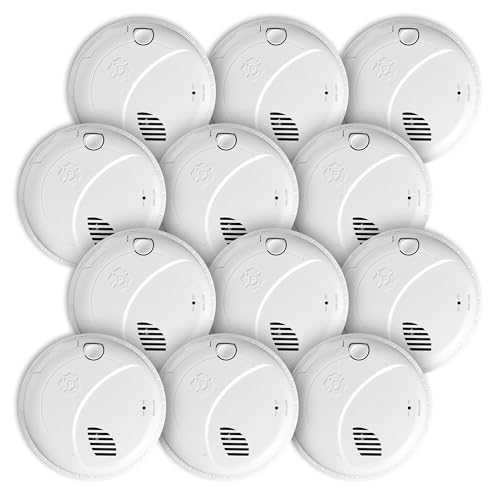
Pros
- Voice and location alerts specify hazard areas
- Precision Detection technology reduces cooking nuisance alarms
- Battery backup maintains operation during power outages
- Interconnects across compatible First Alert and BRK alarms
Cons
- Requires hardwired electrical connections
- No integrated carbon monoxide detection
Wiring Harness Compatibility and Interconnect Lines
Hardwired smoke alarms use three conductors: hot, neutral, and an interconnect communication line. Connecting different brands on the same signaling wire often creates false triggers or disrupts emergency communication across the circuit. Reviewing your dedicated home safety detection layout helps ensure all connected devices share compatible wiring plugs.
Wiring Risk: Never connect hardwired alarms from different manufacturers to the same interconnect signal wire, as conflicting communication signals can prevent alarms from sounding during an actual fire.
Standard branch circuits usually support up to 24 connected safety devices throughout a residence. When one initiating alarm detects smoke, it transmits a low-voltage pulse across the shared conductor to trigger the remaining sirens. Keeping matching brands across all junction boxes ensures these communication protocols function smoothly without unexpected circuit trips.
Sensor Technologies and False Alarm Prevention
Photoelectric sensors recognize smoldering fires from burning upholstery or bedding much faster than ionization sensors, which react primarily to open flaming paper. The National Fire Protection Association maintains residential standards requiring responsive detection while minimizing nuisance cooking steam. Installing updated units near kitchen pathways substantially limits unwanted alarms during meal preparation.
| Sensor Type | Primary Hazard | Best Placement |
|---|---|---|
| Photoelectric | Smoldering fires | Hallways and bedrooms |
| Ionization | Fast flaming fires | Basements and attics |
| Combination CO | Smoke and gas | Sleeping areas |
Dual-sensor models or combination smoke and carbon monoxide alarms consolidate essential life-safety equipment into a single ceiling bracket. Strategic placement outside sleeping areas ensures clear sound propagation throughout connecting hallways. Examining comprehensive home security systems often clarifies how physical sirens integrate with off-site monitoring services.
Battery Backup Formats and Power Failure Protection
Severe thunderstorms and utility disruptions frequently cut alternating current, making reliable battery backups essential during emergencies. Sealed lithium cells provide continuous operation for a full decade without requiring inconvenient battery replacements on tall ladders. Standard nine-volt alkaline models remain affordable up front but demand routine maintenance schedules to avoid low-battery chirping.
Expert Examined
From Marcus Bell

I frequently see homeowners paint over their alarm covers during room renovations, which completely blocks smoke intake vents and ruins internal sensors. Keep protective dust covers on every unit until all sanding and painting finish, or replace contaminated alarms immediately.
Read more about Marcus BellLatching alarm indicators show a visual light pattern on the specific unit that first initiated the emergency cycle. This visual confirmation allows you to pinpoint whether steam, dust, or combustion caused an alarm activation. Integrating your ceiling hardware with reliable home security systems ensures full household awareness when hazardous conditions arise.
Quick Replacement: Take a photo of your existing ceiling wiring harness before shopping so you can match the manufacturer plug without rewiring the outlet box.
Selecting the Right Alarm for Your Home
If you need dual hazard monitoring along central hallways and near utility rooms, I would point you to the 911 EverGuard Hardwired Smoke & Carbon Monoxide. It combines photoelectric smoke detection with carbon monoxide sensing and includes a sealed ten-year backup battery, meeting current UL 217 and UL 2034 requirements in a single enclosure.
For bedrooms and living areas where standard smoke protection is sufficient, I would install the BRK SMI105-AC Smoke Alarm AC Powered Smoke Alarm. Its built-in ten-year locked battery backup stops low-battery chirps during outages, while advanced sensing technology reduces nuisance trips from cooking vapors. It also interconnects with compatible BRK and First Alert hardware.
If your home features multiple levels or expansive hallways, I recommend the First Alert Interconnect Hardwire Smoke Alarm. The voice and location alerts announce the exact room where danger originates, helping occupants select safe evacuation routes. You can explore additional property safety advice on our safety blog to coordinate broader family emergency planning.
The Bottom Line
The single biggest mistake homeowners make is assuming all hardwired smoke detectors share interchangeable wiring harnesses and communicate safely across brands. Installing mismatched alarms on the same 120-volt interconnect line can disrupt signaling voltage, leaving distant bedrooms silent during an active fire.
If you do only one thing, inspect your existing mounting brackets and wiring plugs before ordering replacements so you can maintain uniform brand compatibility throughout your residence. Replacing expired units on a consistent schedule keeps your family protected under modern fire detection standards.
FAQs
Can you mix different brands of 120V smoke detectors on the same circuit?
While physical line-voltage power will flow to different brands, interconnect signaling wires are proprietary and should never be cross-connected. Mixing manufacturers can cause persistent false alarms or prevent distant alarms from sounding when one unit detects smoke. Always standardize on a single manufacturer across all interconnected wiring.
How often should hardwired smoke alarms be replaced?
All residential smoke alarms must be replaced every ten years from their manufacturing date, regardless of whether they still power on. Internal sensor components degrade over time, reducing detection sensitivity to smoldering fires. Check the printed date stamp on the back of each chassis to verify remaining service life.
Do 120V smoke detectors work during an electrical power outage?
Yes, hardwired alarms continue operating during blackouts if their internal battery backup is functional. Modern sealed lithium batteries supply continuous secondary power for up to ten years without requiring battery replacements. Traditional units with removable alkaline batteries require routine annual battery swaps to guarantee uninterrupted coverage.
Why does a hardwired smoke alarm chirp periodically?
Periodic chirping usually indicates a depleted backup battery, dust accumulation inside the sensor chamber, or an expired unit reaching its ten-year limit. Vacuuming the exterior vents often clears dust interference that triggers error alerts. If the chirp continues after battery replacement or cleaning, the internal hardware has reached end-of-life status.
Sources
- National Fire Protection Association standard on household fire warning equipment. www.nfpa.org
- United States Fire Administration home fire safety documentation. www.usfa.fema.gov
- Consumer Product Safety Commission smoke alarm safety guidelines. www.cpsc.gov