
Shopping for the best z-wave water leak sensors means deciding whether your room needs a built-in detector, a remote probe, or extra temperature and humidity monitoring. That choice matters most for homeowners protecting appliances, pipes, cabinets, and finished basements through a compatible Z-Wave hub.

Pros
- Detects water levels as low as 0.5mm
- Z-Wave Plus 700 series connectivity
- CR2 battery rated up to five years
- Triggers sirens and smart water valves
Cons
- Requires a Z-Wave hub, sold separately
- Depends on Home Assistant or Hubitat app alerts

Pros
- 800 Series long-range Z-Wave technology
- Compatible with HomeSeer and Hubitat
- Works with SmartThings and Home Assistant
- Two-pack covers multiple leak-prone areas
Cons
- Requires a compatible Z-Wave setup
- Water leak detection only

Pros
- Detects as little as 0.02 inches of moisture
- Z-Wave Plus with S2 security
- SmartStart setup support
- Up to 3 years of battery life
Cons
- Z-Wave hub required for notifications
- Leak detection only, no temperature or humidity sensing

Pros
- Probe for hard-to-reach areas
- Built-in prongs for direct placement
- Z-Wave 800 Series connectivity
- Works with Home Assistant and SmartThings
Cons
- Z-Wave hub required separately
- Connected alarm or switch needed for automation

Pros
- Detects as little as 0.02 inches of moisture
- Temperature and humidity sensing
- Three-year battery life
- Z-Wave Plus with S2 security
- SmartStart pairing support
Cons
- Requires a Z-Wave hub
- Limited to certified Z-Wave gateways
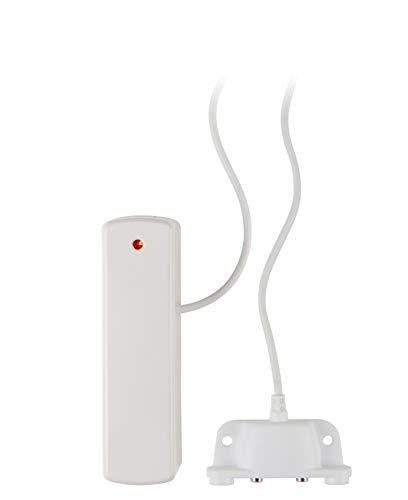
Pros
- Detects flood and freeze conditions
- 36-inch probe for flexible placement
- Five-year CR123 lithium battery life
- Sends alerts through compatible hubs
Cons
- Requires a compatible Z-Wave hub
- Placement and use require verification
Probe placement matters more than app features
A sensor only helps if water reaches its detection point quickly. Built-in prongs suit a clear floor beneath a toilet or water heater, while a remote probe can reach beneath a washing machine, refrigerator, sink, or cabinet where the main unit would not fit.
Before mounting anything, identify the first place water would collect, not merely the appliance most likely to leak. The Ecolink model includes a 36-inch probe, and the NEO and Ezlo options also support probe-based placement for difficult corners. For broader planning, review where leaks start in a house.
Pro Tip: Place the sensing point on a hard, level surface where a small puddle will reach it before spreading under flooring or stored items.
Match the sensor to the room
Basic leak-only models are sensible when your sole concern is water under an appliance. The Basic Version: Aeotec Water Sensor 7 Leak detects as little as 0.02 inches of water or moisture, while the HomeSeer LS100 G8 is supplied as a two-pack for multiple risk areas.
Temperature and humidity monitoring add a different kind of coverage. The PRO Version: Aeotec Water Sensor 7 Pro combines flood detection with both readings, while Ecolink adds freeze detection at 41°F. That makes room conditions relevant in addition to visible leaks, especially near vulnerable plumbing.
| Sensor type | Distinguishing feature | Suitable placement |
|---|---|---|
| Leak-only | Detects water or moisture | Sinks and appliances |
| Probe model | Reaches hidden spaces | Behind refrigerators |
| Flood-freeze | Adds low-temperature alert | Cold pipe areas |
If frozen pipes are a concern, pair sensor placement with practical advice on preventing frozen pipes in cold weather. A freeze alert does not replace insulation, heat, or knowing how to shut off the water main.
Check the hub, battery, and automation path
Every product in this comparison requires a Z-Wave hub, so confirm compatibility before buying. The listed ecosystems include options such as Home Assistant, Hubitat, SmartThings, HomeSeer, and other certified gateways, but the exact setup depends on your hub.
Battery details also affect maintenance. NEO lists a CR2 battery with up to five years of life, Ecolink uses one CR123A lithium battery with a stated five-year life, and both Aeotec models list three years. Ezlo uses Z-Wave 800 Series connectivity and can trigger an alarm, siren, or smart switch through automation.
Before You Mount It: Do not assume a hub notification automatically shuts off household water. A shutoff valve, compatible automation, and suitable installation are separate requirements.
Expert Examined
From Ray Okafor

I keep leak sensors near the earliest collection point rather than high on an appliance. The mistake I see is hiding the detector behind stored items, where the alert may arrive only after water has already spread.
Read more about Ray OkaforZ-Wave certification helps establish that a device follows the relevant wireless protocol requirements, but it does not guarantee identical behavior across every hub. Check your gateway’s supported device list and automation capabilities; the CSA Group is one recognized organization involved in standards and certification work.
Which Sensor Fits Your Home
I would point you to the water leak detector category first if you are mapping several rooms, then choose by the hazard in each location. For a laundry room, basement, or bathroom cabinet where a remote sensing point is useful, I would start with the NEO Z-Wave Plus 700 Water Leak Sensor with Probe. Its probe placement, Home Assistant and Hubitat support, instant app alerts, and stated five-year CR2 battery life make it a practical fit for hidden risk areas.
For a home with several sinks, toilets, or appliances, I would choose the HomeSeer Smart Water Leak Sensor (LS100 G8) because the package includes two sensors and is designed for common household leak sources. If cold plumbing is the bigger concern, I would use the Ecolink FLF-ZWAVE5-ECO Z-Wave Plus Flood/Freeze, whose probe and 41°F freeze trigger address both water and low-temperature risks.
The Bottom Line
The single mistake buyers make is treating hub compatibility as an afterthought. These sensors are not standalone alarms, so your Z-Wave gateway must recognize the device and deliver the notification or automation you expect.
If you only do one thing first, identify the exact leak path and mounting spot. Then select a built-in or probe-based sensor that can detect water there, and confirm the battery and hub requirements before ordering.
FAQs
A probe is better for hidden or hard-to-reach spaces such as behind refrigerators, beneath appliances, or inside cabinets. Built-in prongs are convenient when the sensor can sit directly on the floor where water will collect first. Place it near the earliest likely collection point under sinks, toilets, washing machines, water heaters, and refrigerators. Keep the sensing area unobstructed so stored items do not delay contact with water. Battery life varies by model and usage. The listed products specify periods from three years to up to five years, but you should still monitor low-battery notifications and inspect the sensor periodically. It indicates compatibility with the Z-Wave wireless standard and helps identify devices intended for certified gateways. It does not mean every hub exposes the same features, so verify support with your hub maker.Should I choose a probe or built-in water sensor?
Where should a Z-Wave leak sensor be placed?
How often do Z-Wave leak sensor batteries need attention?
What does Z-Wave certification mean for a leak sensor?
Sources
- US Consumer Product Safety Commission www.cpsc.gov
- UL Solutions www.ul.com
- NFPA www.nfpa.org