
Installing the best Wi-Fi smoke detectors protects your property when nobody is inside to hear an alarm horn. The primary challenge involves deciding between hardwired connections and wireless battery models that stick anywhere. Choosing wrong can leave remote areas of your home isolated during an emergency.
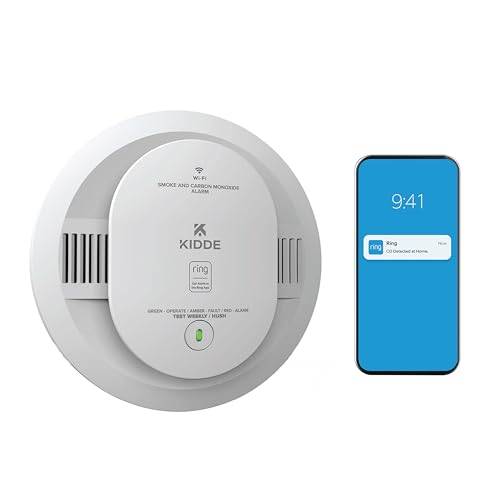
Pros
- Combined smoke and carbon monoxide detection with voice alerts
- Free mobile notifications via Ring app without subscription
- Runs on two included AA batteries with no wiring required
- Certified to UL 217 and FCC safety standards
Cons
- Alkaline AA batteries require periodic replacement over time
- Professional monitoring requires an optional paid subscription

Pros
- Voice alerts announce hazard type and room location
- Quick Connect plug eliminates rewiring for replacements
- Compatible with Google Nest Protect alarms
- Battery backup maintains operation during power outages
- Sends phone alerts through the First Alert app
Cons
- Requires existing AC electrical wiring for installation
- App notifications depend on First Alert app setup

Pros
- Replaceable ten-year lithium battery included
- Tool-free 3M magnetic adhesive ceiling mounting
- Dual sensors detect ambient gas molecules and ions
- Six-pack bundle outfits multiple rooms easily
Cons
- No wireless interconnect between individual units
- Lacks hardwired connection for existing home circuits

Pros
- Photoelectric sensor catches smoldering fire particles
- Monitors airborne TVOC chemicals and ambient humidity
- Loud 85-decibel horn paired with voice warnings
- Sends Wi-Fi hazard notifications directly to smartphones
Cons
- Requires existing electrical wiring for installation
- Ten-year limited warranty excludes battery performance

Pros
- Whole-home smart alerts from one hardwired unit
- Silence nuisance alarms directly from your phone
- Certified to UL 217 8th and 9th editions
- Includes AA backup battery for power outages
Cons
- Hardwired circuit required, cannot run on battery alone
- Requires a 2.4 GHz Wi-Fi network for setup
- Does not include carbon monoxide detection

Pros
- Voice warnings announce danger type and location
- Compatible with Google Nest Protect alarms
- Mobile alerts sent through First Alert app
- Precision Detection Technology reduces nuisance alarms
- Low-battery alerts eliminate midnight chirping
Cons
- Requires battery replacements over device lifespan
- Mobile notifications require First Alert app setup
Hardwired Voltage Versus Battery Power
Hardwired smart detectors tap directly into house wiring while relying on backup batteries during power outages. They trigger every compatible unit along the shared communication line whenever smoke enters a single chamber. If your home has existing junction boxes, swapping in newer units maintains code compliance.
Battery models operate on sealed lithium packs or standard alkaline cells without touching electrical cables. They mount in minutes using basic hardware, making them ideal for older residences without pre-existing wiring. Many property owners review general home safety detection tips before choosing between these power formats.
| Power Format | Interconnect Type | Ideal Placement |
|---|---|---|
| Hardwired 120V | Physical wire or Wi-Fi | Modern home junction boxes |
| 10-Year Lithium | Wireless interconnect | Older homes without wires |
| Replaceable AA | App-based notifications | Quick rental installations |
Interconnection and Whole-Home Synchronization
Fire codes often require that an alarm in a basement awaken occupants sleeping upstairs. Smart units bridge this distance through physical interconnect wiring or dedicated wireless radio signals. According to standards from the NFPA, interconnected alarms raise survival odds by reducing warning delays.
Wiring Incompatibility: Interconnecting hardwired alarms from different brands can damage internal electronics or stop units from sounding together.
A standard detector only sounds where the fire starts, which can leave distant bedrooms unaware of danger. Connected alarms solve this by routing alerts directly to mobile phones and family accounts. Integrating them alongside comprehensive home security systems helps create layered interior protection.
Expert Examined
From Ray Okafor

I frequently see homeowners assume their home Wi-Fi will sound the siren during a house fire. Your local horn must trigger independently through internal wiring or local radio frequency, because routers often lose electrical power before smoke reaches the hallway.
Read more about Ray OkaforSensor Varieties and Environmental Triggers
Modern detection relies predominantly on photoelectric sensors designed to recognize smoldering particles from furniture or bedding fires. Advanced units incorporate carbon monoxide sensors to detect invisible emissions from heating equipment. Integrating these sensors with dedicated home security systems provides unified environmental oversight.
Placement Distance: Mount detectors at least ten feet away from cooking appliances to prevent nuisance alerts caused by normal steam and searing.
Nuisance triggers represent the main reason people disconnect alarms near kitchens. Modern sensing algorithms distinguish between cooking steam and life-threatening fires. Both the CPSC and safety officials emphasize that alarms should never be disabled to silence nuisance alerts.
Matching the Alarm to Your Home
For households already invested in Ring equipment that lack hardwired ceiling cables, I would point you to the Kidde Smart Smoke & CO Detector with Ring. It runs on two standard AA batteries, senses both smoke and carbon monoxide, and shares alerts without requiring a paid subscription.
If your hallways already contain dedicated 120-volt wiring harnesses, I recommend the First Alert SC5 Hardwire Smart Smoke & Carbon. It plugs into your existing junction box with a quick connect plug, offers battery backup during outages, and announces the specific hazard location using voice prompts. It also offers compatibility with Google Nest Protect alarms for mixed hardware setups.
For living areas where chemical off-gassing and humidity matter, I suggest the Kidde Smart Smoke Detector & Indoor Air Quality. This hardwired unit pairs photoelectric fire detection with sensors tracking total volatile organic compounds.
The Bottom Line
The single mistake buyers make with smart alarms is assuming phone notifications replace physical sirens. Mobile alerts keep you informed while away, but an immediate audible warning inside the home is what saves lives at night.
If you take only one action today, inspect your existing ceiling boxes to determine whether you need hardwired or battery units. Choosing the matching mounting format ensures quick setup and prevents dangerous gaps in your bedrooms.
FAQs
Do Wi-Fi smoke detectors sound if the internet goes down?
Yes, certified smart alarms operate as standard standalone alarms even during total network outages. The internal 85-decibel horn sounds immediately upon sensing smoke or heat, protecting occupants inside the house. Smartphone notifications will simply be delayed until your local router or cellular connection comes back online.
How often do battery-powered smart alarms need replacements?
Replaceable alkaline batteries generally require swapping every six to twelve months, whereas sealed lithium models last up to ten years without maintenance. Regardless of battery performance, national safety standards dictate replacing the entire alarm unit ten years from its manufacture date.
Can I mix different smart smoke detector brands in one home?
Battery units from different brands can operate independently in the same house, but they will not interconnect wirelessly. Hardwired connections and wireless mesh alerts require identical brand communication protocols to ensure every siren in the house sounds together during an emergency.
Where is the best place to install a smart smoke alarm?
Mount alarms on ceilings at least four inches from walls, or high on walls four to twelve inches below the ceiling. Install at least one detector on every floor, inside each bedroom, and outside all primary sleeping areas.
Sources
- National Fire Protection Association www.nfpa.org
- U.S. Consumer Product Safety Commission www.cpsc.gov
- U.S. Fire Administration www.usfa.fema.gov