
Shopping for the best water leak and freeze detectors means deciding whether you need a simple spot alarm or a connected sensor that reaches hidden areas. Renters, homeowners, and anyone protecting a basement should match the sensor design to the leak risks and the hub or network already in place.
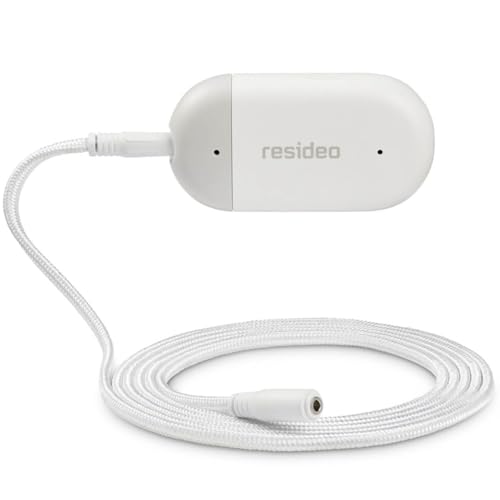
Pros
- Water-sensing cable detects leaks along its entire length
- Push and email notifications for remote alerts
- 100-decibel alarm with LED status lights
- Extendable sensor coverage up to 500 feet
Cons
- Only a 5-foot cable is included
- Requires the separate L5 valve for automatic shutoff

Pros
- Detects leaks and freezing conditions
- Freeze alert at 37°F or rapid drops
- WiFi smartphone and family notifications
- Alexa and Google Home compatible
Cons
- Requires two AA battery replacements
- One-year warranty covers the alarm only

Pros
- Water detection alerts
- Freeze alerts below 40°F
- No base station required
- Fits leak-prone areas
Cons
- Amazon Sidewalk required
- Coverage may vary

Pros
- Detects leaks and freezing below 39.2°F
- 3.9-foot cable reaches narrow, hidden areas
- 75 dB local alarm
- 5-year CR123A battery life
Cons
- Requires compatible eufy HomeBase
- CR123A battery eventually needs replacement

Pros
- Instant water and freeze notifications
- IP65 waterproof design
- Replaceable battery lasts up to 2 years
- Stable sub-1G HomeBase connection
- Works with HomeBase 2 and 3
Cons
- HomeBase required for operation
- App required for alerts and status

Pros
- Six sensors with built-in 105 dB alarms
- Up to 2,034-foot open-air LoRa range
- App, email, and SMS alerts
- Up to five-year battery life
- Works during internet outages with YoLink Control-D2D
Cons
- Each sensor requires two AAA batteries
- Water leak and freeze monitoring only
Match the Sensor to the Leak Risk
A flat sensor works well beside a toilet, under a sink, or near a water heater where water can spread across the floor. A cable probe is more useful when the likely source is hidden, such as beneath a washing machine, behind a refrigerator, or inside a narrow utility space.
The Resideo model uses a five-foot cable that senses water along its length, with optional expansion up to 500 feet. The eufy E20 uses a 3.9-foot cable and keeps both the main unit and probe active, which suits a basement, sump pit, or tight appliance gap.
Before placing any device, identify the first low point where water would gather rather than mounting only beside the appliance. The advice in where household leaks commonly start can help you map those locations.
Pro Tip: Place the sensing cable or probe at the lowest reachable point, while keeping the alarm unit accessible for battery changes and status checks.
Connectivity and Local Alarms Matter
Remote alerts are valuable when nobody is home, but each model reaches your phone differently. Kidde sends notifications through WiFi and supports Alexa and Google Home, Ring uses Amazon Sidewalk without a base station, and eufy sensors require a compatible HomeBase.
For a larger property or several risk areas, the YoLink kit includes a hub and six sensors. Its LoRa connection is rated for up to 2,034 feet in open air, and the sensors can trigger local YoLink devices through Control-D2D even when the internet is unavailable.
| Sensor style | Main advantage | Suitable location |
|---|---|---|
| Spot sensor | Simple floor detection | Under sinks and toilets |
| Cable sensor | Reaches hidden gaps | Appliances and sump pits |
| Hub kit | Covers many zones | Larger homes and outbuildings |
Do not assume a phone alert replaces an audible alarm. A local sound can matter at night, while a remote notification matters when you are away. For broader water-control planning, see how water sensors interact with shutoff systems.
Avoid the Wrong Placement: A sensor cannot protect a room if it is placed above the point where water collects, hidden behind stored items, or outside the device’s communication range.
Power, Freeze Warnings, and Maintenance
Battery life varies by design, so make access part of the installation plan. Kidde uses two AA batteries, eufy E20 uses a CR123A battery rated for up to five years, and YoLink sensors use two AAA batteries with up to five years of typical life.
Freeze detection adds another layer of protection for garages, basements, and pipe runs. Kidde detects freezing at 37 degrees Fahrenheit or after a rapid temperature drop, Ring warns below 40 degrees, and eufy E20 warns below 39.2 degrees Fahrenheit.
Expert Examined
From Jenna Castellano

I keep sensors close enough to inspect without moving boxes or appliances. The mistake I see most often is treating a battery alarm as a set-and-forget device, so I would add battery checks to the same seasonal routine used for pipes and sump equipment.
Read more about Jenna CastellanoReplace or dry a sensing element only according to its design. Resideo specifically allows its cable to be reset after the leak is resolved and the cable is completely dry. For winter preparation, the frozen-pipe prevention checklist is a useful companion.
Which Detector Fits Your Home
I would point you to the Resideo CHW3610W8001 WiFi Water Leak Detector for a utility room or basement where a long sensing route matters. Its five-foot cable can cover a broader path, alerts arrive by mobile push and email, and the device includes a 100-decibel alarm. It can also pair with the Resideo L5 shutoff valve as part of a wider water-control setup.
For a home already using eufy HomeBase, I would choose the eufy Security Flood & Freeze Sensor E20 near a washing machine, dishwasher, refrigerator, or sump pit. Its extension cable reaches narrow spaces, provides a 75-decibel local alarm, and has a rated five-year battery life. If you need several locations covered at once, I would choose the YoLink Water Leak Sensor 4 105 dB Alarm Kit, since the package includes six sensors and a hub with long-range connectivity.
The Bottom Line
The most common mistake is choosing a sensor by app compatibility alone and overlooking the physical detection point. A wireless alert cannot compensate for a probe that cannot reach beneath an appliance or a sensor placed where water will not collect.
Start by walking through the basement, kitchen, laundry area, and bathrooms to mark the first places water or freezing temperatures could cause damage. Then choose the sensor style, hub requirement, and battery format that fit those locations.
FAQs
A spot sensor suits open floors beside sinks, toilets, and water heaters. Choose a cable sensor when the likely leak source is beneath an appliance, inside a narrow gap, or spread across a longer path. Place it near vulnerable pipes or in a cold basement, garage, or utility room. Keep the unit accessible and avoid enclosing it in insulation, cabinets, or stored items that could affect temperature readings. Check battery status through the compatible app when available and inspect the device during seasonal home-safety routines. Battery access matters because a sensor hidden behind an appliance is easy to neglect. Those ratings describe resistance to dust and water under defined conditions, not permanent submersion or every installation situation. Follow the product instructions and place the sensing element where it can detect water without exposing the electronics unnecessarily.Should I choose a spot sensor or a cable sensor?
Where should a freeze sensor go?
How often should I check the batteries?
Does IP65 or IP67 mean the sensor can be submerged?
Sources
- US Consumer Product Safety Commission www.cpsc.gov
- UL Solutions www.ul.com
- NFPA www.nfpa.org