
Installing the best voice alert smoke detectors replaces confusing shrieks with clear spoken directions that wake sleepers faster during a fire. The choice separates homes with pre-existing electrical wiring from spaces needing standalone sealed lithium batteries. Upgrading requires matching your current ceiling junction boxes before purchasing replacements.

Pros
- Built-in 10-year battery eliminates routine replacements
- Clear voice alerts accompany 85-decibel alarm
- Meets UL 217 10th Edition safety standards
- Advanced sensing helps reduce cooking false alarms
Cons
- Lacks integrated carbon monoxide detection
- No alarm interconnect feature for synced warnings

Pros
- Sealed 10-year battery eliminates regular swaps
- Photoelectric and electrochemical dual sensor setup
- Bilingual English and French voice alerts
- Ten-hour silence mode delays overnight fault chirps
Cons
- Lacks wireless interconnect across units
- Non-replaceable battery requires replacing entire unit

Pros
- Voice alerts announce the danger location
- Precision Detection cuts down cooking false alarms
- AA battery backup maintains protection during outages
- Latching indicator visually pinpoints the triggered unit
Cons
- Requires dedicated hardwired AC electrical connection
- Backup AA batteries need regular replacement
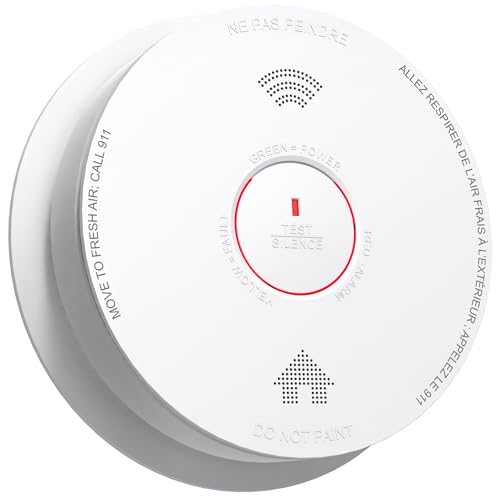
Pros
- Sealed 10-year lithium battery, no replacements
- Bilingual voice alerts in English and French
- Photoelectric sensor reduces steam false alarms
- Single button handles testing and silencing
Cons
- Detects smoke only, no carbon monoxide sensor
- Standalone unit with no wireless interconnect

Pros
- Photoelectric sensor catches smoldering fire particles
- Monitors airborne TVOC chemicals and ambient humidity
- Loud 85-decibel horn paired with voice warnings
- Sends Wi-Fi hazard notifications directly to smartphones
Cons
- Requires existing electrical wiring for installation
- Ten-year limited warranty excludes battery performance

Pros
- Photoelectric sensor catches smoldering fire smoke
- Ten-year battery eliminates regular replacements
- Voice and location alerts identify danger zones
- Built-in test and reset button
- Includes 10-year limited manufacturer warranty
Cons
- No carbon monoxide detection sensor included
- Battery-only power with no hardwire connection
Power Sources and Replacement Wiring
Choosing between hardwired units and sealed battery models depends on what exists behind your ceiling drywall. Hardwired detectors connect directly to household AC power and use backup batteries during outages. Replacing a hardwired unit with a battery-only device violates building codes in jurisdictions requiring interconnected AC systems.
Sealed ten-year lithium units eliminate the regular battery swaps that lead many people to disable their alarms entirely. These units power continuous detection for a decade before the internal sensor expires. For complete residential protection, pairing these dedicated fire alarms with other home safety detection devices keeps your living areas fully monitored.
| Alarm Type | Power Source | Best Location |
|---|---|---|
| Hardwired AC | 120V with Battery | Modern Hallways |
| Sealed Lithium | 10-Year Battery | Retrofit Bedrooms |
| Smart Hardwire | 120V with Wi-Fi | Living Areas |
Wiring Compatibility: Interconnecting hardwired alarms across different manufacturer brands can cause communication failures or continuous false alarms during an emergency.
How Voice Warnings Change Emergency Response
Standard 85-decibel buzzer tones startle people, but children and older adults frequently sleep through high-pitch siren tones. Spoken verbal cues announce whether the hazard is fire or smoke, prompting immediate evacuation instead of confusion. Detectors that announce room locations tell occupants which exit path to avoid before opening a door.
Multi-lingual warnings add vital clarity in homes where multiple generations speak different primary languages. Clear bilingual announcements ensure everyone understands the threat without translating an abstract pattern of beeps. Families upgrading their property through home security systems often find voice-capable fire alarms integrate smoothly alongside standard entry alerts.
Expert Examined
From Jenna Castellano

I keep seeing homeowners disable verbal units after nuisance kitchen alarms because they mounted the detector too close to the range hood. Keeping units at least ten feet away from cooking appliances prevents false alarms while preserving the life-saving spoken warnings.
Read more about Jenna CastellanoSensor Technologies and Nuisance Alarms
Modern photoelectric sensors detect slow, smoldering fires while ignoring everyday steam from bathrooms and light cooking fumes. Newer models meet updated criteria from UL Solutions designed to reduce nuisance alarms while catching synthetic foam fires. This prevents homeowners from disabling units out of frustration.
Advanced units also combine air quality monitoring or electrochemical elements to track airborne hazards before flames emerge. Adding environmental tracking to your ceiling hardware provides data on humidity and airborne chemicals. You can explore additional preventative habits on our safety blog to maintain your sensors throughout the year.
Placement Distance: Mount voice smoke detectors at least ten feet away from fixed cooking appliances and three feet from bathroom doors to prevent moisture from triggering false warnings.
Selecting the Right Voice Alarm for Your Home
If you are retrofitting an older home without ceiling wiring, I would point you to the Kidde Smoke Detector, 10-Year Battery-Powered. Its compliance with UL 217 10th edition standards resists nuisance alarms from everyday cooking while delivering an 85-decibel spoken alert powered by an internal ten-year battery. This makes it an ideal pick for rental properties and hallway retrofits where running new wiring is impractical.
For homes with pre-existing junction boxes, I would install the First Alert Hardwire Smoke Alarm with Voice Alerts. This model connects to household AC wiring, uses AA battery backup during outages, and provides location alerts so you know which room triggered the event. If your layout integrates with the best home security systems, dedicated hardwired alarms maintain proper code compliance across every floor.
For multi-lingual households covering several bedrooms, I would choose the SITERWELL Smoke Detector 10 Year Battery Smoke four-pack. The English and French voice announcements ensure clear communication, while the ten-hour do-not-disturb mode silences low-battery chirps until daytime hours.
The Bottom Line
The single biggest mistake buyers make is purchasing replacement alarms without checking whether their existing ceiling units are hardwired or battery-operated. Installing a standalone battery model into an interconnected hardwired circuit removes the interconnected safety network required by local building codes, leaving distant rooms unable to sound warnings during a fire elsewhere in the house.
If you do only one thing today, unscrew one of your current ceiling alarms to inspect the back plate. If you see wire nuts and a plastic harness, replace your detectors with hardwired voice models; if you only see a drywall bracket, order sealed ten-year lithium units.
FAQs
Why are voice alert smoke detectors better than tone alarms?
Voice alerts wake sleeping children and older adults faster than high-frequency buzzer beeps, which are frequently slept through during deep slumber. A spoken voice also identifies the specific hazard and room location, telling occupants whether they face fire or smoke and which evacuation pathway remains safe.
How often do ten-year battery smoke alarms need replacement?
The entire alarm unit must be replaced every ten years from the manufacture date stamped on the back plate. While the sealed lithium battery requires no mid-life changes, the internal detection sensors degrade over time and lose detection sensitivity after a decade of continuous service.
Can hardwired and battery smoke alarms interconnect?
Standard standalone battery alarms cannot interconnect with hardwired circuits unless they specifically include proprietary wireless bridge technology from the same manufacturer. Hardwired alarms communicate through a dedicated physical traveler wire, meaning different brands or disconnected battery models cannot trigger each other simultaneously across the home.
What is the significance of the UL 217 10th edition standard?
The UL 217 10th edition standard requires smoke detectors to distinguish between smoldering synthetic foam fires and common cooking aerosols like frying hamburger smoke. Meeting this updated standard significantly cuts down on false alarms near kitchens while accelerating alarm triggers during real synthetic home fires.
Sources
- National Fire Protection Association www.nfpa.org
- UL Solutions Standards and Safety www.ul.com
- US Fire Administration www.usfa.fema.gov