
Shopping for the best video doorbells with local storage and no subscription means deciding how much footage you want kept at home and how much installation work you accept. This selection suits households comparing battery, wired, offline, and Wi-Fi doorbells before buying.

Pros
- Sharp 2K video resolution
- 160° ultra-wide field of view
- Person detection with instant alerts
- Up to 180 days of battery use
Cons
- Chime not included
- MicroSD card sold separately

Pros
- 5MP Ultra HD video with 4:3 framing
- 166° head-to-toe view
- 8GB local storage with 60-day loop
- Wireless or wired power options
Cons
- Wireless mode requires periodic battery recharging
- Advanced AI and extended storage need cloud plans
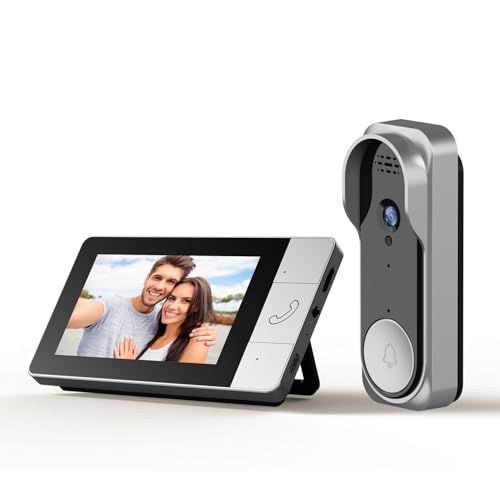
Pros
- No WiFi needed, no monthly fees
- 130° wide-angle viewing
- Infrared night vision
- Two-way audio and local SD recording
Cons
- Wired setup requires a power connection
- No remote monitoring without an internet connection

Pros
- 2K video with 120-degree wide-angle lens
- Night vision reaches up to 33 feet
- Local microSD storage up to 128GB
- No-drill adhesive mounting option
Cons
- 2.4GHz Wi-Fi only, no 5GHz support
- Cloud storage requires a subscription

Pros
- 2K QHD video with 180-degree viewing
- Wired or battery-powered installation
- Person, package, and vehicle detection
- Local storage without a subscription
Cons
- 2.4GHz Wi-Fi required, no 5GHz support
- microSD card required for local storage

Pros
- Dual cameras capture visitors and packages
- 2K video with color night vision
- Built-in 8GB local storage
- Wireless or wired installation
Cons
- Supports 2.4 GHz Wi-Fi only
- Rechargeable battery requires periodic charging
Local storage is not one feature
Built-in memory is the simplest option if you want recording without buying a card. The aosu model and eufy Security Video Doorbell E340, Dual Cameras each include 8GB of local storage, while the XTU model accepts a microSD card up to 128GB and the Tapo D225 supports cards up to 512GB.
Card-based storage gives you a capacity choice, but the card is not included with the XTU or Tapo D225. The irianu model takes a local SD card and operates without Wi-Fi, which suits buyers who want footage and doorbell communication kept independent from an internet connection.
Cloud storage remains optional on several models, but optional cloud access is different from needing it for ordinary recording. Check whether the functions you care about, such as detection history or extended retention, are included locally before relying on a subscription-free setup.
Learn what causes doorbell camera disconnections
Check the recording path: Confirm that the doorbell can save and replay clips locally before you mount it. For card-based models, choose a compatible card and keep the card slot accessible.
Match the view to the doorstep
A wide horizontal view helps with visitors approaching from either side, while a vertical head-to-toe view is more useful for seeing faces and packages together. The Tapo D225 reaches 180 degrees, the aosu reaches 166 degrees, and the Tapo D205 reaches 160 degrees.
The eufy dual-camera design separates visitor coverage from the downward package view. That arrangement is especially useful when deliveries land directly beneath the doorbell. A flexible mounting angle can also matter more than a small resolution difference if the camera faces a porch wall or sits beside a narrow doorframe.
| Device type | Storage method | Best placement |
|---|---|---|
| Battery or wired | Built-in memory | Flexible entryways |
| Wi-Fi with card slot | microSD recording | Homes with nearby router |
| Offline wired system | Local SD recording | Privacy-focused doors |
Before drilling, check the viewing angle from standing height and account for the doorstep surface. The advice in how to angle a video doorbell down is useful when packages disappear below a standard forward-facing view.
Power and connectivity shape ownership
Battery models avoid existing wiring but require a charging routine. The Tapo D205 lists up to 180 days, the Tapo D225 lists up to eight months, and the XTU model lists up to two months under its stated usage conditions. Motion frequency, alert zones, and traffic near the door can change those intervals.
Wired operation is better for a door that receives frequent motion alerts or needs continuous operation. The aosu and eufy models support wireless or wired installation, while the Tapo D225 can provide continuous recording when hardwired. Wi-Fi requirements also matter: several models use 2.4 GHz only, while the aosu supports both 2.4 and 5 GHz.
Before You Mount It: Turn off power at the breaker before working with existing doorbell wiring, and confirm voltage compatibility rather than guessing from the old chime.
For wiring details, consult a qualified professional and review how to hardwire a video doorbell safely. A chime is another separate consideration because the Tapo D205 does not include one, while the XTU and Tapo D225 include chimes.
Expert Examined
From Dana Whitfield

I keep the storage decision separate from the camera-resolution decision. The mistake I see is mounting a doorbell first and discovering later that the card slot, chime, or charging connection cannot be reached easily. Plan access before fixing the bracket.
Read more about Dana WhitfieldDetection should fit the entrance
Person detection can reduce alerts caused by general movement, while package and vehicle detection adds useful choices for driveways and delivery areas. The aosu combines radar, PIR infrared sensing, and AI human recognition, and the Tapo D225 identifies people, packages, and vehicles.
Custom activity zones are valuable when the camera sees a sidewalk, road, plants, or a busy shared hallway. Narrowing those zones can reduce unwanted alerts and preserve battery life. Night coverage also varies, from infrared night vision on the Tapo D205 and XTU to color night vision on the Tapo D225 and eufy model.
For a broader smart-home comparison, see these HomeKit doorbell camera alternatives. Alexa and Google Assistant compatibility appears on several models, but compatibility does not remove the need to confirm your home’s Wi-Fi band and chime arrangement.
Which doorbell fits your entrance
I would point you to the aosu 5MP Ultra HD Wireless & Wired Video Doorbell if you want high-resolution coverage, built-in 8GB storage, a head-to-toe view, and the option to use either battery or wired power. Its triple-sensor detection is a strong match for a porch where ordinary motion alerts would be distracting.
For package-heavy entrances, I would choose the eufy Security Video Doorbell E340, Dual Cameras. Its second camera points downward toward deliveries, and its built-in 8GB storage avoids a separate card. The wireless or wired design also lets you choose between simpler mounting and a permanent power connection.
I would reserve the irianu Wireless Video Doorbell, 130° Wide Angle for a household that prioritizes offline operation over remote monitoring. It needs no Wi-Fi and supports local SD recording, making it the clearest fit for a privacy-focused entry where internet access is not part of the plan.
The Bottom Line
The mistake most buyers make is treating “local storage” as a complete specification. You still need to check whether memory is built in or requires a card, how much footage the device keeps, and whether the doorbell remains useful during a Wi-Fi or power interruption.
If you do only one thing first, inspect your existing wiring, router band, chime, and mounting position together. That quick check will narrow the models more reliably than choosing resolution alone.
FAQs
A wired model suits a high-traffic entrance or a household that wants continuous operation without charging. A battery model is more flexible for renters or doors without existing wiring, but you must plan for charging and account for frequent motion alerts. Mount it where the camera can see both faces and the ground area where packages are placed. Check the angle before drilling, and use activity zones if the view includes a sidewalk, road, plants, or another busy area. Keep the lens clean, review alert zones, and recharge the battery before it becomes critically low. Frequent motion can shorten the stated battery interval, so reducing unnecessary triggers can help extend the time between charges. An IP rating describes protection against dust and water under specified conditions, not protection from every installation problem. Mount the doorbell as directed, avoid blocked drainage paths, and confirm that the rating suits the exposure at your entryway. Some doorbells can record locally without internet, but many smart models need Wi-Fi for app alerts, remote viewing, or cloud features. The irianu system is specifically described as operating without Wi-Fi, while other models require a compatible wireless network.Should I choose a wired or battery video doorbell?
Where should I mount a local-storage doorbell?
How do I maintain a battery doorbell?
What does IP weather resistance mean?
Does local storage work without Wi-Fi?
Sources
- National Fire Protection Association www.nfpa.org
- UL Solutions www.ul.com
- US Consumer Product Safety Commission www.cpsc.gov