
Shopping for the best TP-Link video doorbells means deciding first whether your entryway favors existing wiring or a rechargeable battery, then weighing view size, detection, and storage. Renters, homeowners, and anyone replacing an old chime need different compromises.

Pros
- 2K 5MP live view
- 180° head-to-toe field of view
- Color night vision with spotlight
- Person, vehicle, and package detection
Cons
- Wired installation required
- MicroSD card not included

Pros
- Sharp 2K video resolution
- 160° ultra-wide field of view
- Person detection with instant alerts
- Up to 180 days of battery use
Cons
- Chime not included
- MicroSD card sold separately
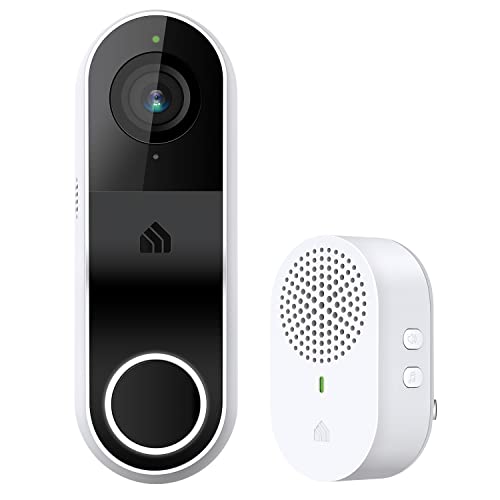
Pros
- 2K 3MP video with 160° diagonal view
- Modular chime with adjustable volume
- Two-way audio through the Kasa/Tapo app
- Infrared night vision up to 30 feet
Cons
- Hardwired installation requires an existing circuit
- Works on the 2.4GHz Wi-Fi band only

Pros
- 2K QHD video with 180-degree viewing
- Wired or battery-powered installation
- Person, package, and vehicle detection
- Local storage without a subscription
Cons
- 2.4GHz Wi-Fi required, no 5GHz support
- microSD card required for local storage

Pros
- 4K video with 180° diagonal field of view
- Radar detection helps reduce false alerts
- Free AI detection for people and packages
- Subscription-free microSD storage up to 512GB
Cons
- Facial recognition unavailable in Illinois and Texas
- MicroSD card sold separately
Start With Power and Installation
A hardwired doorbell makes sense when compatible wiring already reaches the frame. The Tapo 2K Wired Smart Video Doorbell w/Chime, D130 and Kasa 2K Smart Video Doorbell Camera Hardwired both use corded power, while the Tapo 2K Wireless Smart Video Doorbell, D205 uses a built-in rechargeable battery.
The Tapo 2K+ Wired or Battery Powered Smart Video gives you both routes. Its battery can support installation away from existing wiring, while hardwiring enables continuous recording. The Tapo 4K Wired or Battery Powered Smart Video also supports either setup, with hardwired operation intended for continuous recording and pre-roll footage.
Before removing an old doorbell, confirm the available wiring and mounting position. For wiring-specific safety information, consult the safe hardwiring instructions and shut off power before handling conductors.
Before You Mount It: Never connect a doorbell to wiring you cannot identify or verify. Turn off the relevant breaker and use qualified help if the circuit, transformer, or existing chime is unclear.
Match Coverage to the Doorway
Field of view matters most when packages land close to the wall or visitors stand below the camera. The D130 and D225 provide 180-degree head-to-toe coverage, while the D205 and KD110 provide 160 degrees. The D260 also uses a 180-degree view and adds 4K detail for close inspection.
| Model type | View and detail | Best placement |
|---|---|---|
| Wired 2K | 160 to 180 degrees | Existing doorbell wiring |
| Wireless 2K | 160 degrees | Doors without wiring |
| Flexible 4K | 180 degrees | Detail-focused entryways |
A wide view does not fix a poor angle. If the lens points across a walkway instead of toward approaching faces and packages, alerts may be less useful. The instructions on angling a video doorbell downward can help you plan the mounting wedge and vertical coverage.
Night visibility also varies by model. The D130, D225, and D260 use color night vision with a spotlight, while the D205 and KD110 use infrared night vision. Choose color if identifying clothing or package details after dark is especially important.
Pro Tip: Aim the camera at the visitor’s upper body while preserving enough lower view to see deliveries near the threshold.
Detection and Storage Without a Monthly Requirement
All five choices offer local storage options, although compatible microSD capacity differs. The D130, D225, and D260 support cards up to 512GB, while the KD110 supports up to 256GB with version-related limits noted in its specifications. The D205 also provides subscription-free local storage, but its listed features do not state a card capacity.
Detection is another meaningful separator. The D130 identifies people and cars, the D205 identifies people, and the D225 identifies people, packages, and vehicles. The D260 adds pets and facial recognition, while radar and dual motion sensors are intended to reduce unwanted alerts.
I keep storage decisions simple: use a compatible card when you want local recording without a recurring plan, and consider cloud storage when remote video history matters more than keeping footage only at home. Tapo Care adds 30-day cloud history on applicable Tapo models.
Expert Examined
From Ray Okafor

I keep seeing homeowners mount a doorbell where the old button sat without checking the lower viewing angle. The result is a clear face but a hidden package, so I prefer planning the camera height and wedge before fastening the bracket.
Read more about Ray OkaforWhich Doorbell Fits Your Entryway
I would point you to the Tapo 2K Wireless Smart Video Doorbell, D205 when you do not have convenient wiring or want a battery installation. Its built-in battery is rated for up to 180 days of use, it provides person detection, and doorbell calls can reach your phone through the Tapo app. Remember that its chime is not included.
I would choose the Tapo 2K Wired Smart Video Doorbell w/Chime, D130 for a wired entry that benefits from a supplied indoor chime, 180-degree head-to-toe viewing, color night vision, and person, vehicle, and package detection. It is a practical fit when the doorway needs broad vertical coverage without moving to the highest-resolution model.
For a household that wants the most detailed image and flexible power, I would consider the Tapo 4K Wired or Battery Powered Smart Video. Its 4K view, 180-degree coverage, person, pet, vehicle, and package detection, plus facial recognition, suit an entry where identifying activity matters. Hardwiring also supports its continuous-recording features.
For general placement advice about deliveries and entry visibility, the article on whether doorbell cameras deter package thieves offers useful context.
The Bottom Line
The mistake most buyers make is treating resolution as the only deciding feature. A 4K camera cannot compensate for incompatible wiring, a battery that is inconvenient to recharge, a narrow mounting angle, or storage that does not fit your routine.
Start by checking the power at your door and marking the camera’s intended viewing area. Then choose between the D205 for wire-free installation, the D130 for a wired 180-degree setup with a chime, or the D260 for maximum detail and detection flexibility.
FAQs
A wired model suits an entry with compatible doorbell wiring and can support continuous recording on applicable products. A wireless model is more flexible when wiring is unavailable, but its battery needs periodic charging and its listed runtime depends on use. Mount it so faces are visible while keeping enough lower-frame coverage for packages. The correct height depends on the door, approach, and camera angle, so use an included wedge when it improves the view rather than copying the old button position. The listed models provide subscription-free local storage through a compatible microSD card, while optional cloud plans are available on applicable Tapo or Kasa products. Check each model’s storage limit and card compatibility before buying. An IP rating describes protection against solid particles and water under defined conditions. It does not mean the doorbell can be submerged or installed carelessly, so follow the manufacturer’s mounting instructions and keep connections protected.Should I choose a wired or wireless TP-Link doorbell?
How high should a video doorbell be mounted?
Do these doorbells require a subscription?
What does IP weather resistance mean?
Sources
- UL Solutions, Standards and safety information. www.ul.com
- US Consumer Product Safety Commission, Home safety information. www.cpsc.gov