
Installing the best smoke detectors for kids room setups requires waking heavy sleepers who routinely ignore standard high-frequency tones. Children respond faster to spoken commands than blaring beeps, splitting bedroom safety into voice-capable units and standard sirens. Parents also need interconnected hardware so an alert across the house sounds immediately above a child’s bed.

Pros
- Sealed 10-year battery eliminates annual replacements
- Dual photoelectric and electrochemical sensing technology
- Bilingual voice alerts in English and French at 85dB
- ETL listed to UL 217 and UL 2034 safety standards
Cons
- Non-replaceable battery requires full unit disposal on fault
- Lacks wireless interconnect to trigger companion alarms

Pros
- Sealed 10-year lithium battery needs no replacements
- Bilingual English and French 85dB voice alerts
- Dual-wave sensing reduces kitchen false alarms
- Certified to UL 217 and UL 2034 standards
Cons
- Standalone design lacks multi-room interconnectivity
- Permanently sealed battery cannot be replaced
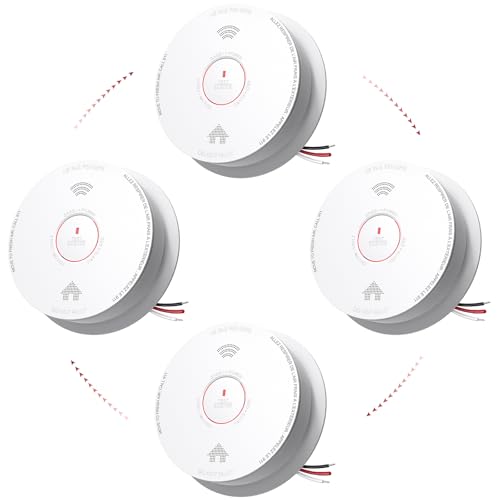
Pros
- Photoelectric dual-wave sensor reduces cooking false alarms
- Bilingual voice alerts for smoke and carbon monoxide
- Hardwired interconnection links up to 18 detectors
- Sealed 10-year backup battery avoids annual replacements
- UL 217 and UL 2034 certified
Cons
- Requires hardwired electrical connections for installation
- Hardwired interconnect only, lacks wireless linking

Pros
- Dual smoke and carbon monoxide detection
- Voice alerts announce the specific hazard
- Built-in 10-year battery eliminates replacements
- Tested to UL 217 10th Edition standards
Cons
- Missing interconnect capability between units
- Sealed battery requires replacing the entire unit

Pros
- Voice and location alerts identify the hazard source
- Precision Detection technology reduces cooking nuisance alarms
- Interconnects with compatible First Alert and BRK alarms
- Latching indicator identifies which unit triggered the alarm
- AA battery backup ensures operation during power outages
Cons
- Hardwired installation requires existing household wiring
- AA backup batteries require periodic replacement
- Detects smoke only without carbon monoxide sensing

Pros
- Wireless interconnect links up to 18 units
- Dual-light wave sensing limits cooking false alarms
- Built-in 10-year lithium battery requires no swaps
- Voice alerts toggle between English and French
- Ten-hour Do Not Disturb mode silences fault chirps
Cons
- Entire unit must be replaced upon battery fault
- Insect filter permits pests smaller than 2mm
Why Voice Alerts Wake Children Faster
Young children spend more time in deep slow-wave sleep than adults, which makes piercing high-pitch tones ineffective during a fire. Research documented by the CPSC highlights how verbal instructions wake sleeping children faster and reduce confusion during midnight evacuations. Hearing a clear voice identify the danger helps a startled child process what action to take.
Dual voice prompts that announce fire or carbon monoxide directly eliminate guesswork. If your family speaks multiple languages, bilingual alarms deliver safety warnings in both English and French to prevent hesitation during urgent moments.
Pro Tip: Choose voice alarms that announce the hazard type to help children grasp emergency steps immediately.
Interconnection and Whole House Coverage
A standalone alarm in a nursery or bedroom only triggers when smoke reaches that specific ceiling. Linking every bedroom device across a broader home safety detection grid ensures a basement furnace problem sounds immediately in an upstairs bedroom. Hardwired lines or wireless radio frequencies keep these units communicating instantly.
When you integrate units alongside comprehensive home security systems, early notification windows widen significantly. The NFPA standards mandate alarms inside every sleeping room, right outside bedroom doors, and on every household floor.
Expert Examined
From Jenna Castellano

I frequently find nursery alarms mounted directly above warm heating vents or humidifiers, triggering frustrating 2 AM false alarms. Shifting the unit three feet away from airflow drafts stops phantom chirps while preserving critical early warning speed.
Read more about Jenna CastellanoBedroom Placement and Lighting Impact
Mounting location dictates how swiftly a detector samples rising combustion particles. Units belong on the ceiling at least 4 inches from the wall, or on the wall between 4 and 12 inches below the ceiling. You can learn more installation fundamentals on our safety blog before securing wall brackets.
Flashing indicators also matter in children’s rooms. Bright strobe lights or aggressive status LEDs can disturb a toddler’s sleep patterns, making alarms with quiet night features and subdued monitoring lights ideal for quiet nurseries.
| Alarm Style | Wake Mechanism | Best Location |
|---|---|---|
| Voice Combo | Spoken hazard alerts | Inside sleeping rooms |
| Hardwired Linked | Synchronized whole home sirens | Hallways and bedrooms |
| Battery Standalone | Local tone warning | Small temporary rentals |
Dual-sensor units combine photoelectric detection with electrochemical carbon monoxide monitoring in one housing. This dual coverage meets modern residential codes while reducing unnecessary ceiling clutter.
Nuisance Alarms: Never silence an alarm in a child’s bedroom by pulling its battery; use hush buttons or do-not-disturb features instead.
Matching Alarms to Your Child’s Room
For homes relying on wireless battery installations, I would put the SITERWELL Smoke and Carbon Monoxide Detector inside a nursery or child’s bedroom. Its wireless interconnect links up to 18 alarms across the home, while bilingual voice prompts wake deep sleepers far better than tone alarms. The ten-hour do-not-disturb function silences low-battery chirps overnight, and the subdued status lighting avoids shining directly into a crib or bed.
If your hallways contain pre-existing line-voltage electrical boxes, I would point you to the First Alert Hardwire Smoke Alarm with Voice Alerts. This AC-powered unit integrates directly with standard wired home systems, features battery backup during grid failures, and speaks the room location of danger.
For families needing a standalone device without interconnected wiring, I suggest the Kidde Smoke & Carbon Monoxide Detector. It delivers dual detection for fire and carbon monoxide, provides a 10-year sealed lithium battery to eliminate ladder climbs, and uses voice alerts to state the exact hazard.
The Bottom Line
The most common mistake parents make is assuming standard high-frequency horns wake children as reliably as they wake adults. Deep sleep patterns make young ears remarkably resistant to repetitive beeps, leading to dangerous evacuation delays when seconds count.
Audit your bedroom ceilings today and replace outdated standalone chirpers with interconnected voice alarms. Ensuring an alert in your furnace room speaks directly inside your child’s bedroom creates the critical escape buffer your family needs.
FAQs
Do children sleep through standard smoke alarms?
Yes, clinical pediatric sleep studies show that children often sleep through traditional high-frequency 85-decibel tones. Their slow-wave sleep stages make them less responsive to pure beeping sounds. Voice alarms that clearly announce the danger have been proven to awaken sleeping children significantly faster.
Where should smoke alarms be installed in a child's bedroom?
Alarms belong on the ceiling at least four inches away from the nearest wall, or on the wall between four and twelve inches from the ceiling. Keep detectors at least three feet away from air supply vents, ceiling fans, or bathroom doors to avoid false triggers caused by steam or draft currents.
Is a photoelectric or ionization alarm better for kids rooms?
Photoelectric sensors are widely recommended for bedrooms because they detect slow, smoldering fires that produce heavy smoke and dangerous gases before active flames erupt. Modern dual-wave photoelectric alarms also reject nuisance cooking smoke, preventing late-night waking from harmless kitchen fumes.
Should bedroom smoke detectors be interconnected?
Yes, interconnected smoke detectors provide essential protection because a fire starting elsewhere in the home instantly triggers the alarm in your child’s room. Wireless or hardwired interconnection ensures parents and children receive simultaneous warnings regardless of where smoke first appears.
Sources
- National Fire Protection Association www.nfpa.org
- U.S. Consumer Product Safety Commission www.cpsc.gov
- UL Solutions Standards www.ul.com