
Wiring the best smoke detectors for Google Home into your ceiling means deciding between legacy proprietary Wi-Fi networks and modern Matter over Thread connections. Traditional Wi-Fi alarms tie you to third-party apps, whereas Thread hardware communicates natively with your Nest Hub. Choosing the wrong communication standard leaves your smart speakers silent during a fire.

Pros
- Detects smoke, TVOC chemicals, humidity, and mold risk
- Separate sensor flags water leaks and 37-degree freezes
- Voice alarm announces fire hazards and replacement time
- Integrates with Amazon Alexa and Google Home platforms
Cons
- Smoke detector requires hardwired electrical installation
- Lacks integrated carbon monoxide sensing

Pros
- Split-Spectrum Sensor detects fast and slow burning fires
- Voice alerts announce hazard type and room location
- App silence feature hushes alarms from your phone
- Built-in 10-year carbon monoxide sensor
Cons
- Hardwired installation requires compatible home wiring
- Wi-Fi connection requires a 2.4GHz network

Pros
- UL 217 10th Edition certified construction
- Dual-beam photoelectric sensor limits steam false alarms
- Built-in temperature and humidity climate sensors
- Matter over Thread support for local automations
- Loud 85 dB alarm with silence button
Cons
- Requires a compatible Thread border router
- No built-in carbon monoxide detection

Pros
- Whole-home smart alerts from one hardwired unit
- Silence nuisance alarms directly from your phone
- Certified to UL 217 8th and 9th editions
- Includes AA backup battery for power outages
Cons
- Hardwired circuit required, cannot run on battery alone
- Requires a 2.4 GHz Wi-Fi network for setup
- Does not include carbon monoxide detection
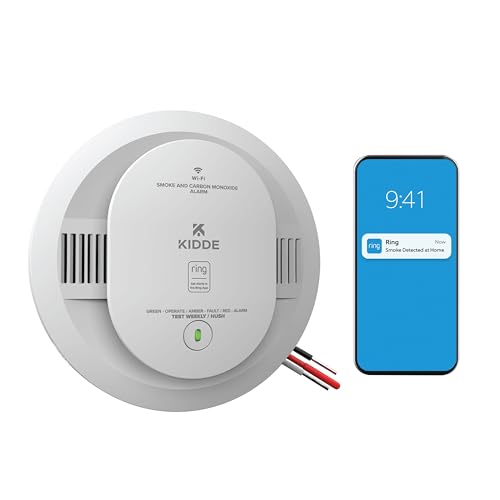
Pros
- Smoke and carbon monoxide double detection
- Free real-time Ring app notifications
- Spoken voice alerts and Alexa compatibility
- UL 217 and FCC safety certified
Cons
- Requires hardwired electrical installation
- 24/7 professional monitoring requires paid subscription
- Uses replaceable AA batteries instead of sealed cell

Pros
- Matter over Thread, smart wireless home integration
- Battery operated, mounts without electrical wiring
- Bundled hardware, covers both smoke and CO hazards
- Dedicated CO unit, specific carbon monoxide monitoring
Cons
- Two separate devices, requires installing multiple units
- Battery powered only, no hardwired AC option
Wireless Protocols and Google Assistant Integration
Connecting an emergency detector to your Google Assistant environment depends on how the hardware transmits data. Standard Wi-Fi units broadcast through home routers to manufacturer servers before relaying alerts to your mobile dashboard. Detectors operating over Thread establish mesh communication directly with local smart hubs, removing cloud latency during urgent hazard warnings.
Matter Hub Compatibility: Connecting a Thread-based alarm to Google Home requires an existing hub with a built-in Thread border router, such as a Nest Hub Max, Nest Hub second generation, or Google TV Streamer.
Selecting the right wireless protocol ensures your alarms exchange signals without congesting your local network bandwidth. Modern multi-sensor units fit naturally alongside broader home safety detection sensors when using open networking standards. Standardizing communication prevents delayed emergency notifications when every household member needs immediate warnings.
Photoelectric Sensors and Kitchen Nuisance Resistance
Modern residential fire safety relies on dual-beam photoelectric sensors rather than older ionization chambers. According to research from the NFPA, photoelectric chambers excel at identifying slow, smoldering fires generated by synthetic home furnishings. These optical sensors measure light dispersion from combustion particles, reacting rapidly while ignoring minor atmospheric shifts.
False triggers from cooking smoke remain the primary reason residents disable ceiling units. Updated manufacturing guidelines from UL Solutions mandate strict resistance against cooking aerosols under UL 217 standards. Deploying certified hardware prevents nuisance sirens from undermining household safety, offering reliable protection alongside top home security systems.
| Alarm Standard | Detection Mechanism | Primary Protection |
|---|---|---|
| UL 217 10th | Dual-Beam Optical | Cooking Smoke Resistance |
| Split-Spectrum | Dual Wavelength | Fast And Slow Burns |
| Legacy Optical | Single Beam | Smoldering House Fires |
Cooking Zone Placement: Never install an optical smoke alarm within ten feet of a cooking appliance. Even modern alarms with advanced nuisance reduction can register concentrated grease vapors from broiling as structural smoke.
Hardwired Power Versus Sealed Battery Systems
Deciding between 120-volt hardwired installations and standalone battery units shapes how your safety hardware functions during electrical outages. Hardwired alarms utilize existing house wiring to trigger physical sounders across every bedroom simultaneously when a single unit trips. Battery-operated units avoid cutting drywall but depend entirely on wireless mesh signals to replicate whole-home warnings.
Expert Examined
From Ray Okafor

I frequently see homeowners mount smart alarms right outside bathroom doors where morning shower steam triggers nuisance alerts. Placing your unit at least ten feet away from high-humidity areas prevents unwanted emergency notifications to your phone.
Read more about Ray OkaforBackup power ensures your family remains protected if a fire trips your main breaker panel. Integrating these devices alongside your primary home security systems requires balancing physical wiring with smart notifications. You need reliable secondary batteries in every enclosure to bridge the gap during severe storms and local grid blackouts.
Matching the Alarm to Your Ceiling
If you already run a Thread-compatible Nest Hub in your living room, I would point you toward the Heiman Smoke Detector, Matter Over Thread. It mounts cleanly without electrical work, carries the rigorous UL 217 10th Edition safety certification, and tracks ambient room temperature and humidity without forcing you into an external subscription service.
For households with existing 120-volt wiring junction boxes who prefer native Google hardware, I recommend the Google Nest Protect – Smoke Alarm. Its Split-Spectrum sensor detects both smoldering and fast-flaming fires, while the Pathlight illuminated ring and vocal location announcements give immediate clarity in dark hallways. The option to hush false cooking alarms directly from your phone prevents dangerous ladder climbs.
If your goal includes tracking chemical hazards alongside fire safety, the Kidde Smart Smoke Detector & Indoor Air Quality is the right fit for finished basements or utility rooms. It combines hardwired fire detection with volatile organic compound monitoring, alerting your Google Home system to humidity spikes and mold risks.
The Bottom Line
The single mistake most buyers make is assuming every smart detector will broadcast audible spoken hazard alerts across their existing Google smart speakers. Many models only push silent notifications to a mobile phone app, leaving sleeping occupants unaware if their smartphone sits on silent in another room.
Before ordering hardware, inspect your current ceiling junction boxes to verify whether you have 120-volt wiring with an interconnect traveler line. Once you confirm your electrical setup, verify that your Google Home system includes a Matter border router before choosing between Thread and traditional Wi-Fi alarms.
FAQs
Can Google Home silence smoke alarms automatically?
No smart assistant can silence a sounding smoke detector automatically without manual intervention. Safety regulations require an occupant to physically verify the room conditions through an app prompt or by pressing the hush button on the alarm face.
What is the difference between Matter smoke detectors and Wi-Fi alarms?
Matter smoke detectors communicate over local Thread mesh networks, linking directly to your Google smart hub without routing signals through cloud servers. Standard Wi-Fi detectors connect directly to your home router and rely on manufacturer cloud services to push notifications.
Do smart smoke detectors still sound an alarm if the internet disconnects?
Yes, all certified smart smoke alarms contain dedicated internal sirens that sound locally regardless of Wi-Fi or internet status. You will lose phone notifications and smart speaker alerts during an outage, but the 85-decibel physical buzzer functions normally.
Where should smart smoke detectors be placed in a home?
Install detectors on every level of your home, inside each bedroom, and outside sleeping areas in hallways. Keep every unit at least ten feet away from cooking appliances and three feet away from bathroom doors to prevent false alarms.
Sources
- National Fire Protection Association Standard 72. www.nfpa.org
- UL Solutions Smoke Alarm Standard UL 217. www.ul.com
- US Consumer Product Safety Commission Smoke Alarm Safety. www.cpsc.gov