
Equipping your home with the best smoke detectors compatible with Ring protects your family by linking early fire detection directly to mobile alerts. The primary fork is whether to install complete replacement alarms or mount acoustic listeners beside your existing setup. Homeowners with aging units need fresh hardware, while newer hardwired networks can bridge instantly.

Pros
- Listens specifically for standard UL smoke and CO sirens
- Single unit covers entire hardwired detector networks
- Three-year battery life requires minimal replacement
- Mounts easily within four inches of existing alarms
Cons
- Emergency dispatch requires a paid monitoring plan
- Requires separate listeners for non-hardwired detectors
- Cannot detect hazards without existing audible alarms

Pros
- Wire-free interconnect sounds every alarm across the home
- Detects both smoke and carbon monoxide
- Real-time alerts via Ring app without subscription
- UL 217 and FCC certified protection
Cons
- AA alkaline batteries require ongoing replacements
- Live monitoring service requires an optional paid subscription

Pros
- Sealed 10-year battery eliminates low-battery chirps
- Dual detection for both smoke and carbon monoxide
- Precision Detection technology reduces nuisance cooking alarms
- Z-Wave Plus certified for Ring Alarm integration
Cons
- Remote notifications require separate Ring Alarm hardware
- Sealed battery cannot be swapped when depleted
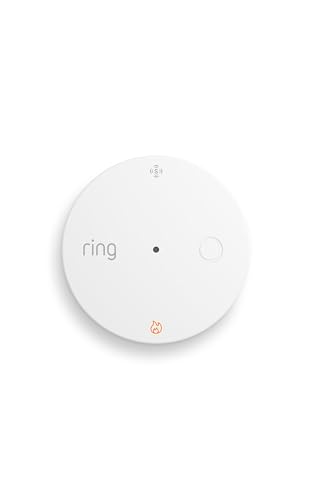
Pros
- No base station required, uses Amazon Sidewalk
- Mounts without tools near current alarms
- Relays alerts from existing smoke and CO alarms
- Supports optional 24/7 professional monitoring
Cons
- Does not directly sense smoke or carbon monoxide
- Requires functional Amazon Sidewalk coverage to work
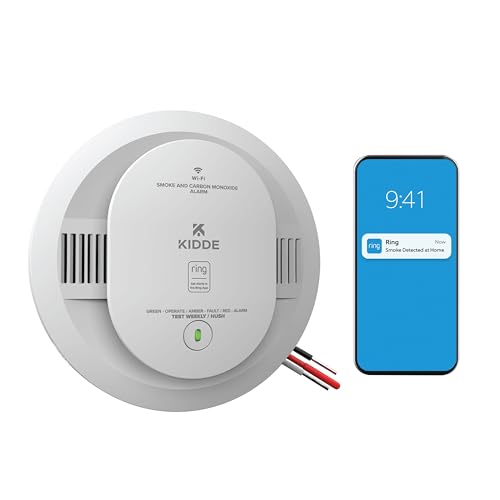
Pros
- Smoke and carbon monoxide double detection
- Free real-time Ring app notifications
- Spoken voice alerts and Alexa compatibility
- UL 217 and FCC safety certified
Cons
- Requires hardwired electrical installation
- 24/7 professional monitoring requires paid subscription
- Uses replaceable AA batteries instead of sealed cell
Dedicated Replacement Units Versus Audio Listeners
Upgrading your fire protection involves choosing between standalone smart alarms and acoustic listening modules. A dedicated smart alarm houses its own internal sensors to identify fire or toxic gases directly. These units communicate immediately through Z-Wave or wireless protocols to alert your phone the instant hazard levels rise.
Listener Sensor Limits: An acoustic listener does not sense smoke directly and depends entirely on an operational siren nearby. Always verify that your existing alarms are less than ten years old before relying on an audio bridge.
Audio listeners monitor the physical acoustic output of existing alarms rather than sensing air particles. These small microphones mount nearby to detect standard Temporal Three smoke sirens and Temporal Four carbon monoxide cadences. If you have newer alarms, adding a listener connects them into modern home security systems without replacing functional hardware.
Hardwired Interconnects and Power Configurations
Building codes frequently require interconnected alarms, meaning when one sounds, every alarm in the house activates. If your property features 120-volt wiring with an interconnect line, installing a compatible hardwired alarm lets you bridge the entire network to your system. Adding a single smart hardwired unit can relay notifications for the entire linked chain.
Expert Examined
From Ray Okafor

I frequently encounter homeowners who mount audio listeners in central hallways expecting them to hear distant bedroom alarms through closed doors. You must place listeners within inches of an individual detector horn, or the sound recognition will fail to trigger when minutes matter.
Read more about Ray OkaforHomes lacking traveler wiring rely on battery-operated alternatives to achieve safety compliance. Battery units simplify installation across bedrooms and hallways while eliminating electrical work. Modern safety guidelines from the NFPA recommend smoke alarms inside every bedroom, outside each sleeping area, and on every level of the home.
Dual Sensing and Battery Longevity
Selecting combination devices that detect both smoke and carbon monoxide provides comprehensive coverage without cluttering your ceilings. Advanced detection technology meeting standards set by UL Solutions minimizes nuisance alarms caused by normal kitchen cooking vapors. Combining both detection methods into one housing saves installation effort and ensures single-point maintenance.
Interconnect Verification: When replacing a single hardwired alarm with a smart unit, press the diagnostic button to ensure all other linked units across the home sound simultaneously.
Battery longevity remains a vital consideration for ongoing upkeep and uninterrupted protection. Sealed ten-year lithium units eliminate intermittent low-battery chirps for the entire functional lifespan of the sensor. Exploring integrated home safety detection options helps identify the ideal balance between routine upkeep and long-term reliability.
| Detector Format | Power Type | Ideal Placement |
|---|---|---|
| Smart Hardwired | 120V With Battery | Modern homes with wiring |
| Smart Battery | Sealed 10-Year | Retrofit bedrooms and hallways |
| Acoustic Listener | Lithium Battery | Inches from existing alarms |
Matching Alarms to Your Home Setup
For households with existing hardwired traveler circuits, I would point you to the Kidde Smart Smoke & CO Detector with Ring. Because it ties directly into 120-volt wiring and includes AA battery backup, adding just one unit detects both smoke and carbon monoxide while relaying mobile alerts for every hardwired alarm across your entire house.
If you live in a home without interconnected ceiling wires, I would put the First Alert 10-Year Battery Combination Smoke inside bedrooms and hallways. Its sealed ten-year lithium power cell eliminates annoying battery chirps, while certified Z-Wave Plus hardware links reliably with the Ring Alarm Base Station to send immediate fire and carbon monoxide notifications.
When your existing smoke alarms are modern, code-compliant, and under ten years old, I recommend mounting the Ring Smoke & CO Listener. It installs within six inches of your current detectors without any wiring, operating over Amazon Sidewalk without needing a base station to forward siren alerts straight to your phone.
The Bottom Line
The most common error buyers make is purchasing an acoustic listener under the assumption that it directly senses fire or carbon monoxide. A listener possesses no internal detection sensors and acts solely as an ear for your functional, code-compliant alarms. Installing a listener next to an expired or non-functional detector leaves your home completely unprotected during an emergency.
Before purchasing new equipment, walk your property and check the manufacture dates printed on the back of your current alarms. If your units have surpassed their ten-year service limit, bypass acoustic bridges and invest in full replacement alarms compatible with your broader best home security systems strategy.
FAQs
Do smoke detectors compatible with Ring require a base station?
Some models require a base station while others do not. Devices using Z-Wave Plus protocols connect through the Ring Alarm Base Station to send emergency alerts. However, standalone smart units and certain listeners connect over Amazon Sidewalk or Wi-Fi directly to your mobile application without needing a separate central hub.
Can an acoustic listener detect both smoke and carbon monoxide?
Yes, provided your existing alarm produces standard emergency cadences. Listeners recognize the Temporal Three pattern for smoke and the Temporal Four pattern for carbon monoxide. The listener identifies the specific acoustic cadence and sends the corresponding alert type directly to your connected mobile device.
How close must a listener be to an existing smoke detector?
An acoustic listener must be mounted within four to six inches of the target alarm horn. Placing the unit too far away or behind closed doors dampens sound waves and prevents the internal microphone from reliably recognizing emergency siren patterns during an incident.
Do smart smoke alarms still work if the Wi-Fi goes down?
Yes, the physical sirens continue to sound locally during a network outage. While mobile alerts and automated emergency dispatch require an active network or cellular backup, the internal horn will still alarm at full volume to warn occupants inside the property.
Sources
- National Fire Protection Association Standards www.nfpa.org
- UL Solutions Fire and Life Safety www.ul.com
- US Fire Administration Guidance www.usfa.fema.org